




 126 / 745

KRYOTEC ENGINE
118
Diesel engines produce a variety of particles during
combustion of the fuel/air mix due to incomplete
combustion. Diesel particulate matter resulting
from the incomplete combustion of diesel fuel
produces soot (black carbon) particles. Soot and
other particles from diesel engines worsen the
particulate matter pollution in the air and are
harmful to health.
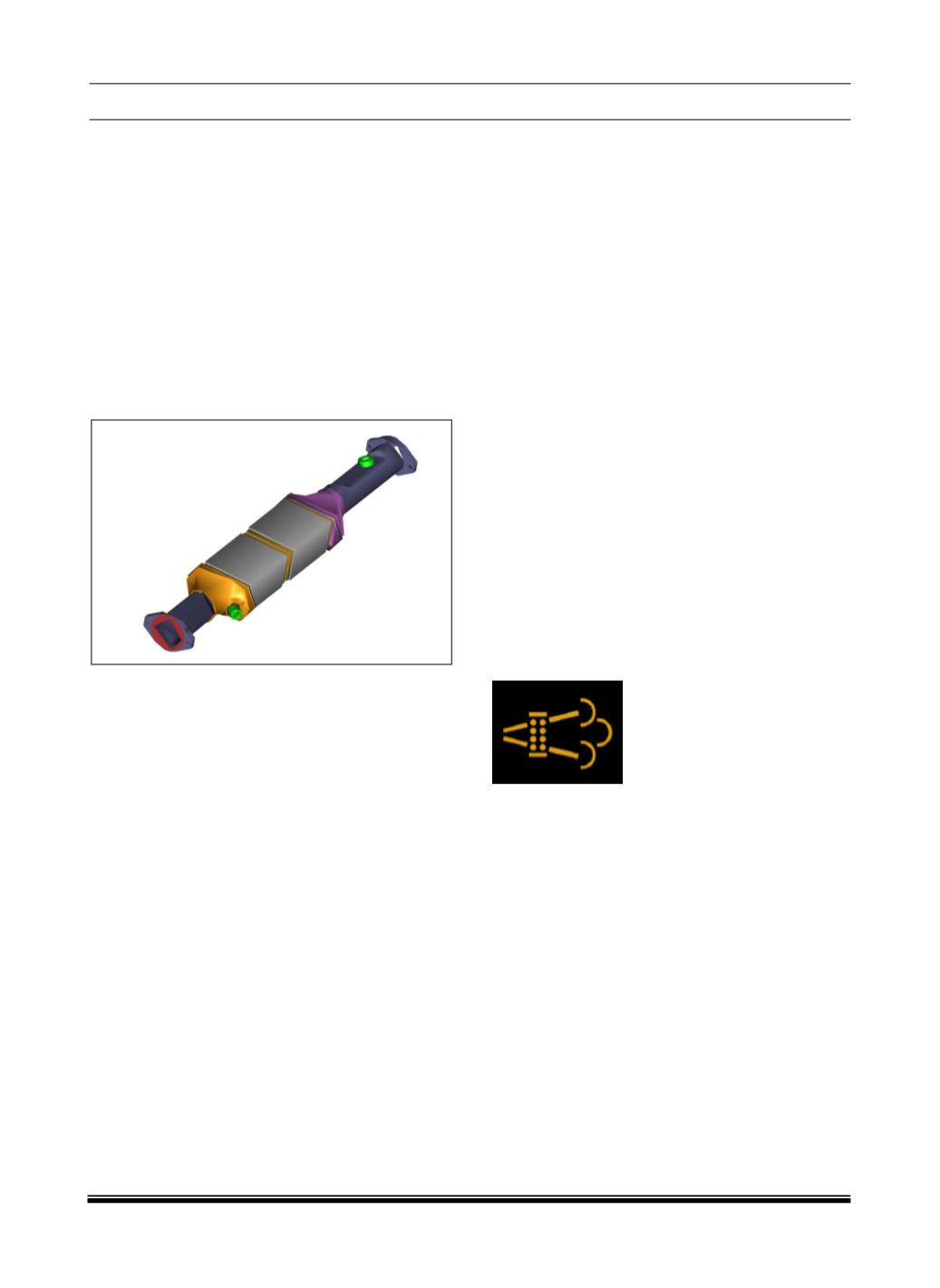
Diesel particulate filters (DPF) are devices that
physically capture diesel particulates to prevent
their release to the atmosphere. The exhaust gases
pass through the filter, which collects particles from
the gases. Collected particulates are removed from
the filter through thermal regeneration.
SELECTIVE CATALYST REDUCTION (SCR)
Selective Catalytic Reduction (SCR) is an
advanced active emissions control technology
system that injects a liquid reductant agent through
a special catalyst into the exhaust stream of a
diesel engine. The reductant source is Diesel
Exhaust Fluid (DEF). This reductant is also known
as Diesel Exhaust Fluid (kDEF). Diesel Exhaust
Fluid (DEF) sets a chain of chemical reaction that
converts nitrogen oxides into nitrogen, water and
tiny amounts of carbon dioxide.
Mixer is used to thoroughly mix ammonia in the with
the exhaust gas.
DIESEL EXHAUST FLUID (DEF) INJECTOR
Dosing of precise amount of DEF (Diesel Exhaust
Fluid (DEF)) is necessary for the required chemical
reactions to begin in the SCR system.
Diesel Exhaust Fluid (DEF) injector injects the
precise amount of Diesel Exhaust Fluid (DEF) into
the SCR on exhaust stream.
Diesel Exhaust Fluid (DEF) contains two amino
groups and when disintegrating in heat, they turn
into ammonia, carbon dioxide and water. Within the
SCR catalyst the NOx is catalytically reduced by
the ammonia into water and nitrogen, which are
both harmless.
DPF related warning lamps
The vehicle is equipped with a Diesel Particulate
Filter (commonly known as DPF). DPF is a
mechanical filter that physically traps particulate
matter from diesel engine exhaust gas.
DPF traps the particulate matter in the following
way:
Filtration – Particulates / soot are collected in the
inlet channel of the filter.
Regeneration – When the filter channels are filled
up with soot, they are cleaned automatically by the
engine management system. This process is
known as DPF Regeneration and this will happen
during normal running of the vehicle.
DPF equipped in Harrier vehicle normally
regenerates automatically which is controlled by
engine management system.
In certain specific driving conditions, DPF
regeneration may not happen automatically as the
desired temperatures required to regenerate soot
many not be achievable due to specific driving
conditions. This includes prolonged driving at low
vehicle speeds for considerable amount of time
(driving in heavy city traffic), prolonged running of
the engine in idle conditions etc. In such cases, a
warning lamp as indicated below will be illuminated
in the instrument cluster indicating that soot
regeneration is insufficient.
This warning lamp switches ON constantly to
indicate that the DPF needs to be regenerated. This
lamp does not indicate any malfunction.
The warning lamp remains OFF during normal
vehicle behaviour and lights up only when driving
condition requires the driver to be notified. When
this lamp is ON, keep the car running ideally at 3
rd
gear 60kmph with engine speed over 2000 rpm
until regeneration is completed and warning lamp
goes OFF. The process normally takes about 20
minutes.
Note: Do not shut down engine till the warning lamp
goes OFF.
The warning lamp remains OFF during normal
vehicle behavior and lights up only when driving
condition requires the driver to be notified. When
this lamp is ON, keep the car running ideally at 3
rd
gear 60kmph with engine speed over 2000 rpm
until regeneration is completed and warning lamp
goes OFF. The process normally takes about 20