




 825 / 1906

TRANSMISSION
10
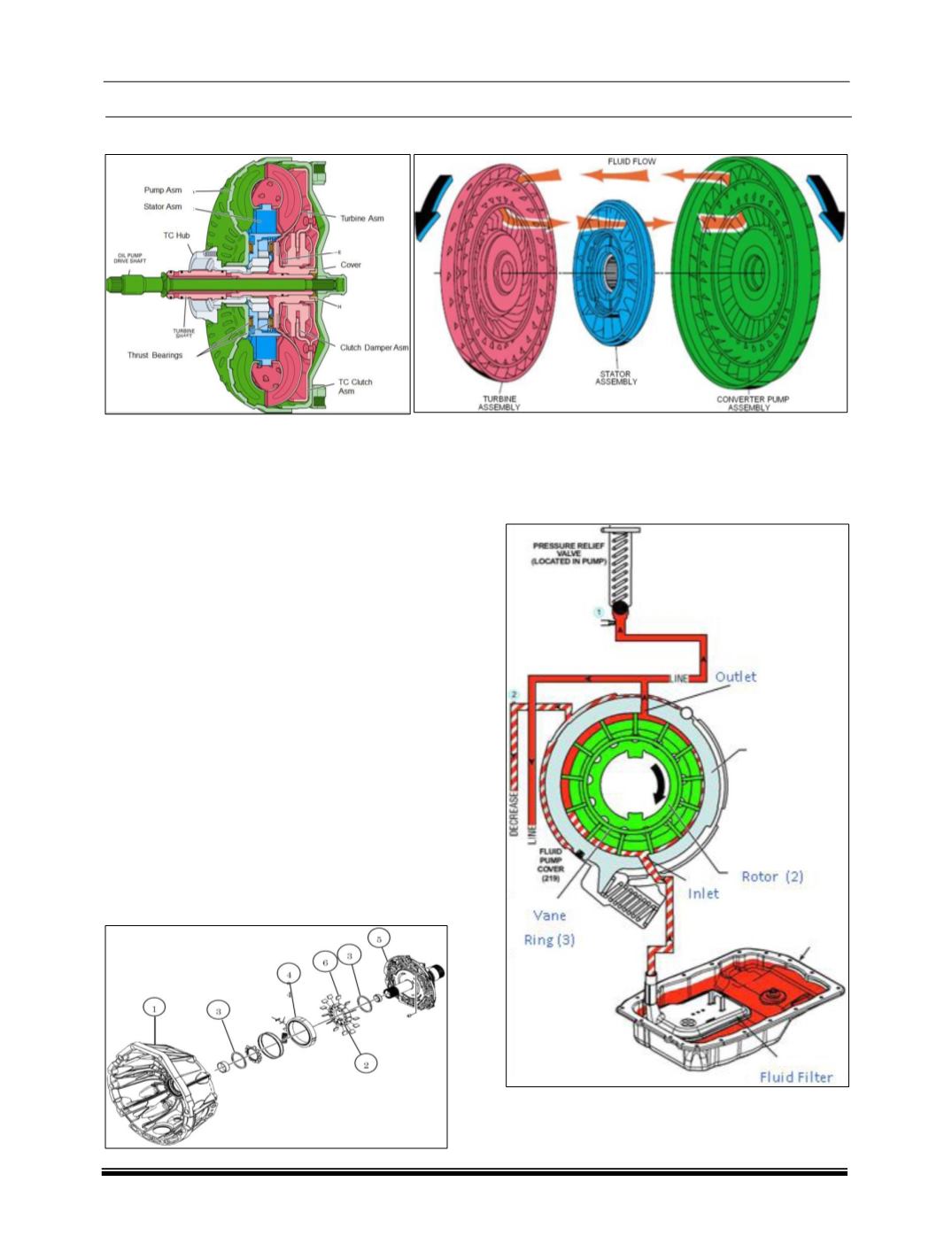
Torque Converter:
The mechanical power flow in the transmission
begins at the point of connection between the
torque converter and the engine flywheel. When
the engine is running, the torque converter cover
(pump) is forced to rotate at engine speed. As the
torque converter rotates it multiplies engine torque
and transmits it to the turbine shaft. The turbine
shaft provides the primary link to the mechanical
operation of the transmission.
The torque converter clutch has an electronically
controlled capacity clutch (ECCC). ECCC was
developed to increase range of operation of the
torque converter clutch operation to increase fuel
economy and drivability. In a torque converter with
ECCC, the pressure plate does not always fully
lock to the torque converter cover. Instead, the
pressure plate maintains a small amount of
slippage. The typical slippage range is from 20 to
50 RPM or full lockup (0 RPM slip).
Oil pump:
The fluid pump assembly (5) contains a variable
displacement vane (6) type pump, located in the
torque converter housing (1). When the engine is
cranking, torque converter pump hub, which is
keyed to the fluid rotor (2), turns rotor at cranking
speed and pressurize the hydraulic system.
Fluid from the transmission bottom pan is drawn
through the fluid filter assembly and into the fluid
pump suction fluids circuit. This fluid is then forced
to rotate around the fluid pump slide (4) to the
pump outlet port.