




 658 / 1428

646
ELECTRICAL
DIAGNOSTIC PROCEDURES & INFORMATION
Before removing starter motor for repair, the following checks should be made,
•
Battery: To determine the condition of battery, follow the testing procedure outlined in the battery manufactures
service bulletin. Ensure the battery is fully charged.
•
Wiring: Inspect the wiring for damages. Inspect all connections to the cranking motor, solenoid switch, ignition
switch or other control switch and battery, including all ground connections. Clean using smear petroleum jelly
and tighten all connections as required.
•
Solenoid & control switches: Inspect all switches to determine their condition. With switches closed, use a
voltmeter to check circuit continuity .Replace defective switches and wiring required,
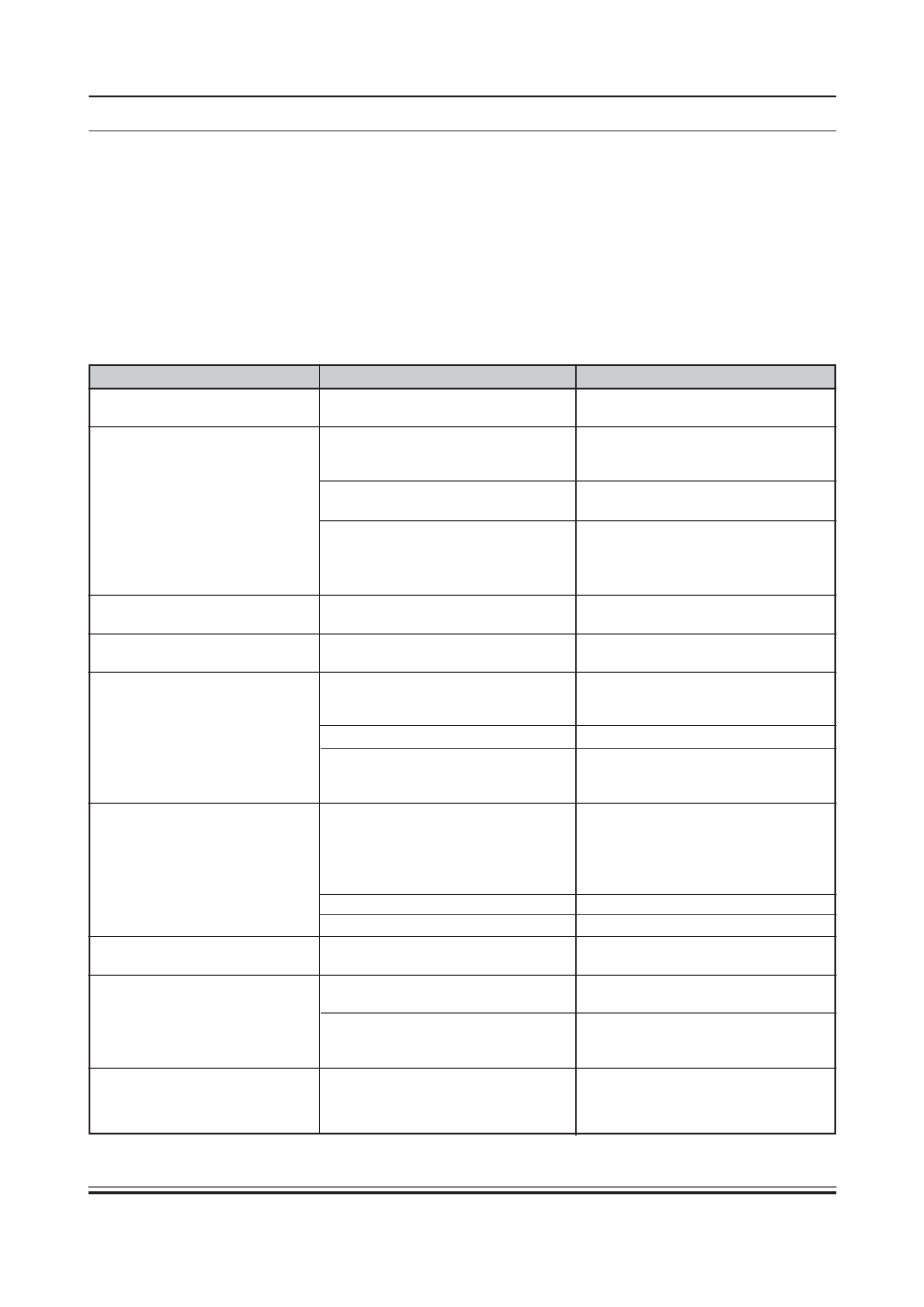
CONDITION
POSSIBLE CAUSES
CORRECTION/REFERENCE ITEM
1) Pinion fails to engage.
Defective solenoid switch.
Check solenoid and Replace.
Armature does not rotate.
2) Armature fails to rotate or
a) Brushes worn-out and not
Replace brushes, if found to be
rotates slowly and the starter
making proper contact with
worn-out.
does not crank the engine
commutator.
though pinion has engaged b) Dirty, oily or badly burnt
Remove dirt or oil. If commutator is
with ring gear
commutator.
burnt, replace armature.
c) Starter terminal or brush box
Remove the starter for further
having earth fault. Defective
investigations and replace parts as
Solenoid Switch. Defective
found to be necessary.
Armature / Field Coils.
3) Armature rotates but pinion Pinion sticky on shaft.
Shaft splines and the pinion internal
fails to engage.
splines to be cleaned and lubricated
4) Armature rotates, pinion fails Clutch slip.
Replace drive assy.
to engage.
5) Starter continues to run
a) Sticky solenoid switch on
Disconnect starter cable
after the solenoid switch is
dashboard
immediately at starter battery
released.
terminal. Replace Starter switch.
b) Sticky solenoid switches contacts Replace solenoid, if found faulty.
c) Pinion / Ring gear fouled or
Clean thoroughly, deburring pinion
damaged.
and ring gear by filing. Replace, if
necessary.
6) Low free speed and high
a) Too much friction-worn out
Replace the bush bearings or faulty
current drawn.
bush bearings, bent armature parts.
shaft or loses pole pieces
allowing armature to drag
misalignment in assembly
b) Shorted armature.
Replace armature if shorted
c) Ground armature.
Replace defective part.
7) Failure to operate with high Direct ground in the terminals
Replace the defective part /
current drawn
insulation.
8) Failure to operate with no a) Armature open circuited .
Replace armature after ensuring
current drawn
Solenoid switch contact Ok.
open circuit.
b) Broken brush springs, worn
Remove dirt or oil. If commutator is
brushes, high insulation
burnt, replace armature.
between commutator bars.
9) Low free speed and current
High terminal resistance due to poor Replace defective part after
drawn.
connection, defective leads,dirty
checking out loose joints/broken
commutator and cause listed in 4.
parts.