




 615 / 1428

ELECTRICAL
603
ELECTRICAL
c. When replacing any fuse, make sure to use
the specified capacity fuse. Using a fuse with a
larger capacity can cause damage to the
electrical parts or a fire.
d. Do not handle electrical/electronic parts
(computer, relay, etc) roughly or drop them.
e. Do not expose electrical / electronic parts to
high temperature (approx. 80
°
C (170
°
F and
above) or water.
f. For open back connectors be sure to insert the
tester probe in to the back side (wiring harness
side) of the connector for inspection.For sealed
back connectors apply the tester probe to the
terminal as gently as possible not to damage
or deform the terminal.
g. Before commencing work on an ignition
system, all high tension terminals,adapters and
diagnostic equipment for testing should be
inspected to ensure that they are adequately
insulated and shielded to prevent accidental
personal contact and to minimize the risk of
shock. Wearers of surgically implanted
pacemaker devices should not work in close
proximity to ignition circuits or diagnostic
equipment.
8. When installing any of the vehicle parts, be careful
not to pinch or damage any of the wiring harness.
9. High Voltage Circuits
Whenever disconnecting live high tension circuits
always use insulated pliers and never allow the
open end of the high tension lead to come into
contact with other components, particularly ECU’s.
Since high voltage spikes can occur on the
terminals of the coil while the engine is running,
exercise caution when measuring the voltage at
these points.
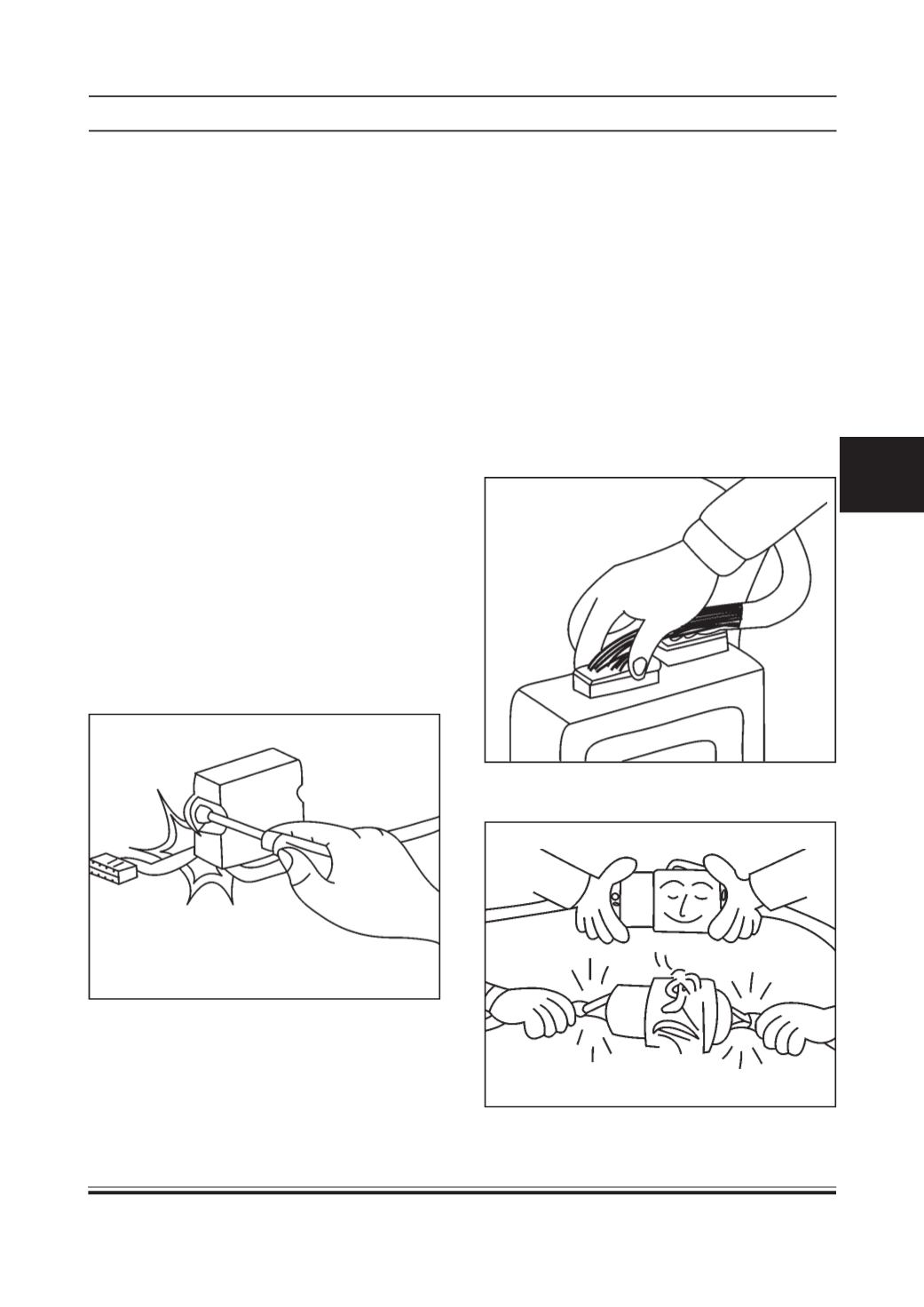
10. Connectors and Harnesses
The engine compartment of a vehicle is a
particularly hostile environment for electrical
components and connectors.Always ensure these
items are dry and oil free before disconnecting
and connecting test equipment. Never force
connectors apart either by using tools or by
pulling on the wiring harness. Always ensure
locking tabs are disengaged before removal and
note orientation to enable correct reconnection.
Ensure that any protective covers and substances
are replaced if disturbed.
a. Loose connectors could be troubled. Make sure
that connectors are connected securely.
b. When removing a connector, be sure to hold
and pull only the connector, not the harness.