



 174 / 1428

168
ENGINE 273 MPFI
SYSTEM MAINTENANCE
Radiator Pressure Cap
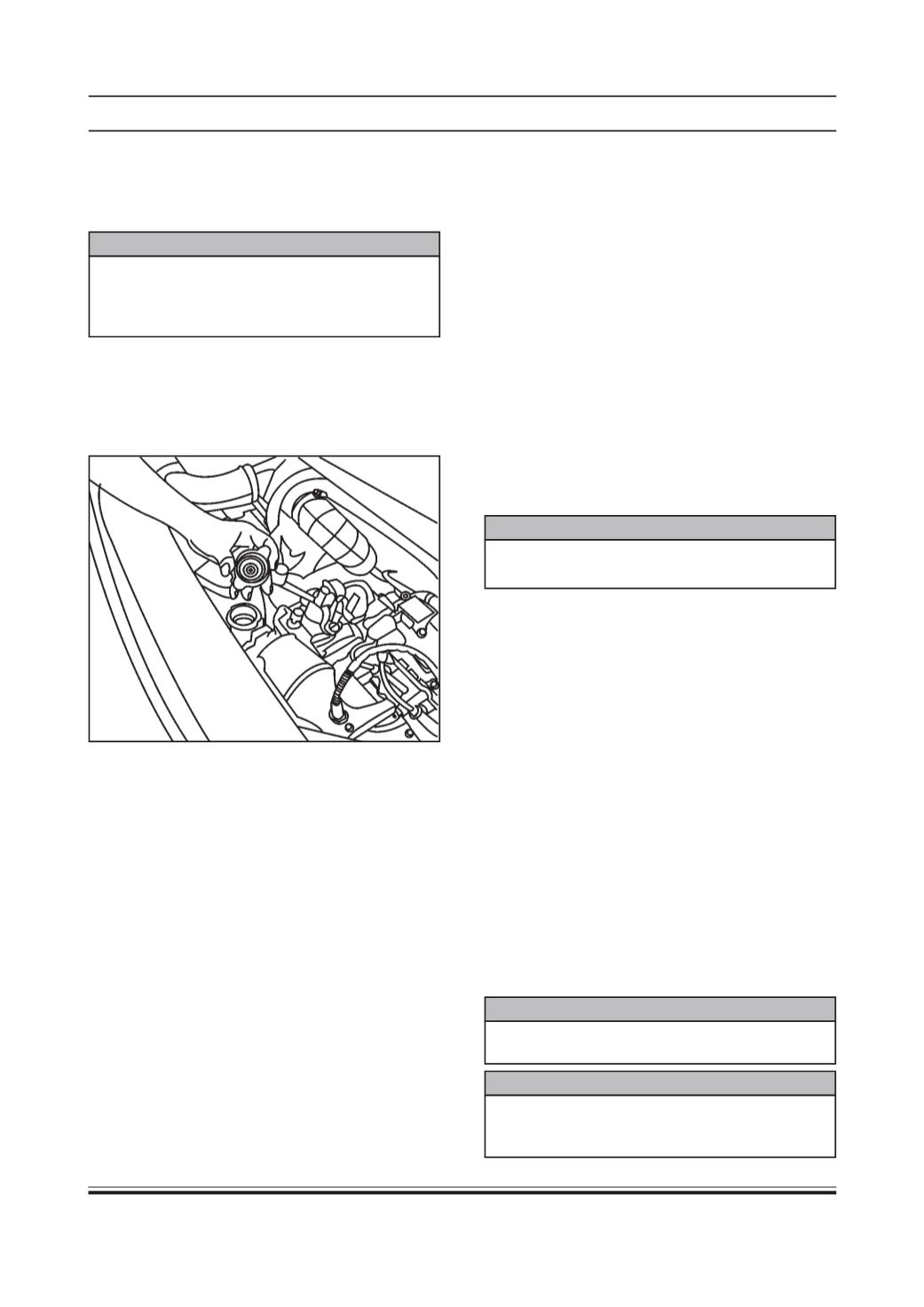
• Remove radiator cap as per procedure given below.
CAUTION
Removing the radiator cap while the engine is hot
can cause the coolant to spray out, seriously scald-
ing . Always let the engine and radiator cool down
before removing the radiator cap.
• Turn the radiator cap anticlockwise, without press-
ing down on it, until it stops. This relieves any pres-
sure remaining in the cooling system.
• Press and turn the radiator cap anticlockwise
further to remove it.
• Check the coolant level. The coolant level should
be up to the base of filler neck. Add coolant if it is
low.
• Put the radiator cap back on. Tighten it fully.
• Pour coolant into the auxiliary tank . Fill it to half-
way between the MAX and MIN marks. Put the
cap back on the auxiliary tank.
Inspection
• Replace the pressure cap with new one if leakage
is observed even after cleaning the filler neck.
• Check radiator cap for perfect sealing in filler neck.
• Check radiator cap, main and vacuum valve open-
ing pressures.
• Replace defective cap with new one of recom-
mended rating.
Test for main valve opening
:
Radiator cap main valve should not open below the
specified pressure value.
On the vehicle, the functioning of radiator cap main
valve can be checked by observing increase in cool-
ant level in auxiliary tank at high coolant temperature.
Test for vacuum valve opening
:
On the vehicle, the functioning of the radiator cap
vacuum valve can be checked by observing decrease
in coolant level in an auxiliary tank when it cools down
compared to higher level at high temperature .
Confirmation of Proper Sealing
• After the sealing work is over, assemble the radia-
tor properly.
• Subject the assembled radiator to leakage test as
per said procedure.
CAUTION
If the problem of leakage persists, it is advisable
to replace the radiator with new one
.
Coolant Level
•
If the coolant level in the auxiliary tank is at or
below the MIN line, add coolant to bring it up to the
MAX line.
•
Inspect the cooling system for leaks.
•
Coolant should always be a mixture of Antifreeze
Agent (Ethylene Glycol) + Soft Water {Ratio 50 :
50}
•
Never add straight antifreeze or plain water.
•
Always use genuine recommendedAntifreeze.
The cooling system contains many aluminum com-
ponents that can corrode if improper antifreeze is
used.
•
Some antifreeze, even though labeled as safe for
aluminum parts, may not provide adequate protec-
tion.
•
If the auxiliary tank is completely empty. Check
the coolant level in radiator.
CAUTION
Allow the coolant in the radiator to reach to the room
temperature.
NOTE
If auxiliary tank is found completely empty, top up
coolant through radiator as well as auxiliary tank
cap..