




 940 / 1863

FRONT SUSPENSION
13
14.3 MAINTENANCE
A.
PRELIMINARY INSPECTION
I.
INSPECTION OF TYRE
Tyre wear pattern are a good indicators of
condition of steering and suspension system.
Uneven tyre wear may be caused due worn out
suspension bushes. For common tyre wear
pattern refer Wheels and Tyres section.
II.
SHOCK ABSORBER OIL LEAKEGE
If there is a leakage observed in the shock
absorber. It should be replaced immediately.
III.
ROAD TEST.
During test drive, ride the vehicle through a rough
patch of road and observe any unusual sounds
like ‘THUMP’ sound or any other sound and
ascertain the location of the sound. In a straight
level road at higher speeds observe for any
humming noise due to worn out wheel bearing.
IV.
GENERAL
Check the torques of all the fasteners.
Check if the brake hose is properly fastened.
Check if the spring is properly seated in strut
seat.
Check if the ride height is same on both sides.
Check if the rubber bushes are in good
condition.
Check if upper lower wishbone ball joint are
damaged
,(Grease leaked)
B. REGULAR MAINTENANCE
I.
WHEEL ALIGNMENT
1. Vehicle should be in unladen condition
without driver.
2. Tyre inflation pressures must be properly
maintained.
3. Front wheels should be in straight ahead
condition with rack and pinion at the central
position and steering wheel should be locked.
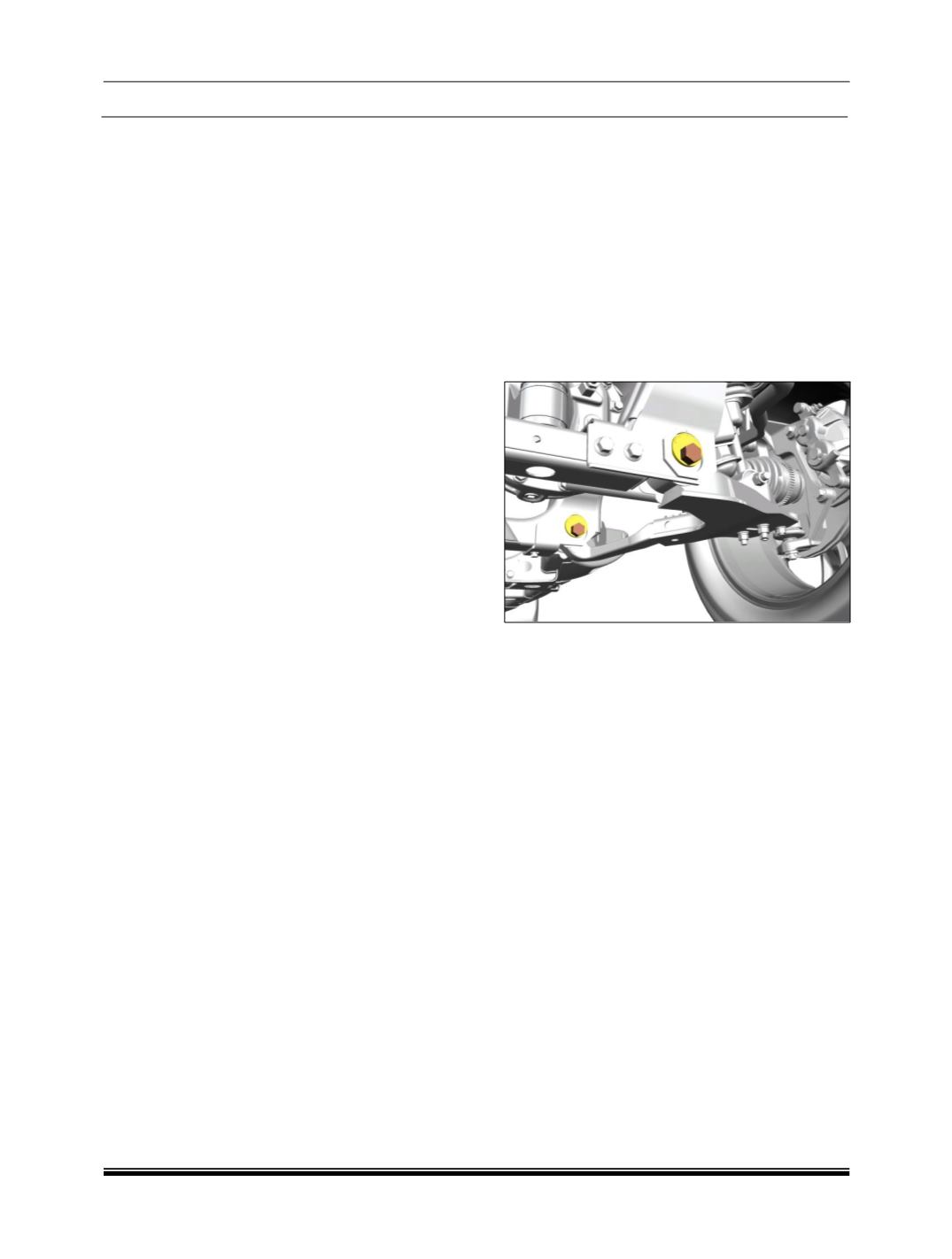
4. First set the eccentric pin at the Front lower
wishbone in upright central position.
5. Rotate both front and rear eccentric pins in
same direction and by same amount either
clockwise or anti-clockwise for the camber
adjustment.
6. The camber value should be 0º ± 30’
NOTE
The LH to RH camber variation should be within
30’.
7. After camber adjustment castor adjustment
should be taken.
8. The castor value should be 3º ± 30’.
NOTE
The LH to RH castor variation should be within
45’.
9. Castor adjustment for LH Wheel:
To increase the castor, rotate eccentric pin at
front pivot in clockwise and eccentric pin at
rear in anti-clockwise as required. This will
ensure that the camber is not disturbed while
adjusting the castor.
To decreasing the castor, the above
procedure should be done in opposite
direction.