



 682 / 1236

BRAKES
56
INSPECTION
Clean all the internal parts thoroughly with fresh
brake fluid or alcohol. Do not use mineral oil like
kerosene, petrol, diesel etc. After thoroughly
cleaning, examine all parts for damages and
corrosion.
Check the various parts for the following:
1. PISTON
Outer surface should be free from nicks, score or
rust and should feel smooth to touch. Do not use
emery paper on piston surface.
2. CALIPER HOUSING
Bores should be free from score, pitting and
corrosion. The seal grooves in the bore should be
thoroughly cleaned and no nicks should be there
at the edges. If the above conditions are
satisfactory then replacement with appropriate kit
will give satisfactory performance. If not the
caliper assembly should be replaced.
3. CARRIER
Remove the grease from sliding pin bores and
clean the bores thoroughly. The carrier-machined
surface should be free from any damages; hit
marks etc. and the sliding pin bores should be
free from ovality and damages. Check for the
carrier mounting bolts.
4. SLIDING PINS
Should be free from rust, bends and step
formation due to wear. If necessary, replace the
sliding pin with new one.
ASSEMBLY
NOTE
Discard all the rubber parts and the anti-rattle
clips and use new one at the time of assembly.
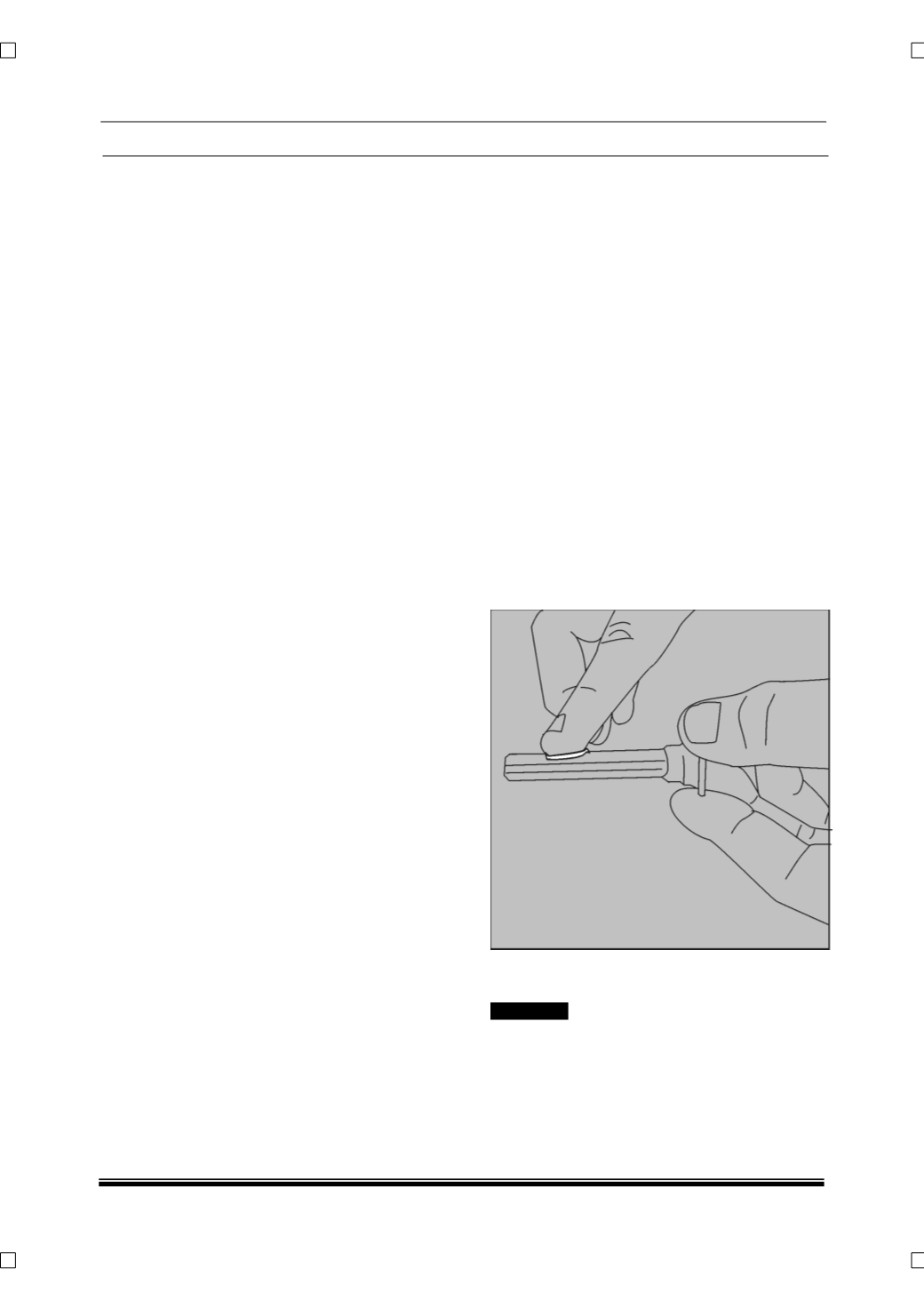
1. Dip the sealing rings in fresh brake fluid and fit
it on to the groove in the caliper pot and work
around with fingers until properly seated.
2. Smear fresh brake fluid to the pistons surface,
assemble piston boot on to the piston by
reversing the dust cover.
3. Smear brake fluid liberally into the bores. Now
locate the piston squarely and push gradually
into the bore until it reaches the bottom.
NOTE
If the piston does not move smoothly, remove it
and examine the sealing ring for correct seating in
its groove. Fit the other end of the piston boot on
to the caliper housing. Fit the other piston by the
same method.
4. Smear sliding pins with the grease provided in
the kit.
5. Fit the sliding pin rubber boot on to the sliding
pin.
! CAUTION
Do not use mineral base grease for lubricating
sliding pin. Using mineral base causes swelling of
sliding pin rubber bush.