



 421 / 1526

46
FRONT AXLE - 4
X
4
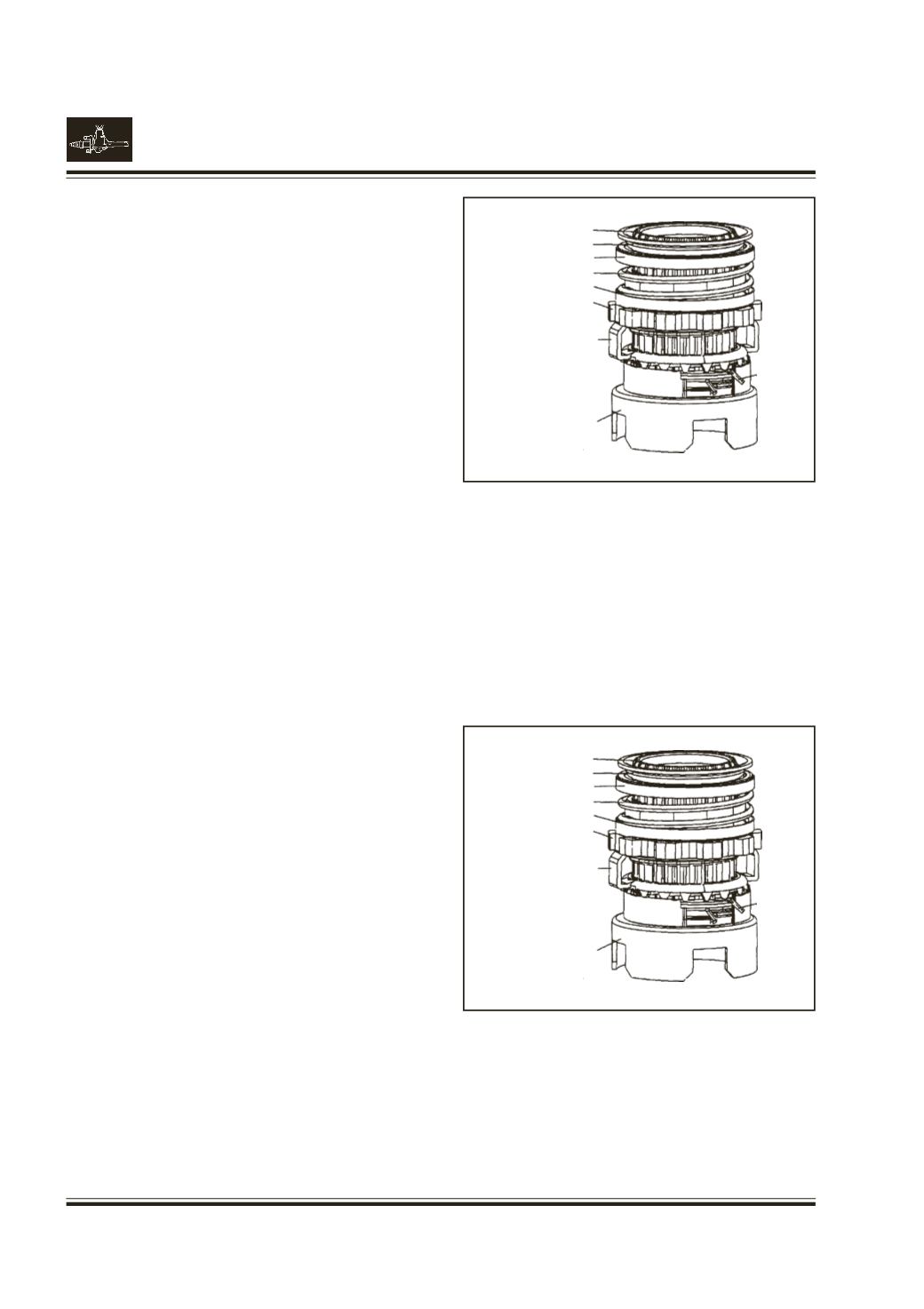
Operation (Fig 3 & 4)
When 4-wheel drive is engaged (and vehicle starts to
move), the axle shaft starts to turn the hub sleeve (16),
clutch gear (15), and cam follower (19). The steel inner
cage (21) and plastic outer cage (20) also start to turn.
(The drag sleeve (26) is fixed to the Wheel spindle and
doesn't rotate) When the inner cagewindowhits the first
brake band tang (30) the band tightens up on the drag
sleeve.This stops the inner cage.The cam follower (19) is
forced up the ramp of the inner cage (21).
As the camfollowermoves up the rampof the inner cage,
it is moved outward along the hub sleeve (16), pushing
theclutchgear (15) intoengagementwith theouter clutch
housing. The cam follower (19) also pushes against the
lugs of the outer cage (20).The outer cage tang contacts
the second brake band tang (30).This unlocks the brake
band and allows it to turn freely on the drag sleeve
serrations.
When 2-wheel drive is selected to disengage the hubs,
and the vehicle is driven in the opposite directions for a
few feet, the rotating front wheel turns the outer clutch
housing, clutch gear (15) and cam follower (19) in the
opposite direction. The cam follower moves down the
rampof the inner cage (20).The return spring (14) pushes
the clutch gear (15) along the hub sleeve (16) and out of
engagement with the outer clutch housing.
16
12
13
14
13
15
19
26
30
16
12
13
14
13
15
19
26
30
Fig. 3
Fig. 4