



 1402 / 1526

19
4 PL FUEL SYSTEM
Inspection :
1.
Remove fuel filler cap.
2.
If check result is not satisfactory, check for vaccum
hose, purge valve, wire harness etc. Check carbon
canister for signs of damage and defects.
l
If defective, replace canister.
l
If OK, go to step 3
3.
Warmup engine to normal operating temperature.
4.
Disconnect “purge” end hose (from the canister to
purge valve)
5.
a) Place finger against the end of disconnected
hoses. Check that vaccum is felt there when
engine is running at idle speed.
b) Alsocheck that vaccum is feltwhenengine speed
is increased to higher than 2000/3000rpm.
6.
Start engine and run it at idle speed. Disconnect
vaccum hose(from canister purge valve to T
Connector). Block the T connector port fromwhere
the hose has been removed, with finger placed
against the hose disconnected. Check that vaccum
is applied. If it is not applied clean vaccum passage
by blowing compressed air.
Assembly :
For hose connection refer schematic circuit diagram.
Fig. 2 .The canister port consists of marking“purge” and
“tank”. Fig. 24.
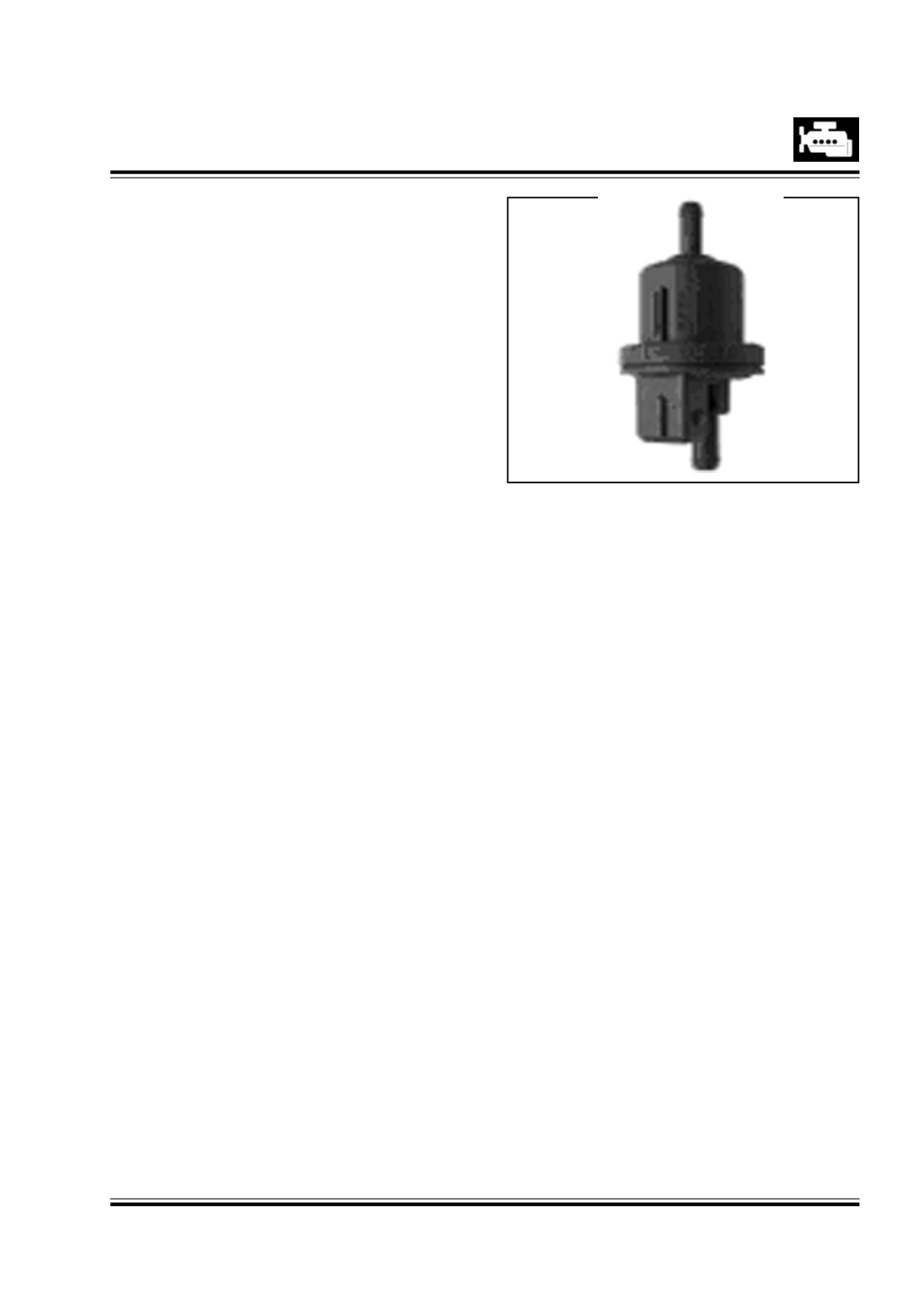
e) Canister purge Valve : Fig. 25, 26
The canister purge valve is controlled by engine
management system (EMS).
The purging of canister takes place because of
pressure differential betweenmanifold vacuumand
atmosphere. Fuel vapours are drawn into the intake
manifold through canister purge valve operated by
ECU.
Removal :
1.
Disconnect hose from canister purge valve to
T connector.
2.
Disconnect the hose fromcanister to purge valve
from canister “purge”end.
Fig. 25