



 1133 / 1526

18
FUELSYSTEM2.2LDICOR
Fig. 24
Fig. 25
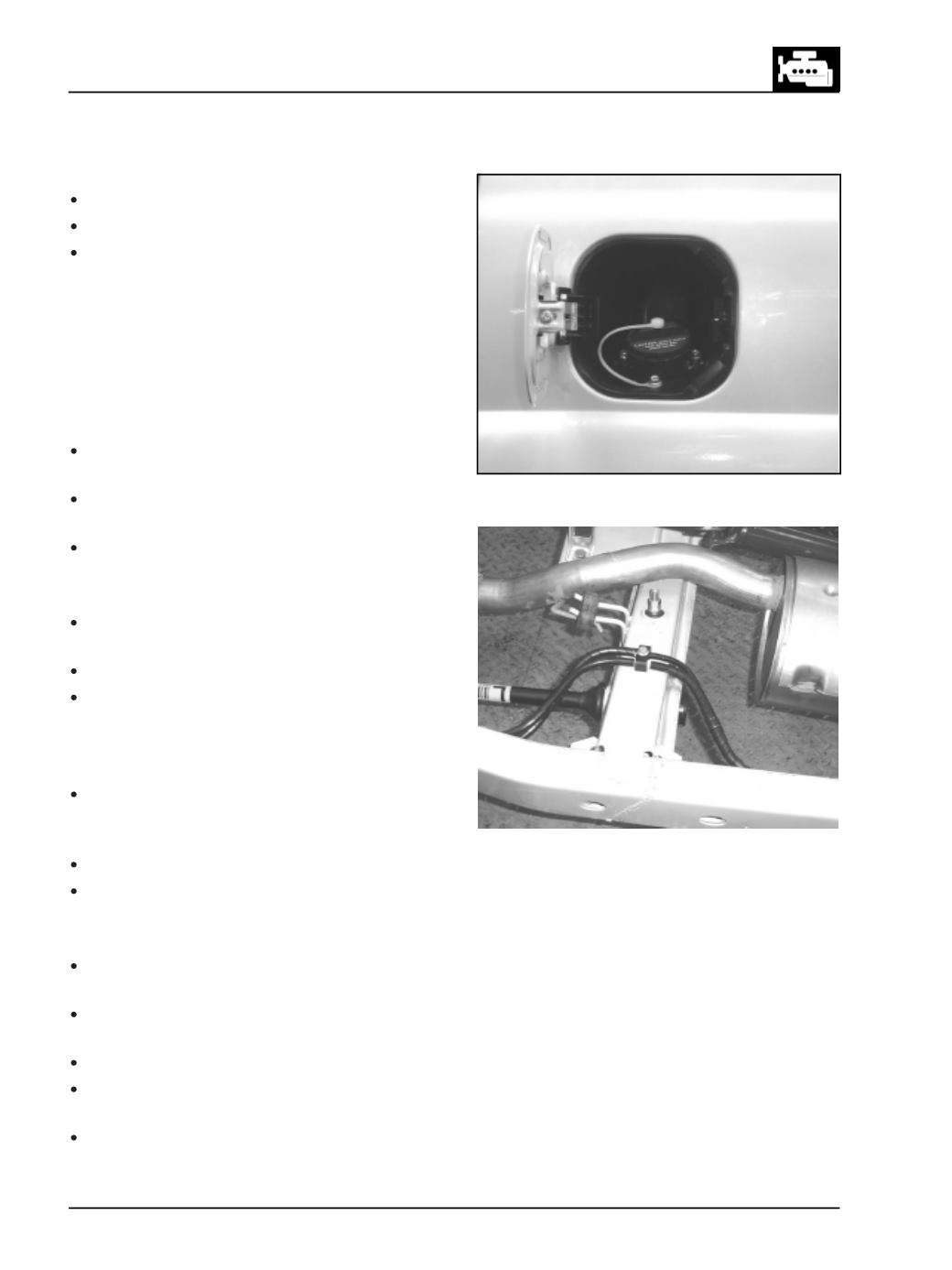
FUELFILLERCAP
(Fig.24)
The fuel tank filler neck has a vented cap.
Removal / Inspection
Remove fuel filler cap
Check ‘O’ ring for even filler neck imprint.
Check ‘O’ ring for any deterioration or any damage.
If found damaged replace fuel filler cap.
NOTE:
In case of fuel filler cap, replacement should be done
with correct cap. Otherwise, it may result in critical
malfunction of the system.
FUELHOSESANDFUELLINES
(Fig. 25)
Removal
In case of hose connection, loosen the clamp and
slide it back then twist the lines as you pull.
In case of Q.C. joints make use of release button
located on side of Q.C.
To remove fuel line hold this release button in
release condition and then move the fuel line
Caution :
When the fuel pipe and hoses are removed, use
waste cloth etc. to prevent spilling fuel.
Spilt fuel should always be wiped away.
After the fuel pipe & hose have been removed,
install blind caps to prevent entry of foreign
particles.
Inspection
Visually check all hoses and pipes connected via
clamp for leaks, loose connections, deterioration or
damage, hose crack etc. Replace if necessary.
Make sure that all clamps are secure.
If the pipe clamps are found deformed, bend or
broken replace with new one.
Assembly
Do not tighten the clamps excessively to avoid
damage to hoses.
Necessary care to be taken to connect hose to pipe
and clamp on hose.
Do not kink, twist hoses when they are routed.
In case of Q.C. joints push Q.C. mating port till you
hear ‘click’ noise.
After all of the fuel pipes and hoses have been
connected, start the engine and then confirm that
there is no fuel leakage fromany of the connections.