




 1231 / 1525

ENGINE
64
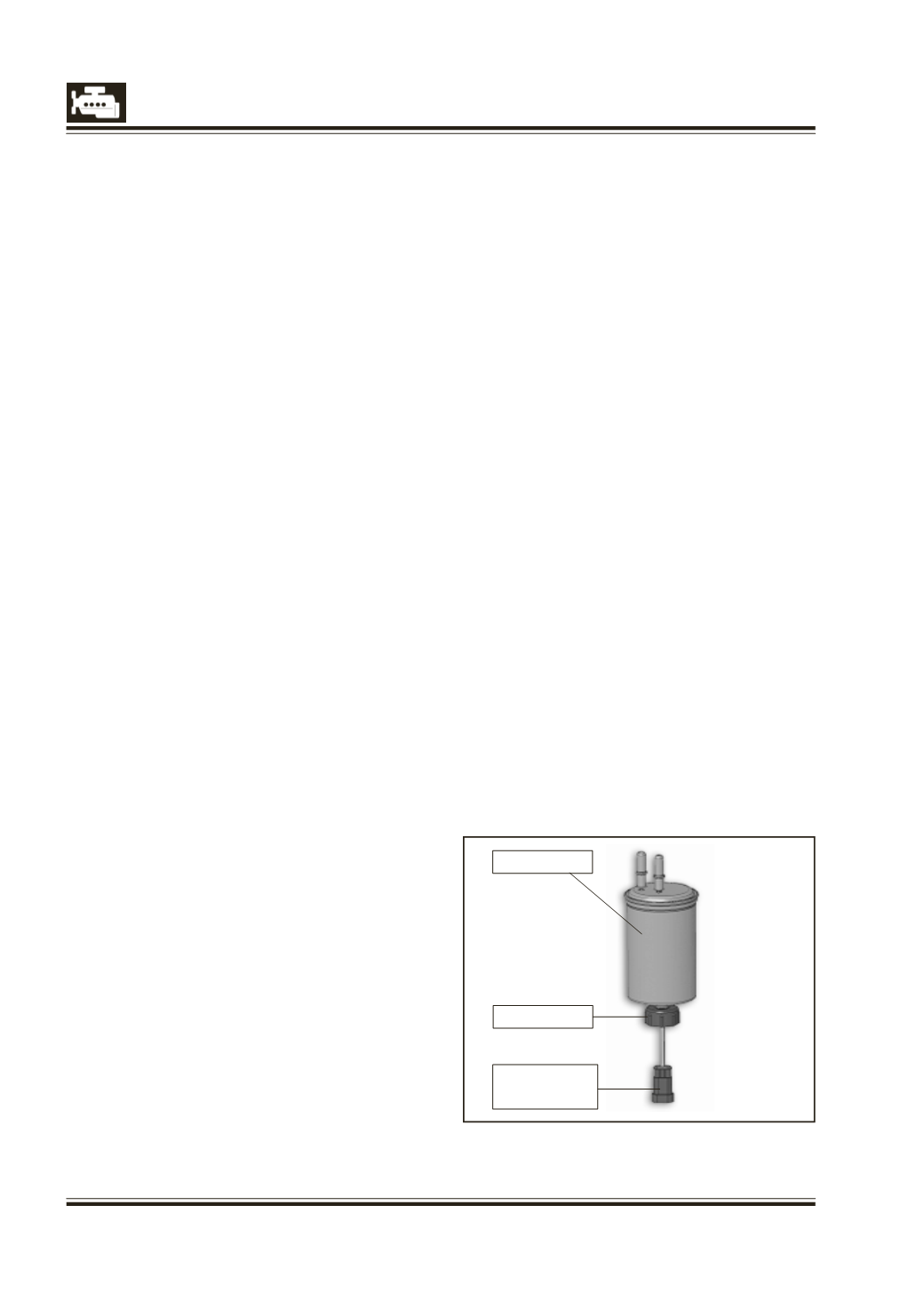
Sedimenter
Water sensor
Connector
Water sensor
7.
Tighten the rail mountings (28 Nm).
8.
Tighten the rail-end pipe nut (38 ± 2 Nm).
9.
Tighten the pump-end pipe nut (38 ± 2 Nm).
NOTE
: Apply the torque to the upper half of the
nut in order to avoid damaging it. The
order in which the pipe end nuts are
tightened (pump first, rail after) is critical!
2.
Discard all used protection plugs.
3.
Reconnect the IMV and Fuel Temperature
sensor electrical connectors.
4.
Refit the upper engine cover.
Precautions
:
l
HP pipes once removed are not to be refitted/
reused (One time use only).
l
HP pipes are not to be cleaned with
compressed air, oil or water.
l
Cleaning is adding dirt in the pipes and CR
system.
l
Should not be loosened for air bleeding
SEDIMENTER :
To remove water content from the Diesel fuel.
Product Description
l
Hydrophelic material
l
Integrated Water sensor
l
Fully sealed
l
Easy Drain
Function of Sedimenter
The water sedimenter is part of the filtration
system. It is used in the fuel supplying system in
order to reduce the water content in the fuel
provided to the FIE system. It gives additional water
volume storage. A water sensor is fitted to the
water sedimentor in order to:
1.
Warn the driver that the water sedimenter has
to be drained
2.
Coupling the water sedimenter to a filter, it
reduces the amount of water seen by the filter.
3 The sensor is fitted on the bottom part of the
filter where water separated from the fuel is
stored. When the water reaches a defined level
then the sensor output switches from high
state to low state. The sensor will be connected
to the dashboard to switch a lamp.
Life and service
Life
The water sedimenter life is 5 years or
1,50,000 kms whichever is reached sooner.