




 173 / 1904

ENGINE 273 MPFI
167
ENGINE
SYSTEM COMPONENTS
Radiator
The
radiator pipes
and
fins
are
aluminum
, the
tanks
are
plastic.
A radiator is a type of
heat exchanger.
It is designed
to transfer heat from the hot coolant that flows through
it to the air blown through it by the fan. The coolant
flows from the inlet to the outlet through many tubes
mounted in a parallel arrangement. The fins conduct
the heat from the tubes and transfer it to the air flow-
ing through the radiator.
Radiator (Pressure) Cap
The radiator cap actually increases the boiling point
of coolant. The boiling point of water increases when
the water is placed under pressure.
When the fluid in the cooling system heats up, it ex-
pands causing the pressure to build up. The cap is
only place where this pressure can escape, so the
setting of the spring on the cap determines the maxi-
mum pressure in the cooling system. The pressure
pushes the valve open, allowing coolant to escape from
the cooling system. This coolant flows through the
overflow tube into the bottom of the overflow tank. This
arrangement keeps air out of the system. When the
radiator cools back down, a vaccum is created in the
cooling system that pulls open another spring loaded
valve, sucking water back in from the bottom of the
overflow to replace the water that was expired.
Cooling Fan
The single-speed cooling fan is provided which
increases the heat dissipation capacity of the radiator.
Coolant Reservoir Tank (Auxiliary Tank) and
Radiator Over Flow Tube
In addition to supplying the circuit, the coolant reservoir
absorbs the variations in the volume of the coolant as
the temperature of the engine varies. The cooling
system make use of a plastic container, which is
connected to the overflow tube from the radiator. This
container provides extra storage space for the coolant
when it expands and is called the expansion, or
overflow tank.
Water Pump
This is a centrifugal pump secured to the engine crank-
case and driven directly by the balancer shaft. The
pump circulates the coolant whenever the engine is
running. The coolant leaving the pump flows first
through the engine block and cylinder head then into
the radiator and finally back to the pump.
Coolant Temperature Sensor
(For details Refer EMS Section )
Thermostat
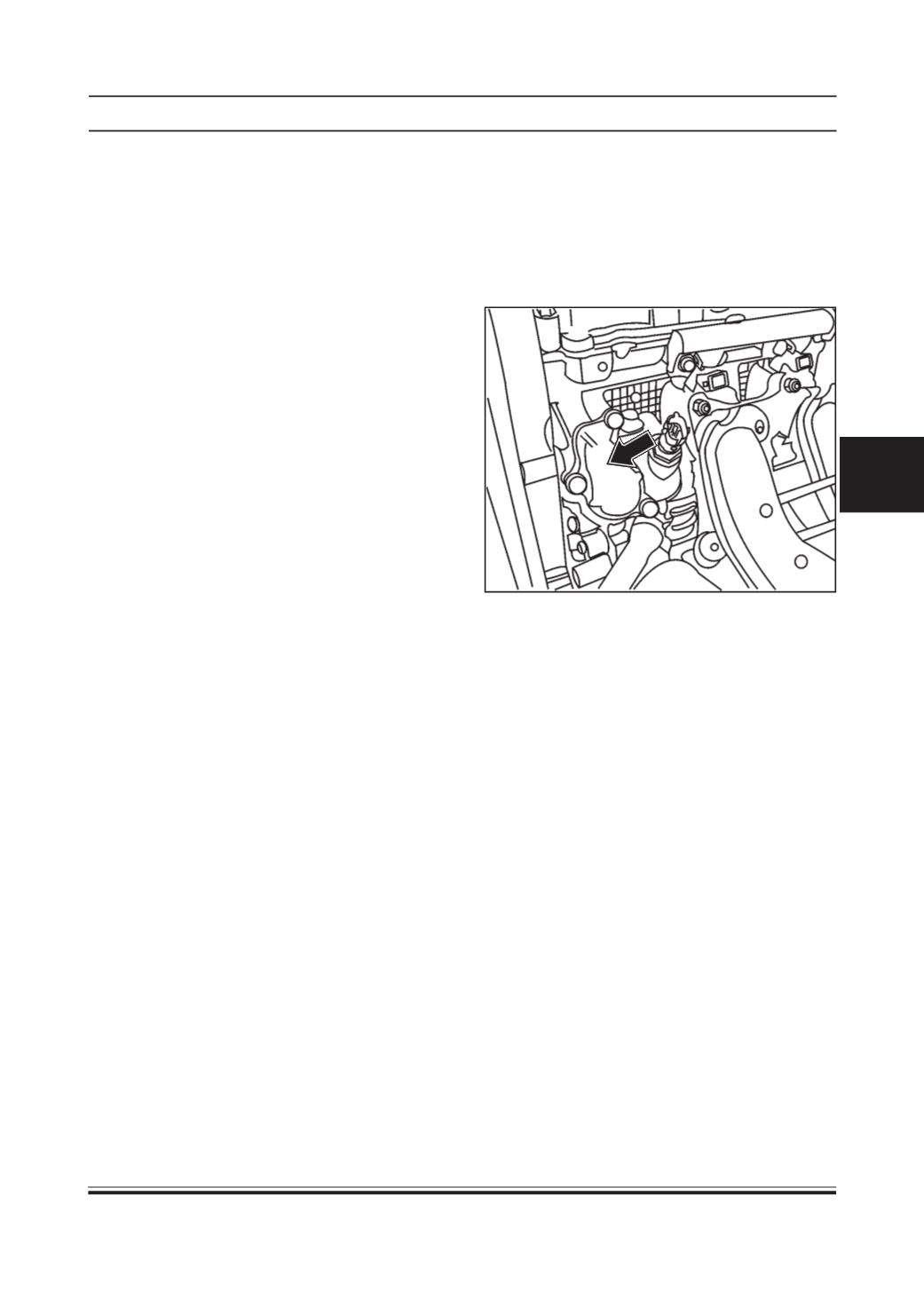
Location :
Thermostat ismounted on cylinder head and positioned
between coolant temperature sensor and timing cover.
Working principle of thermostat
:
•
For cool engine (immediately after starting):
Thermostat does not allow water to flow to radiator
(thermostat valve in closed position) instead water
flows to thermostat by-pass outlet to water pump.
Thus short circuiting of the radiator which helps for
attaining engine working temperature in very short
period.
•
As soon as the cooling water temperature reaches
opening temperature of thermostat (i.e. 82
0
C), the
thermostat valve start opening gradually and water
flow start to radiator. At the same time thermostat
by pass start closing gradually.
•
As the engine working temperature reaches
thermostat full open temperature ( i.e. 92
0
C),
thermostat valve opens fully and thermostat by-
pass valve closes completely. Under such condition
maximum quantity of engine cooling water flows
to radiator.
Satisfactory operation of thermostat is very much
essential for efficient engine operation and longer engine
life.