



 721 / 1575


ANTI LOCK BRAKING SYSTEM (ABS)
ANTI-LOCK
BRAKING
SYSTEM (ABS)
INTRODUCTION
In addition to the conventional hydraulic brake
system, an Anti-lock Braking System
(ABS)
incorporating Electronic Brake Distribution
(EBD)
is
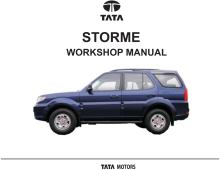
provided In TATA SAFARI STORME.
During a normal braking event EBD replaces the
Load Sensing Pressure Valve (LSPV) and limits
the level of braking force transmitted to the rear
wheels. The advantage of EBD over a LSPV is that
it can moderate the braking forces at the rear axle
depending upon the load condition and available
friction at the rear wheels.
During an emergency braking event the ABS
regulates the braking force for each individual
wheel. In doing so the system optimizes the level
of braking being achieved while maintaining a
stable, controllable vehicle. The EBD only acts on
the rear wheels, whereas the ABS is able to
control each wheel individually and can facilitate
pressure hold, release and increase cycles.
Both the EBD and the ABS functions work by
continuously monitoring and comparing the four
individual wheel speeds and reacts when a wheel
is detected as loosing grip with the road surface,
which happens when a wheel tends to lock during
braking.
The ABS is designed to be incorporated into the
circuits of the foundation brake system and will not
prevent the normal hydraulic operation of the
brakes in the event of an ABS failure.