




 161 / 745

KRYOTEC ENGINE
153
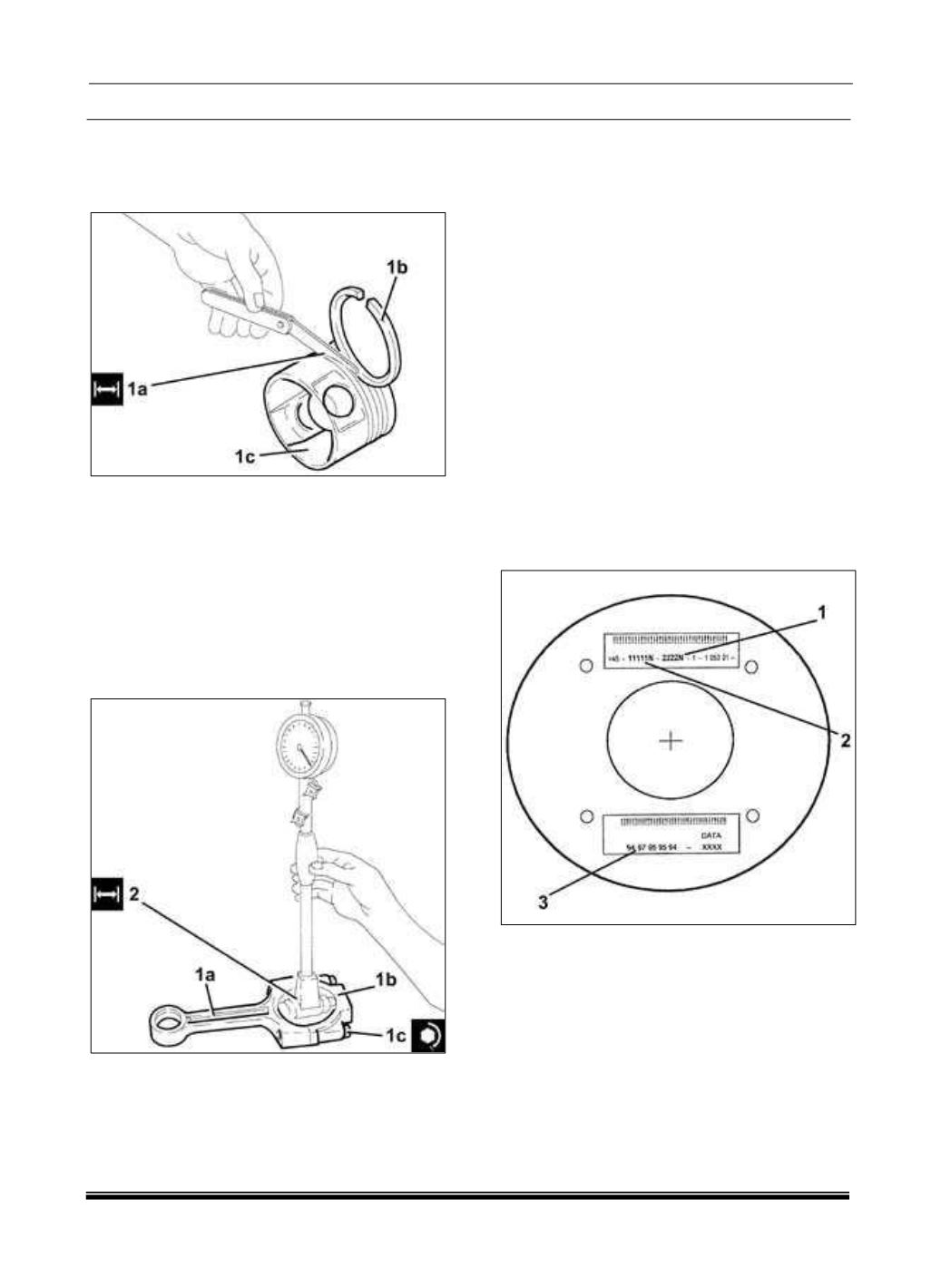
33. Check that the axial clearance (1a) between the
first and second ring (1b) and ring groove on the
piston (1c) is within specification (Refer to 09 -
Engine/ Specifications).
34. Check that the axial clearance between the
scraper ring and its ring groove on the piston is
within
specification
(Refer
to
09
-
Engine/Specifications).
35. Install the connecting rod caps (1b) to the
connecting rods (1a) and tighten the bolts (1c) to
the proper (Torque Specifications).
36. Verify that the diameter of the connecting rod
big end (2) is within specification (Refer to 09 -
Engine/ Specifications).
37. Reassemble the piston and connecting rod
assemblies (Refer to 09 - Engine/Engine
Block/ROD, Piston and Connecting/Disassembly
and Assembly).
38. Inspect meshing teeth indications on the ring
gear. If unusually worn, replace it.
39. Install the engine block on the 1871000000
maintenance stand.
40. Install the piston oil cooling jets in the engine
block and tighten the screws to the proper (Torque
Specifications).
41. Place the thrust bearings in their seats on the
third main bearing journal.
NOTE
A new crankshaft is provided without bearing shells
but is identified with journal and connecting rod
dimensional class values in order to choose the
bearing shells to assemble with "normal" journal
and connecting rod bearing clearances.
For the selection of main journal bearing shells the
numeric code is printed on the crankshaft adjacent
to the pins.
Use only the codes related to the legend, all other
codes present on the tone wheel must not be used.
42. The following is an example of a class
identification of the main journals.
• Crank pin identification (1): The number on the left
refers to the first pin on the timing side.
The "N" at the end is a code not significant for
4-cylinder engines.
• Crank journal identification (2): the first number
on the left refers to the first journal on the timing
side. The "N" at the end is a code not significant for
4-cylinder engines.
• Number blocks (if any), in groups of two digits (3),
indicate the size (thousandth part) of the main