




 710 / 1006

ELECTRONIC STABILITY CONTROL INTEGRATED PROGRAM (ESCi)
13
1.4 ON VEHICLE REPAIRS
NOTE
Refer ABS “REPAIRS” sections for the removal of
ECU, Wheel speed sensors and HCU.
STEERING ANGLE SENSOR REMOVAL
1. Switch of the Ignition and disconnect the
battery.
2. Remove the steering wheel and its lower
cover.
(For procedures refer steering section).
3. Remove the upper and lower nacelle.
(For
procedure refer combi-switch removal in
Electrical section).
4. Disconnect all electrical connections to the
clock spring and Steering Angle Sensor.
5. Remove four mounting screws of clock spring
and take out the clock spring.
(Refer SRS
section).
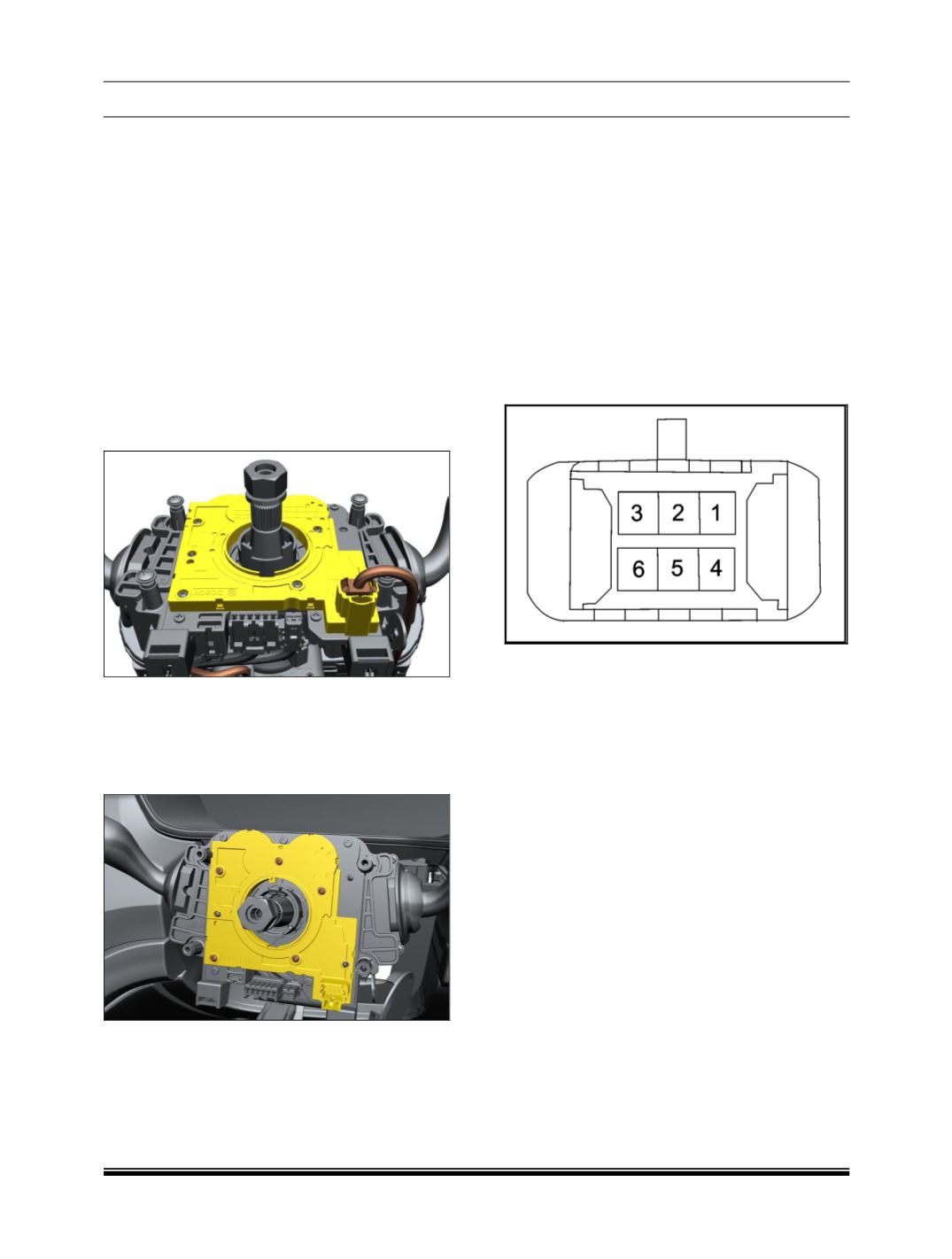
6. Loosen and remove five mounting screws of
steering angle sensor.
7. Take out steering angle sensor from its
locators
.
INSPECTION
Inspect the steering angle sensor and replace
found in following conditions
If the connecter is damaged, scratched or
cracked.
If the sensor has been dropped.
If surface of the sensor is cracked, dented or
chipped off.
ELECTRICAL SUPPLY INSPECTION
1.
Disconnect the SAS electrical connector and
measure the voltage between pins 3 and 4 on
harness side connecter with Ignition ON.
2.
The voltage should be approximately 12V
(battery voltage).
If not then check the wiring
harness.
NOTE
SAS output can be checked using the diagnostic
tool in the SAS calibration option (Start Test) and
then clicking on ‘Steering Wheel Angle Position’.
REFITMENT
For refitment follow the reverse procedure of
removal.
First locate the locators.
Tighten the mounting screws to a torque of
0.03 Kg-m.
CAUTION
The steering angle sensor should be
calibrated when it is removed and refitted. If
this is not done the system may malfunction.
Refer ABS Diagnostic tool user manual for
details.
If proper locking between clock spring and
SAS is not there ESCi might log faults.