




 720 / 1232

SUSPENSION
41
6.10.6 BALANCING WHEELS:
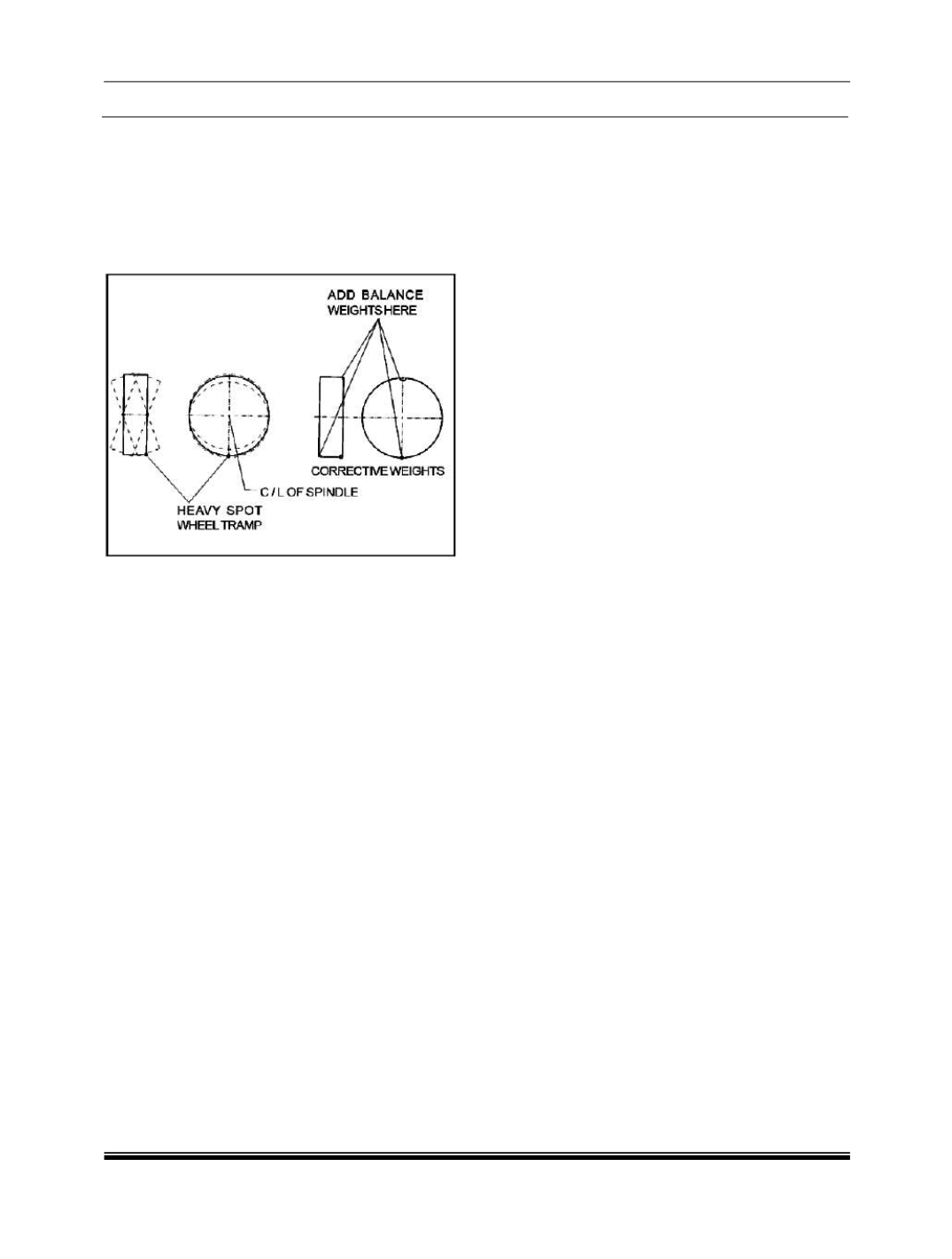
Dynamic balance, as shown in is the equal
distribution of weight of each side of the wheel
center line so that when the tyre spins there is no
tendency for the assemble to move from side to
side. Wheels that are dynamically unbalanced
may cause shimmy.
GENERAL BALANCE PROCEDURES:
Deposits of mud, etc. must be cleaned from inside
of rim.
WARNING:
Remove stones from tread, clean the tyre and rim
before balancing for safety to achieve better
results.
Each tyre should be inspected for any damage,
and then balanced according to equipment
manufacturer’s recommendation.
OFF-VEHICLE BALANCING:
Most electronic off vehicle balancers are more
accurate than the on-vehicle spin balancers. They
are easy to use and give a dynamic (two plane)
balance. Although they do not correct for drum or
disc unbalance as does on vehicle spin balancing,
this is overcome by their accuracy.
NOTES:-
1. Permissible imbalance for assembly tyre with
rim, 95 gmcm Max.
2. Total balance weight should be within 140 gm
on each side.
3. Do not use more than one balance weight on
one side.
6.10.7. TYRE CARE:
Repairing a Tyre:
Mark the tyre position (if original color dot mark is
not visible) with respect to valve stem hole to
ensure that the tyre is refitted in the original
location on the wheel rim.
Ensure that balancing weights are not disturbed
during removal of tyres.
Check the balance weight prior to the removal of
the tyre. If found loose, mark its location on the
rim & refit properly.
Balance the wheel after every dismantling and
assembly of tyre on the wheel rim.
While fitting wheels on the vehicle ensure that
wheel pins are free from dust, scratches, dirt,
dents, etc.
NOTE:
Do not apply any oil on the wheel pins. Wipe
off
the oil if present.
SPECIAL CARE FOR TUBELESS TYRES:
1. While removing tyre from wheel rim and
mounting it back on wheel rim, take
precautions not to damage tyre bead. Use tyre
removal and assembly machines. Damage or
cut on tyre bead may cause gradual loss of air
and deflation of tyre.
2. Do not scratch inside of tubeless tyre with
metallic or sharp object. Tubeless tyres are
coated with impermeable layer of rubber from
inside which holds the air inside the tyre.
Removal of this layer due to scratching may
cause gradual loss of air and deflation.
3. If wheel rim gets damaged in service, get the
wheel rim repaired/replaced immediately.
Running the vehicle with damaged rim may
cause deflation of tyre and subsequent
dislodging of tyre from rim.
4. Maintain recommended inflation pressure.
Over- inflation, in particular, may cause
puncture or bursting of tyre.
NOTE:
Life and wear pattern of tyres depends on
various
parameters like tyre pressure, wheel
alignment,
wheel balancing, tyre rotation, etc. It also
largely
depends on vehicle speed, load carried,
usage,
driving habits, road conditions, tyre quality,
etc. In
case fault is suspected to be due to poor
quality of
tyres, the same may be taken up with
concerned
tyre manufacture