




 719 / 1232

SUSPENSION
40
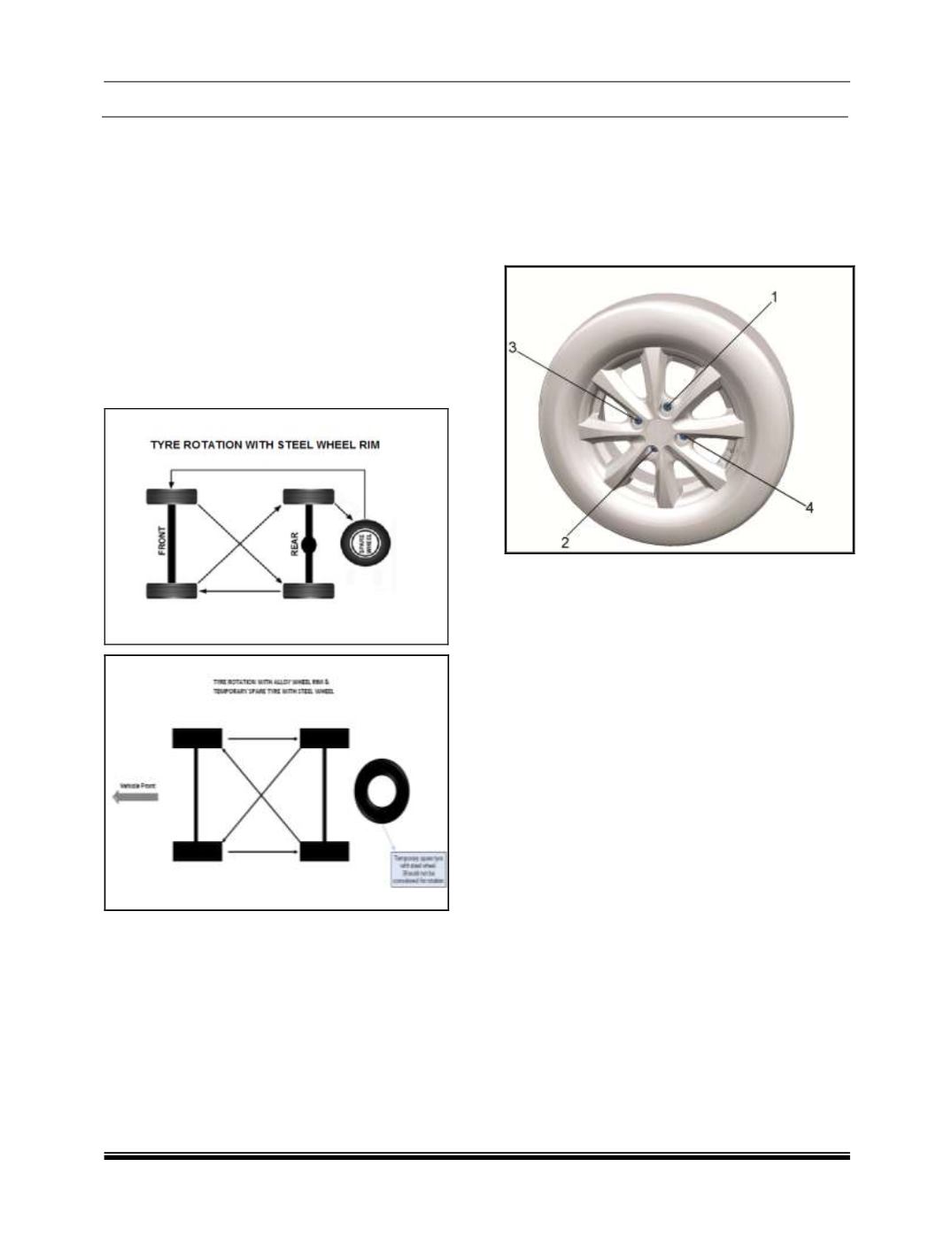
6.10.3 TYRE ROTATION:
To equalize wear, rotate tyres according to
periodically. Set tyre pressure. Rotate tyres
according to service schedule or earlier
depending on the operating condition of car and
wear pattern.
NOTE:
Due to their design, radial tyres tend to wear
faster in
the shoulder area, particularly in front
positions.
This makes regular rotation necessary. Do not
use spare steel wheel rim for tyre rotation, when
vehicle is fitted with alloy wheel rims.
6.10.4 WHEEL REMOVAL:
1. Loosen wheel bolts (M12 x 1.5) by
approximately 180 deg (half a rotation)
2. Lift the vehicle using two post lift.
3. Remove bolts and then wheel. Wheel bolts
must be tightened in sequence given in Fig
and to proper torque to avoid bending wheel or
brake disc
.
NOTE:
1.
Clean all parts and remove any build up of
corrosion of any parts, before installation of the
wheel.
2. Never heat any part to loosen tight wheel, it
will shorten life of wheel and bearings.
6.10.5 TYRE MOUNTING AND DEMOUNTING:
Use a tyre changing machine to mount or
demount tyres. Follow equipment manufacturer’s
instructions.
Do not use hand tools or tyre irons alone to
change tyres as they may damage tyre beads or
wheel rim. Rim bead seats should be cleaned with
a wire brush or coarse steel wool to remove
lubricants, old rubber, and light rust.
After mounting, inflate to specified pressure so
that beads are completely sealed.
WARNING:
Do not stand over tyre when inflating. Bead may
break when bead snaps over rim’s safety hump
and cause serious personal injury.
Do not exceed specified pressure when inflating.
If specified pressure will not seat beads, deflate,
relubricate and reinflate.
Install valve core and inflate to proper pressure.