




 961 / 1034

HVAC
48
B. FLUSHING OF AC SYSTEM
Whenever there is an AC compressor failure the AC
system should be flushed. This is done in order to
remove the debris of the AC compressor that might
have circulated through the system.
The compressor used is piston type compressor.
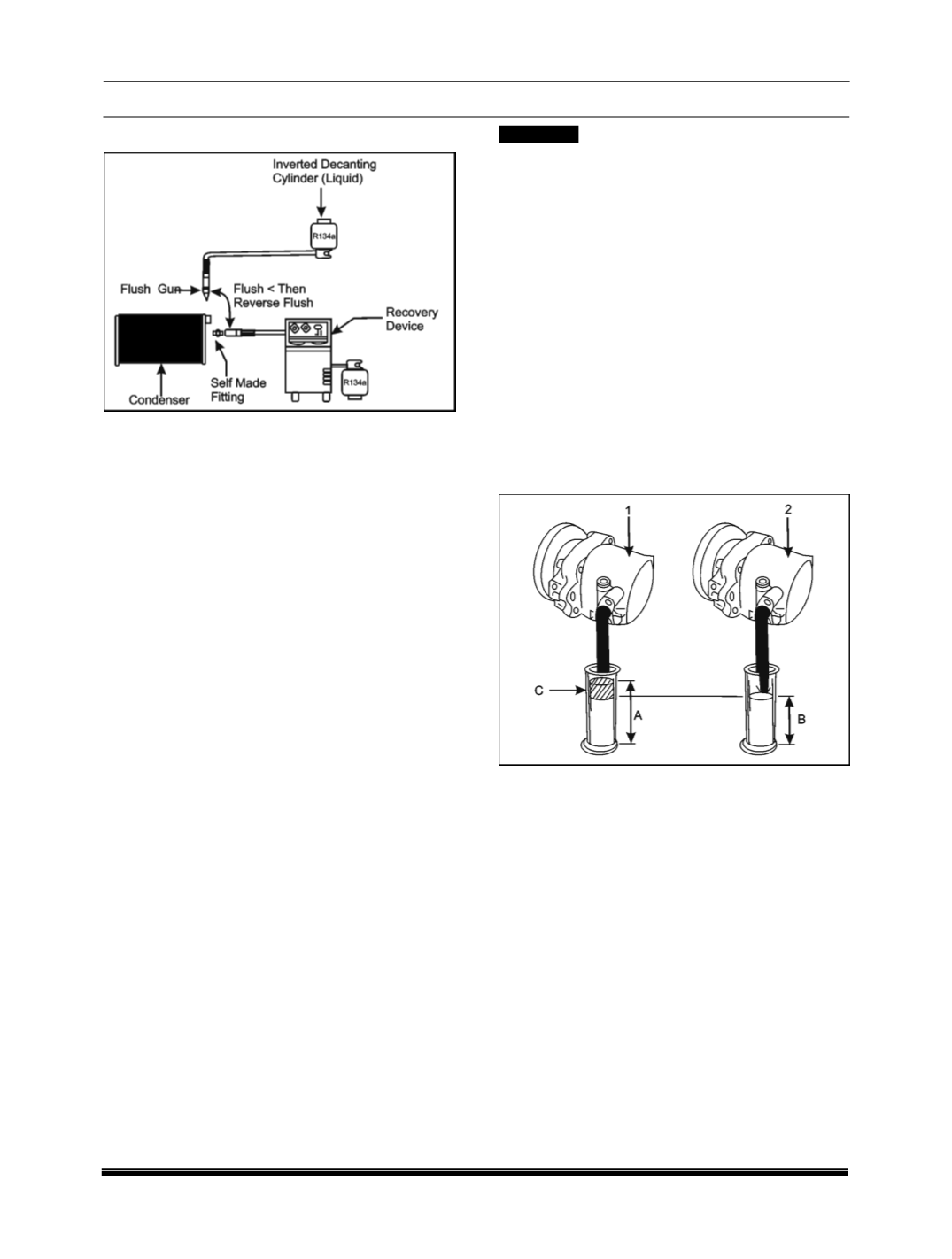
Flushing can be either done using an inverted
decanting R134a cylinder filled with refrigerant. In
some recovering devices a flushing port is provided.
NOTE
If a compressor is replaced without flushing,
debris would circulate throughout the system.
Hence all the components should be flushed
Flushing also removes excess oil from the
system. If you suspect the system contains too
much oil, flushing is a way to start fresh so you
can establish the correct quantity of refrigerant oil
in the system.
Following points should be noted while
performing a flushing process
1. Flush individual components.
2. Self made flushing fitments will be required as AC
system component fittings all differ in size, shape
and thread size.
3. When replacing air conditioning parts with new
ones, it is necessary to replenish oil by
approximately the same amount which was left in
each part.
4. Reverse flush the components.
5. Do not flush through a compressor otherwise
possible internal damage could occur.
6. Recycle the refrigerant recovered during flushing;
the recovery device will remove contaminants
through a filtration system.
! CAUTION
Be sure to use specified compressor oil only
.
C. REPLENISHING COMPRESSOR OIL
(a) While re-installing the Original Compressor
1. Drain and measure the refrigerant oil contained in
the compressor.
2. Charge oil through the discharge port of the
compressor with the same amount of new
refrigerant oil.
NOTE
If the amount of oil in the original compressor was
not checked, then approximately 70±10 ml. of new
oil should be added to the compressor being
installed. (This is assuming the compressor being
installed has first been drained).
(b) While installing a New Compressor
A new compressor (1) comes with a certain amount
of oil (A) sealed in it. When replacing the old
compressor (2) with a new one; an amount of oil (C)
as calculated below should be drained from the new
compressor.
“C” = “A” -“B”
“C” = Amount of oil to be drained
“A” = Amount of oil sealed in a new compressor
“B” = Amount of oil remaining in old compressor (2)
NOTE
As it is necessary to replenish oil by approximately
the same amount, which is remaining in old
compressor, draining of additional oil from the New
Compressor becomes necessary.