




 1310 / 1863

ELECTRICAL
8
8.3
CHARGING & STARTING SYSTEM
8.3.1 BATTERY
FUNCTION:
The battery has three major functions in the elec-
trical system:
It is a source of electrical energy for cranking
the engine.
Once the engine is cranked, it is getting
charged from alternator.
Also it provides electrical energy to the vehicle
loads whenever the alternator output current is
not able to meet the demand or when the alter-
nator is fails.
SPECIFICATION:
12V, 75AH and 80 A/H,
Specific Gravity: 1.27 ± 0.01
Items
Specification
Type
75D31L
95D31L
Cold cranking am-
perage [at -18 C(-
0.4 F)]
650A
800 A
Reserve capacity
140 Mins
160 Mins
Specific gravity [at
20 C(68 F)]
1.27 ± 0.01 1.280 ± 0.01
NOTE
•
COLD CRANKING AMPERAGE is the amper-
age a battery can deliver for 30 seconds and
maintain a terminal voltage of 7.2V or greater at
a specified temperature.
•
RESERVE CAPACITY RATING is amount of
time a battery can deliver 25A and maintain a
mini- mum terminal voltage of 10.5V at 26.7
C(80.1 F).
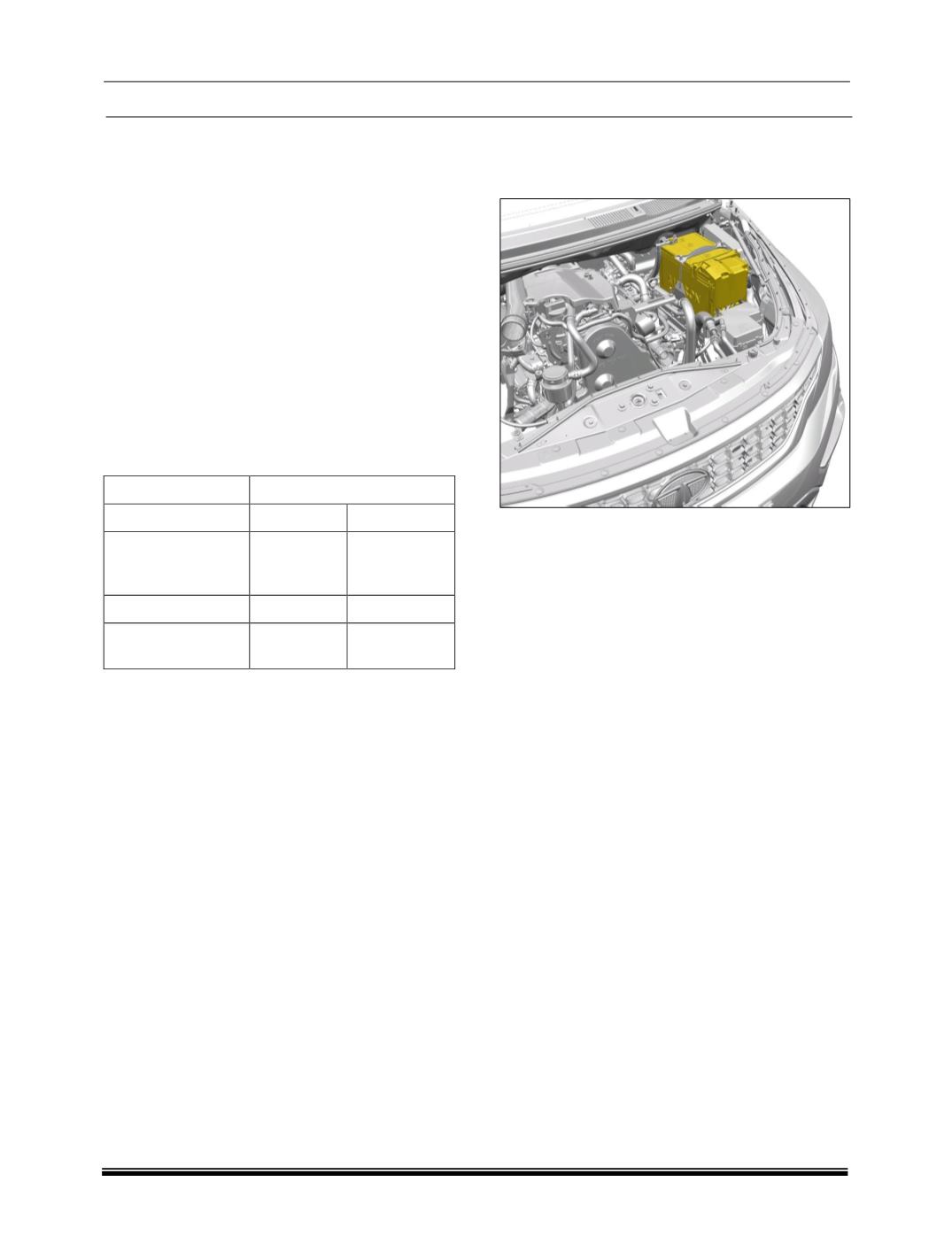
LOCATION:
Battery is located in the left side of the engine
compartment on panel front wheel arch inner LH.
BATTERY DO’S AND DON’TS:
DO'S:
Think Safety First.
Do regular inspection and maintenance espe-
cially in hot weather.
Recharge batteries immediately after dis-
charge.
DON'TS:
Don't add acid.
Don't store batteries with tools and other
equipment haphazardly placed.
Don't disconnect battery cables while the en-
gine is running (battery acts as a stabilizer).
Don't put off recharging batteries.
Don't add tap water as it may contain minerals
that will contaminate the electrolyte.
Doesn’t discharge a battery any deeper than
you possibly have to?
Don't mix different size and types of batteries.
NOTE
Don't use the Vehicle Electrical loads for more than
30 minutes when Engine is in OFF condition.