



 818 / 1526

37
AIRCONDITIONING
TROUBLE SHOOTING
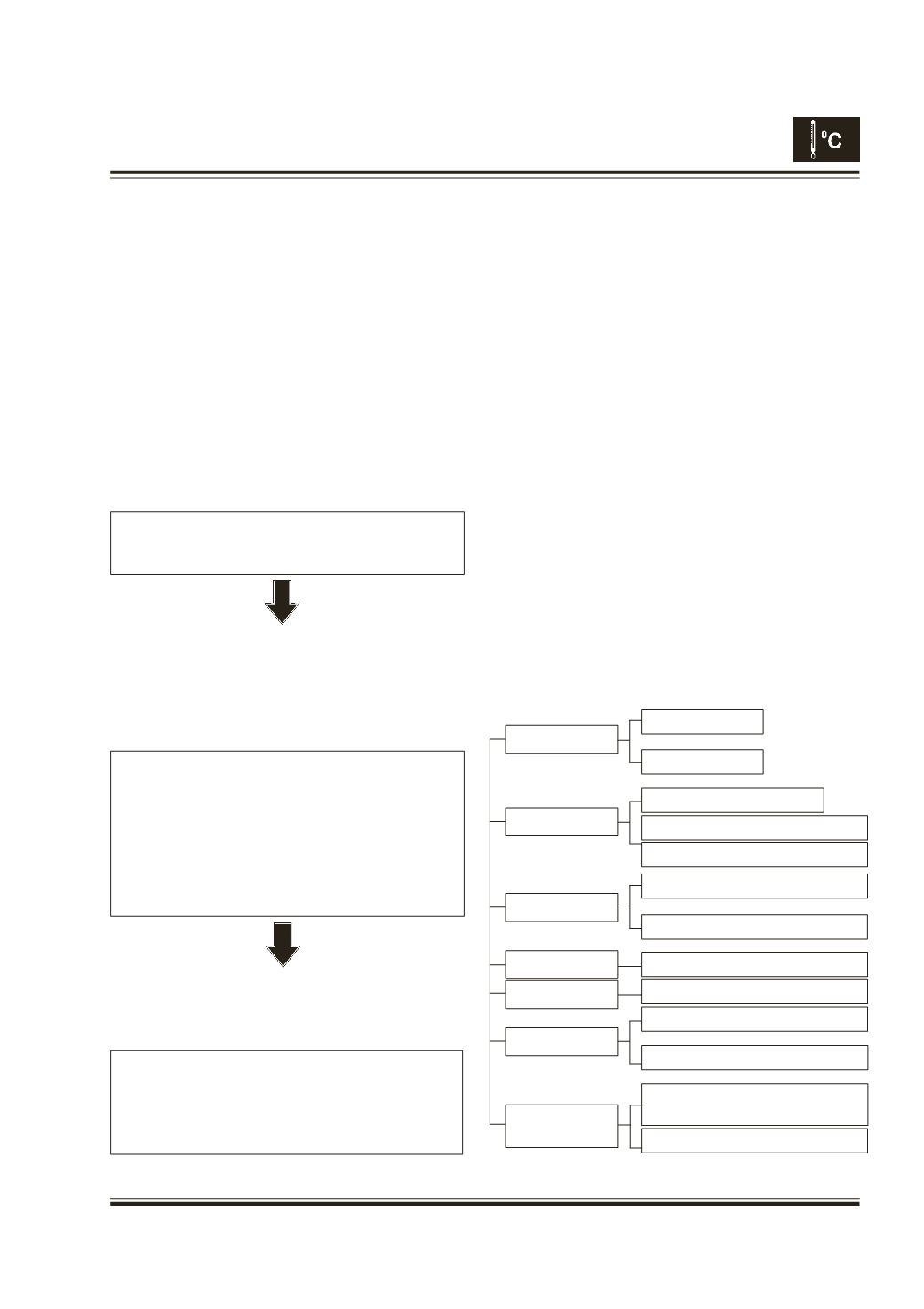
In order to find the causes of troubles as quickly as
possible, it is necessary to conduct troubleshooting
using a rational method and procedure.
Before starting troubleshooting, first confirm the
symptoms as follows:
Start the engine and keep it idling. Then turn the
blower switch and A/C switch on, and check the A/
C working conditions.
Check the blower operation, the magnetic clutch
operation and A/C outlet air temperature.
After confirmation of symptoms, conduct the
following rational method of troubleshooting.
VISUAL AND AUDIO INSPECTION
This can detect simple causes of troubles.
Preparation:
1) Install the manifold gauge to the refrigeration
cycle.
2) Prepare a multimeter and gas leak detector.
CHECK MANIFOLD GAUGE PRESSURE
Inspect the refrigeration cycle pressures -
Low and High Side
Standards:
Low side - - 1.5 - 2.5 kg/cm (0.15 - 0.25 MPa)
High side - -14 -16 kg/cm (1.37- 1.57 MPa)
After the pressures to be okay, the remaining causes
are on the electrical circuit and components.
TROUBLESHOOT ELECTRICAL CIRCUIT
To make easy, first star t the blower circuit
troubleshooting and continue to the cooler circuit
troubleshooting.
a. Visual and Audio Inspection
The simplest way to detect troubles is by looking and
listening.
1. Is the drive belt loose?
2. Are the condenser fins covered with dirt and dust?
In this case, the condenser cooling effect will be
greatly reduced. As a result, the cooling capacity also
will decrease.
3. Is the air filter clogged?
A clogged air filter will reduce the air flow and’lower
the cooling capacity.
4. Can oil stains be seen in the refrigeration cycle
connections and joints?
A place that shows an oil stain indicates that the
refrigerant is leaking from that place together with
compressor oil.
5. Check the quantity of refrigerant at the sight
glass.
6. Abnormal noise
Shaft
Compressor
Magnetic clutch
Cylinder head
Worn or damage bearing
Contact between stator and rotor
Loose mounting screw on stator
Upside down blower motor
Blower motor
Crank pulley
V- Belt
Loose blower mounting
Loose Pulley
Improper tension
Wrong mounting
Idle Pulley.
Worn or damage bearing
Wrong fastening or mounting
of bracket or clamp
Wrong clearance
Other piping
parts