



 549 / 1525

21
ANTI-LOCK BRAKES
ABS
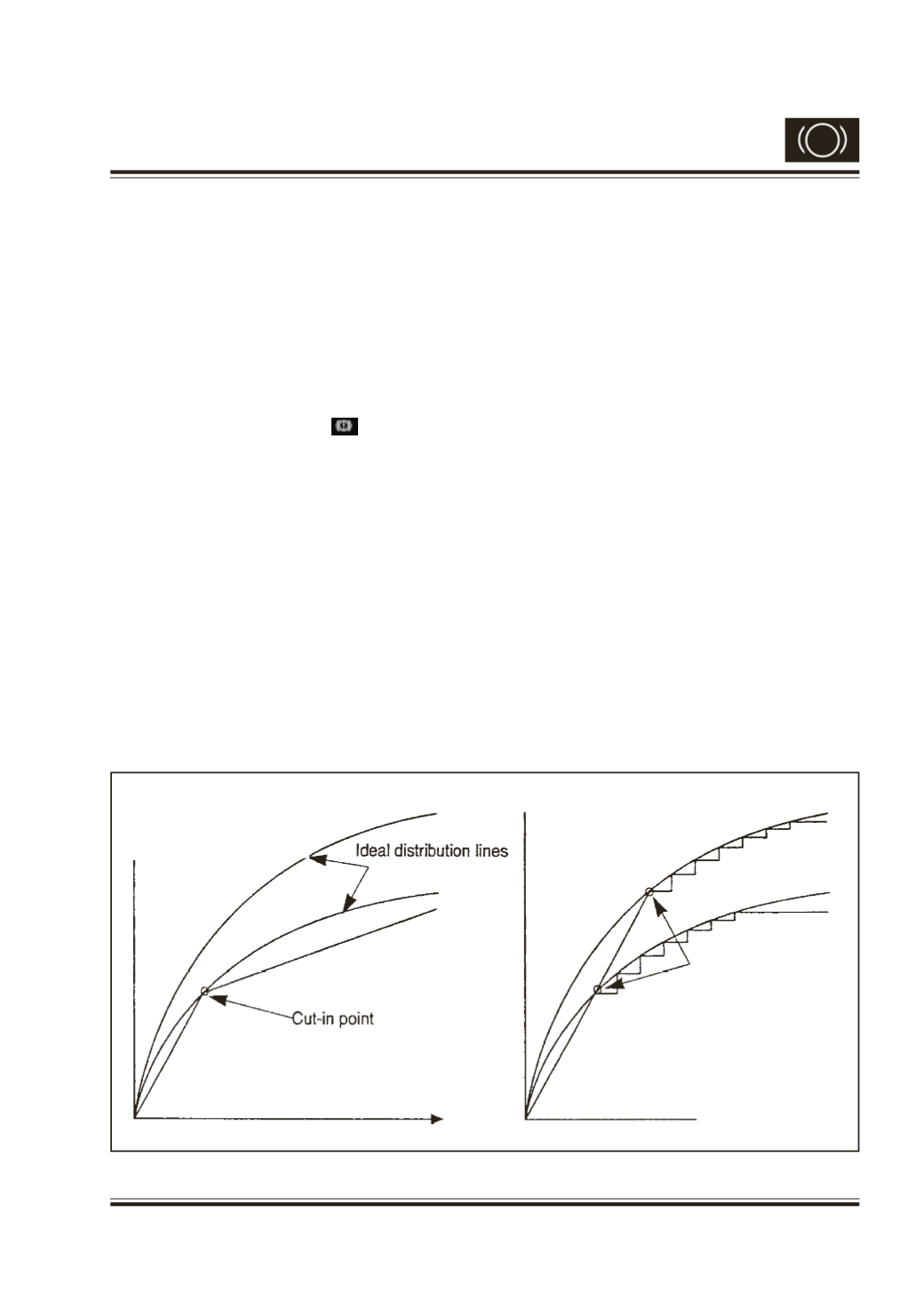
Fig. 14
6. ELECTRONIC BRAKE DISTRIBUTION (EBD)
EBD substitutes load conscious reducing valve. Its
function is not determined by the brake pressure or
the weight transfer but by the amount of wheel slip.
EBD function is an additional program to the
conventional ABS program. It reduces the pressure
at the rear depending upon the wheel slip and
pressure reduction is carried out after certain
pressure-maintaining phase. It maintains the brake
pressure to both the rear wheels same. If any of the
rear wheels is still over braked, ABS becomes
operational. EBD warning lamp is turned on in
case of error in the EBD system. EBD failure does
not necessarily mean ABS failure.
EBD (Electronic Brake-force Distribution) Control
Necessity
1.
During braking, whenever the rear axle wheels
lock before the front axle wheels, the vehicle
will loose its control & it may start to spin. This
is because, braking is always associated with
a certain weight transfer from rear axle onto
the front axle wheels. Due to this drift of the
vehicle weight, there will be lesser normal force
acting on the rear axle when compared to the
front axle. Due to lesser normal force, rear axle
wheels can support lesser brake pressure. In
a passenger vehicle, as a counter measure to
this problem, the brake circuit for the rear axle
will be fitted with LCRV (Load conscious
regulating valve). This LCRV avoids the locking
of rear axle wheels before the front axle wheels.
2.
But LCRV is a mechanical vehicle component
and it cannot result in ideal brake force
distribution for the rear axle wheels. LCRV
distributes rear brake force according to vehicle
load to a certain degree.
3.
The brake force required for optimum braking
may be different for each wheel. This is
depending on the road surface, the condition
of the friction material of brake lining/ pad &
also the condition of the tyres (old/ new). With
LCRV, when the same brake force reaches both
the rear axle wheels, ideal braking cannot be
achieved by the rear axle wheels.
4.
When the LCRV fails in any vehicle, the driver
has no chance of knowing about this failure.
Under this condition, when braked, the vehicle
may deviate/ spin (depending on the brake force
applied by the driver) from the intended driving
direction.
5.
In the Safari vehicle with ABS system, the ECU
incorporates a special function by name EBD
(Electronic Brake force Distribution). With this
EBD, the conventional mechanical LCRV has
Outlet Pressure
Inlet Pressure (bar)
Inlet Pressure
EBD start point
Vehicle equipped with LCRV
Vehicle equipped with EBD system
Outlet Pressure
Laden
Unladen
Unladen
Laden