



 476 / 1904

470
WHEELS AND TYRES
MAINTENANCE AND INSPECTION OF TYRE/
WHEELASSEMBLY
(a) Visual inspection
Visually inspect the tyre and replace the same if any
of the following defects are found :
1. Bumps or bulges in the tread or the side of the
tyre.
2. Cuts, splits or cracks.
3. Excessive tread wear or non uniform tyre wear.
(b) Inflation of tyres
Check tyre pressures when tyres are cold.
Correct tyre pressure is necessary to give the best
combination of riding comfort, handling, tyre life and
better fuel efficiency.
It is normal for tyre pressure to increase when the
tyres become hot during driving. Do not bleed or
reduce tyre pressure after driving. Bleeding reduces
the “Cold Inflation Pressure”.
Recommended tyre pressures are :
Front: 28 psi / 190 kPa
Rear: 30 psi / 230 kPa
Spare: 30 psi / 230 kPa
WARNING :
Driving with uneven pressures on different sides may
reduce handling performances during certain driving
maneuvers. The balance of the vehicle is also upset
and tyre wear will be uneven.
Higher than recommended pressure (Over -
inflation) can cause :
1. Bumpy and harsh ride
2. Tyre brushing or carcass damage
3. Rapid tread wear at the center of tyre
Unequal pressure on same axle can cause :
1. Uneven braking
2. Vehicle pull
3. Reduced handling
4. Swerve on acceleration
Lower than recommended pressure (Under -
inflation) can cause :
1. Tyre squeals on turns.
2. Hard steering
3. Rapid and uneven wear on the edges of the tread
4. Tyre rim bruises and rupture
5. Tyre cord breakage
6. High tyre temperature
7. Reduced handling
8. High fuel consumption
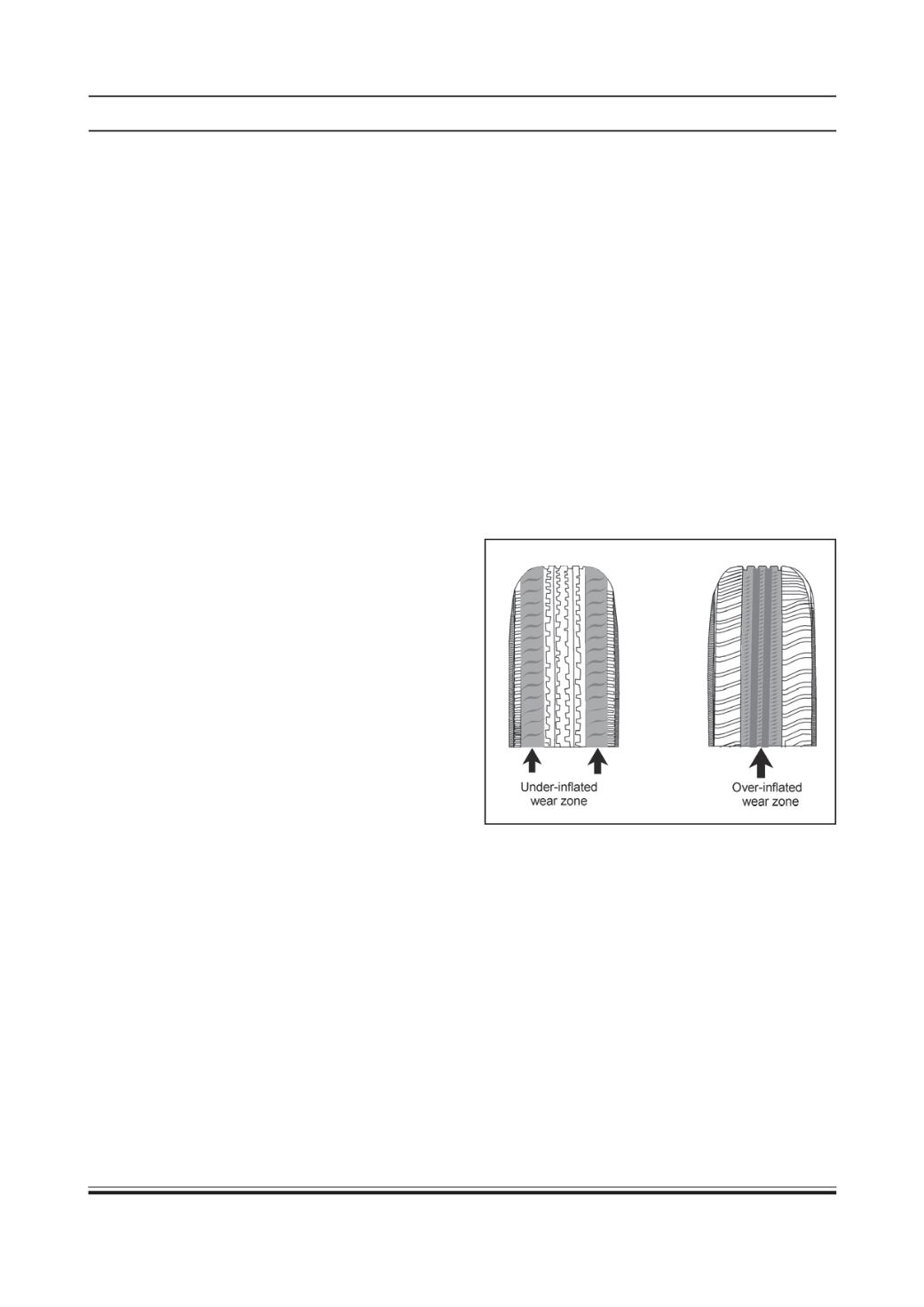
Excessive shoulder wear can indicate under inflation
while wear to the centre of the tread can mean over
inflation.
Both - over inflation and under inflation tread wear
pattern are shown below.