



 75 / 745

KRYOTEC ENGINE
67
16.
Lugging Engine
Lugging is running the engine at a lower RPM in a
condition where a higher RPM (more
power/torque) should be implemented.
Especially susceptible on vehicles equipped with
a manual transmission. This driving habit causes
more stress loading on the piston and can lead to
increases in engine oil consumption.
17.
Turbocharged Engines
There is a possibility for higher crankcase
pressure (as compared to naturally aspirated
engines) which is normal for turbocharged
engines. This condition causes varying amounts
of engine oil to enter the intake manifold, charge
air cooler and associated plumbing to and from
the charge air cooler, also a leaking turbocharger
seal will draw oil into the combustion chamber
where it will burn (blue smoke from tail pipe may
be present) and form carbon deposits which
contribute to further oil consumption as they
interfere with proper engine function.
18.
Restricted Air Intake
Excessive restriction in the air intake system will
increase engine vacuum and can increase oil
consumption, an extremely dirty air filter would be
one example of this situation.
B. REGULAR MAINTENANCE
i. ENGINE OIL AND FILTER CHANGE
DESCRIPTION
Change the engine oil and filter as per service
schedule. If the vehicle is operated in
sandy/dusty conditions, idled extensively, or
subject to frequent short distance driving, change
the engine oil and filter more frequently.
CAUTION
Always use the recommended grade and quality
of motor oil.
Never use reclaimed oil as this may not protect
the engine components properly.
NOTE
To protect the environment, always recycle or
dispose of oil at the proper outlets.
PROCEDURE
WARNING
Engine oil will be hot. Contact with hot engine oil
will cause bums. Use care when handling hot
engine oil.
1. Drive the vehicle so the engine oil is at
normal operating temperature.
2. Raise the vehicle off the ground to access the
oil sump drain plug and oil filter.
Raise the vehicle with a lift post.
Park the vehicle on flat, level surface and
engage the parking brake. Place chocks at the
rear wheels and raise the front of the vehicle
with a floor jack.
3. Raise the vehicle bonnet/hood and remove
the oil fill cap.
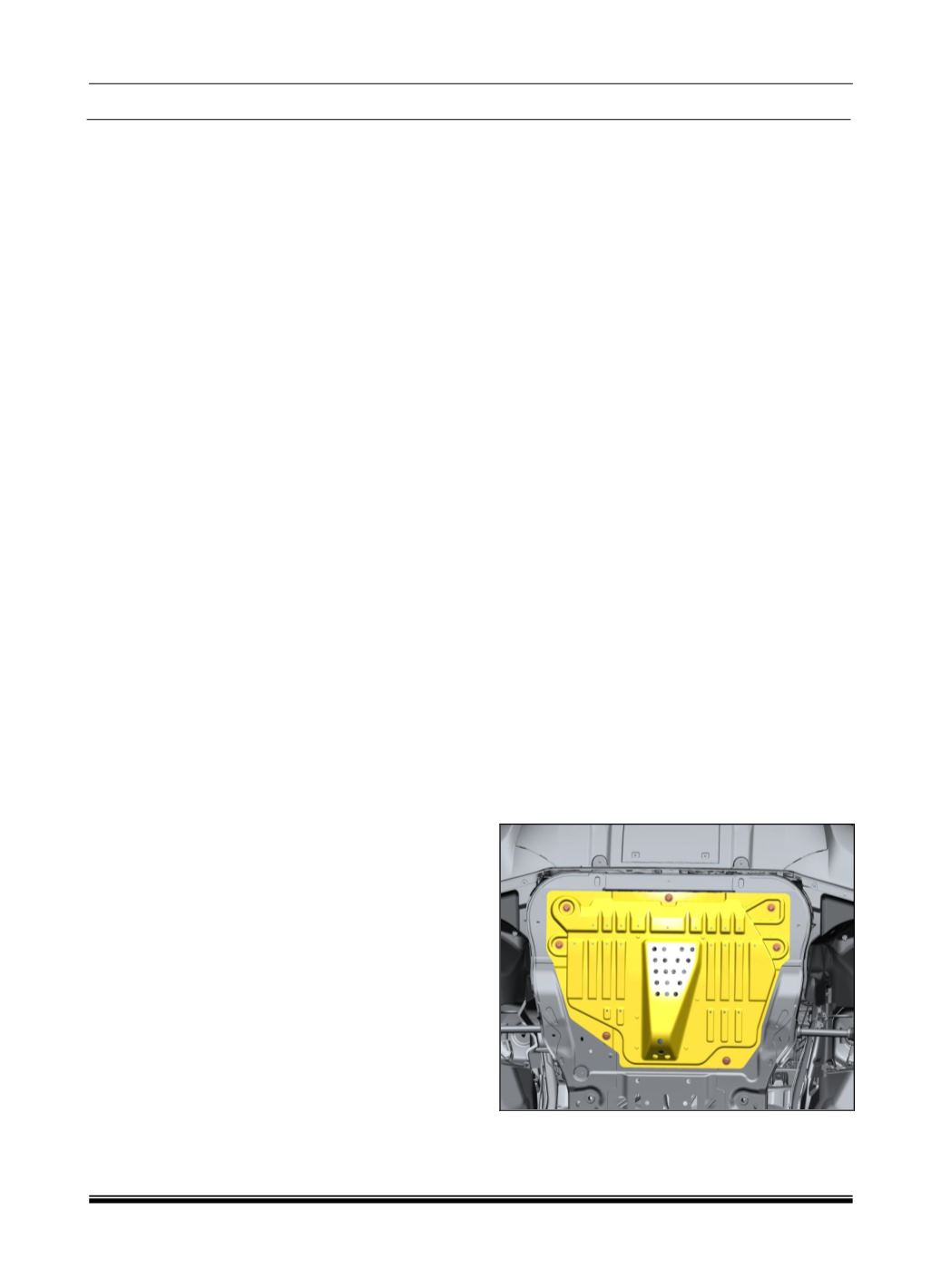
4. Remove engine underbody guard.