




 71 / 745

KRYOTEC ENGINE
63
5. ENGINE TESTS AND DIAGNOSIS
A. ENGINE TESTS
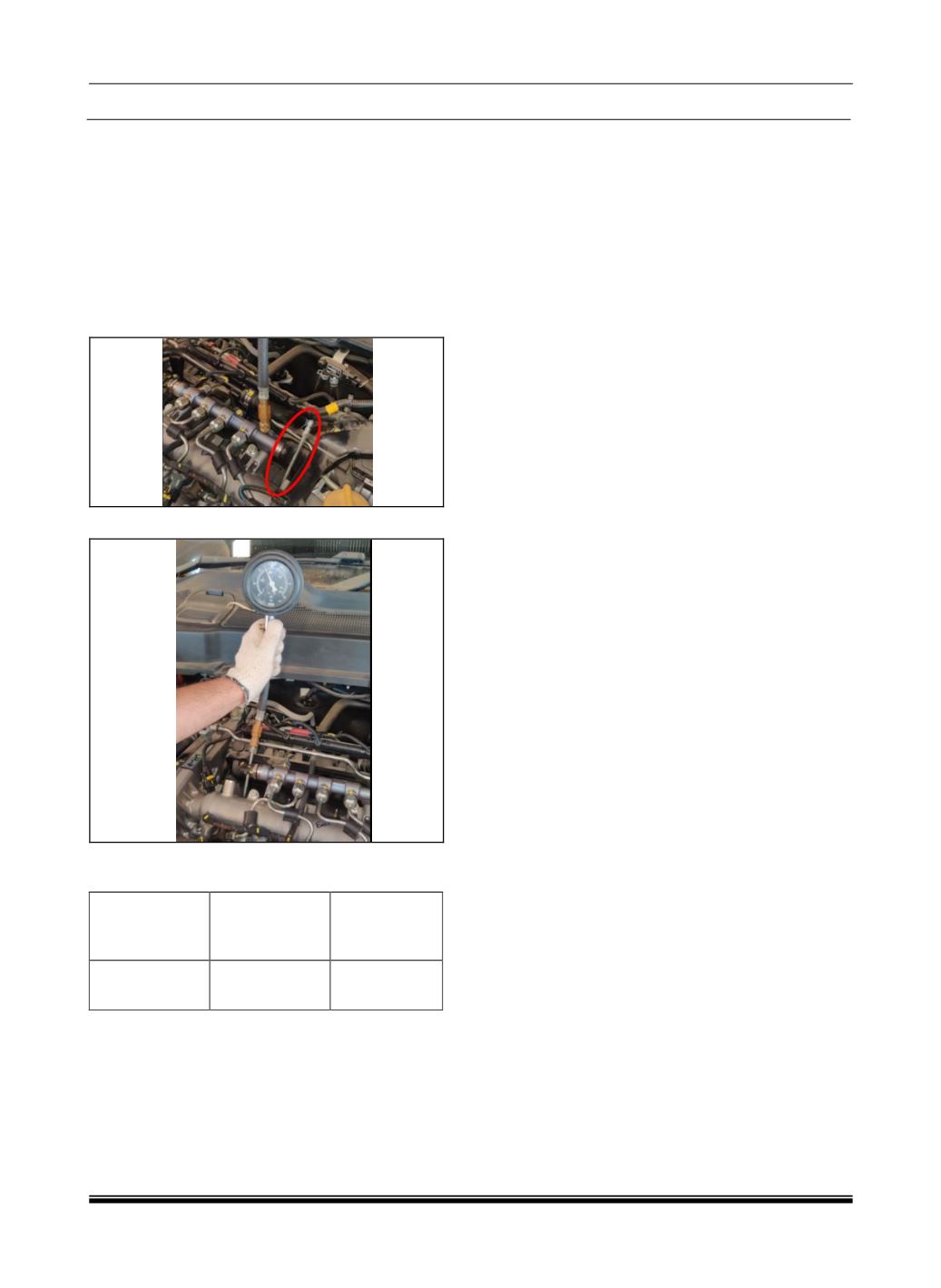
CYLINDER COMPRESSION TEST
1. Warm up engine to operating temperature
(approximately 80 °C, 176 °F).
2. Shut the engine off.
3. Remove the glow plug of cylinder to be tested.
4. Install the compression checking tool adapter
(5412 5890 0628)
.
5. Connect the compression tester to the adapter.
6. Test compression pressure by cranking engine
with starter for at least 8 revolutions.
Description
Specification
Difference
Between
Cylinders
Cylinder
Compression
21 – 25 bar
(304-362 psi)
5 bar (73 psi)
7. Carry out test procedure at the remaining
cylinders in the same way.
8. Check that there is not a great difference
between the pressure readings for the cylinders.
9. Remove the compression checking tool
adapter.
10. Install the glow plug.
CYLINDER LEAKAGE TEST
The cylinder leakage test provides an accurate
means for determining engine condition. Cylinder
leakage testing will detect:
• Exhaust and intake valve leaks (improper
seating).
• Leaks between adjacent cylinders or into water
jacket.
1. Check the coolant level and fill as required.
DO NOT install the radiator cap.
2. Start and operate the engine until it attains
normal operating temperature.
3. Turn the engine OFF.
4. Remove the fuel injector.
5. Set the piston of the cylinder to be tested at
TDC on the compression stroke.
6. Perform cylinder compression test as stated.
7. As each cylinder is pressurized, listen for the air
escaping through the EGR air flow control valve,
tailpipe, and the oil filler cap opening.
Check for bubbles in the pressurized coolant
bottle.
8. All gauge pressure indications should be equal,
with no more than 25% leakage. Refer to
CYLINDER LEAKAGE DIAGNOSIS CHART
below.