




 90 / 516

LV ELECTRICAL SYSTEM
4
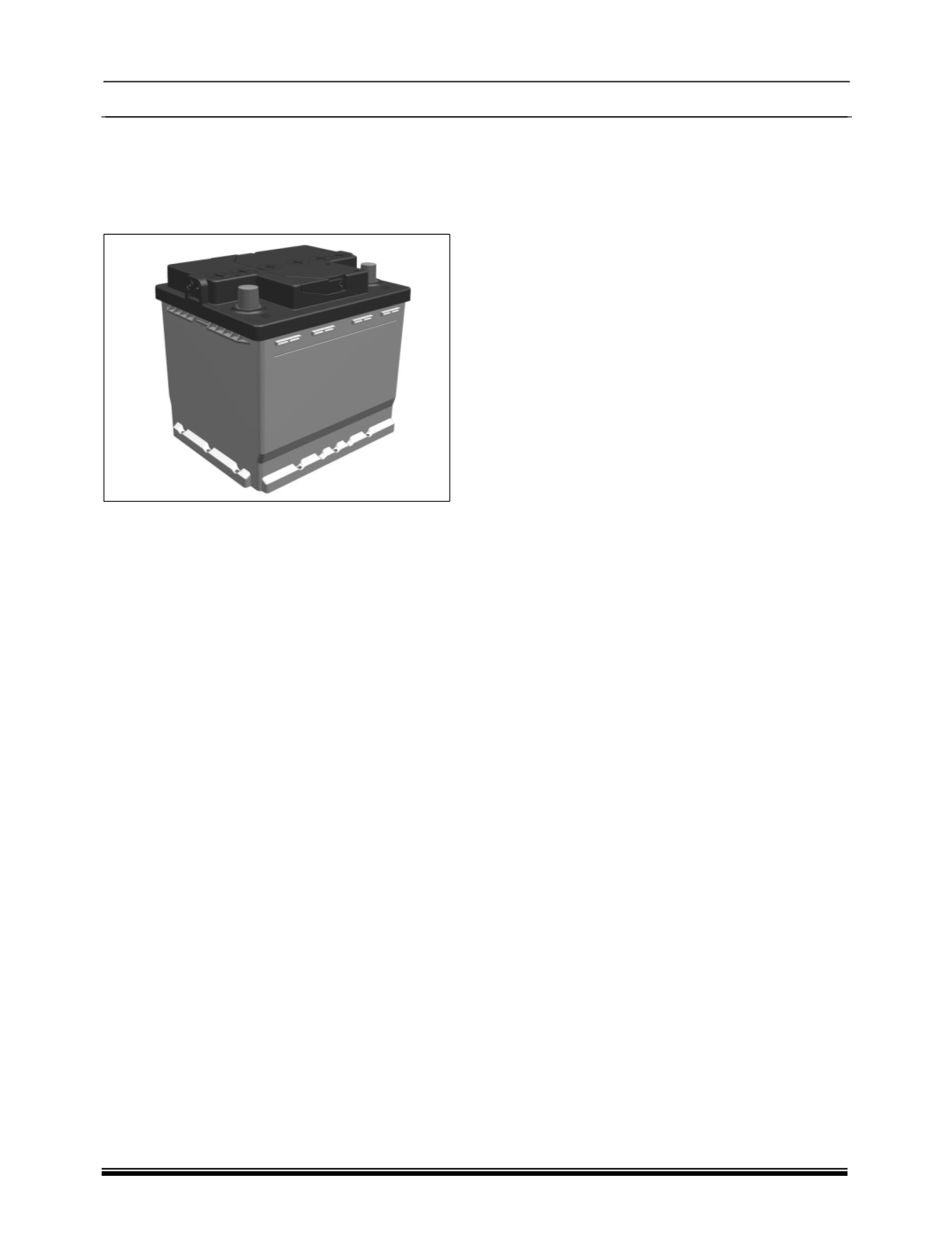
2. BATTERY
SPECIFICATION
System Voltage
:
12 Volts (-ve earth)
Battery
:
12V DIN 44 40 Ah
BATTERY CHECKING
Using Hydrometer:
A hydrometer is a float-type device used to
determine the State-of-Charge by measuring the
specific gravity of the electrolyte in each cell. It is
an accurate way of determining a battery's State-
of-Charge and weak or dead cells.
Visual Inspection:
Visually inspect for such as a loose or broken
alternator belt, low electrolyte levels, dirty or wet
battery top, corroded or swollen cables, corroded
terminals or battery posts, loose hold-down
clamps, loose cable terminals, or a leaking or
damaged battery case.
If the electrolyte levels are low in non-sealed
batteries, allow the battery to cool and add only
distilled water to the level indicated by the battery
manufacturer.
PREVENTIVE MAINTENANCE
•
Tighten loose hold-down clamps and battery
terminals.
•
Check the battery terminals for corrosion (a
white or yellowish powder). To remove it, cover
the terminals with a solution of baking soda. It
will bubble up and turn brown.
When this stops wash it off with plain water. Dry
off the battery with a cloth or paper towel.
•
Coat the terminal with petroleum jelly to
prevent future corrosion.
•
Use a proper wrench to loosen and remove
cables from the terminals.
•
Always disconnect the negative (-ve) cable first
and reconnect it last.
•
Clean the battery terminals with a terminal
cleaning tool or wire brush. Reconnect and
tighten the cables, coat the terminals with
petroleum jelly.
•
Ensure that battery securely mounted.
•
If you need to connect the battery to a charger,
disconnect both cables to prevent damage to
the vehicle’s electrical system.
•
Clean the battery top and alternator.
•
Check the alternator belt for cracks and
retention, if slipping.
•
Check the battery cables for corrosion or
swelling and replace if necessary with equal or
larger diameter wire size.
CAUTION:
During normal operation, the battery generates
gas which is explosive in nature, a spark or open
flame can cause the battery to explode causing
very serious injuries. Keep all sparks & open
flames and smoking materials away from the
battery. Getting electrolyte in your eyes or on the
skin can cause severe burns. Wear protective
clothing and a face shield or have a skilled
technician to do the battery maintenance. The
battery contains sulphuric acid (electrolyte) which
is poisonous and highly corrosive in nature.