




 87 / 516

LV ELECTRICAL SYSTEM
1
1. GENERAL PRECAUTIONS
SERVICING THE ELECTRICAL SYSTEM
1. Before Troubleshooting:
•
Always disconnect negative terminal of battery.
•
Check the fuses in fuse box.
•
Check the battery for damage, state of charge,
and clean and tight connections.
•
Check the alternator belt tension.
! CAUTION:
•
Do not quick-charge a battery unless the
battery ground cable has been connected, you
will damage the battery.
•
Do not attempt to crank the engine with the
battery ground cable connected incompletely.
2.Switch off ignition prior to making any connection
or disconnection in the system as electrical surge
caused by disconnecting ’live’ connections can
damage electronic components.
3. Ensure hands and work surfaces are clean and
free of grease, scarf, etc. as grease collects dirt
which can cause tracking or high-resistance
contacts. When handling printed circuit boards,
treat them as you handle a disc - hold by the
edges only, because some of the electronic
components are susceptible to body static.
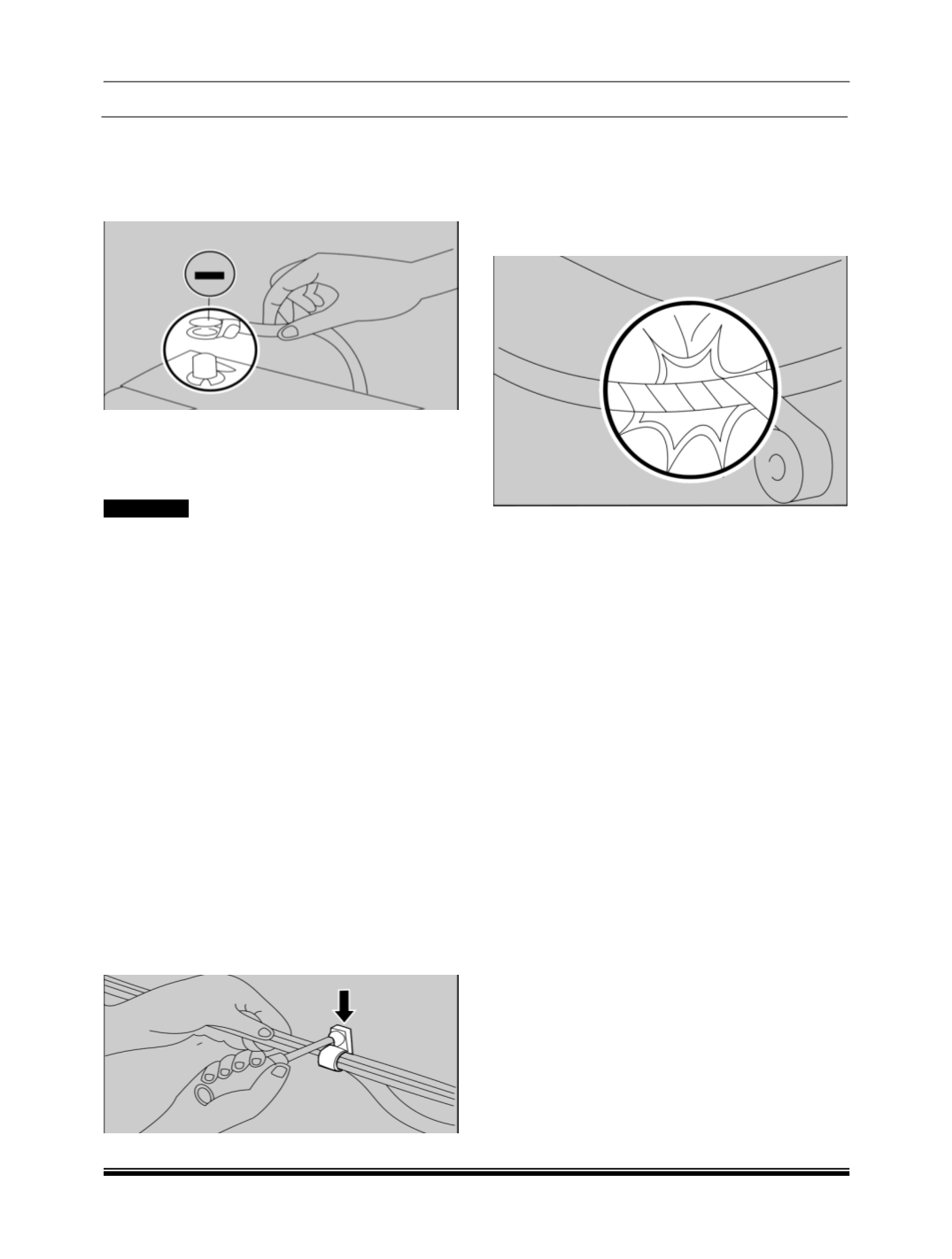
4. Secure the wiring harness by using clamps so
that there is no slack. However, for any harness
which passes to the engine or other vibrating
parts of the vehicle, allow some slack within a
range that does not allow the vibrations to cause
the harness to come into contact with any of the
surrounding parts, and then secure the harness
by using a clamp.
5
.
Don’t damage the insulation when connecting a
wire. Do not use wires or harnesses with a broken
insulation. Repair by wrapping with protective
tape or replace with new ones if necessary.
6. If any section of a wiring harness interferes with
the edge of a part or a corner, replace the part of
harness or wrap the section of the harness.
7. To prevent damage to the electrical/ electronic
parts (
especially computers or semi conductors
)
or to prevent fire:
a. Always disconnect the battery. Ensure that
battery leads are routed correctly and are not
close to any potential chafing points. Never
reverse connect the vehicle battery and always
observe the correct polarity when connecting
test equipment.
b. When disconnecting the battery terminals, be
sure for the following
•
Turn off the ignition switch and all other
switches.
•
Disconnect the negative (-) terminal wire
•
Disconnect the positive (+) terminal wire.
•
Connect the wires in the reverse order of
disconnecting.
c. When replacing any fuse, make sure to use the
specified capacity fuse. Using a fuse with a
larger capacity can cause damage to the
electrical parts or a fire.
d. Do not handle electrical/electronic parts (
ECU,
relay, etc)
roughly or drop them.
e. Do not expose electrical/electronic parts to high
temperature (
approximately 80°C (170°F) or
higher
) or water.
f. For open back connectors be sure to insert the
tester probe in to the back side (
wiring harness
side
) of the connector for inspection. For sealed
back connectors apply the tester probe to the
terminal as gently as possible not to damage or
deform the terminal. Make sure to use probe
with tapered tip.