




 720 / 1119

BRAKES
23
CAUTION NOTE:
Use only DOT4 brake fluids confirming to SAE
J1704 from a sealed container. Ensure brake
fluid is not contaminated.
Entire Bleeding operation should be carried out
with the Engine ON (running) condition only.
BRAKE FLUID LEVEL INSPECTION:
After completion of brake bleeding check the
brake fluid level in the reservoir. The fluid level
should be between MIN and MAX level indicated
on the brake master cylinder reservoir. If the
warning light lights during Engine ON condition
replenish fluid to MAX line. Never use container
which has been used for mineral oil or which is
wet. Always keep all brake fluid container capped
to prevent contamination.
SERVICING OF MASTER CYLINDER
Note - Servicing of the fixed seal master cylinder
internal parts are not recommended and if a major
fault is apparent, a new complete guaranteed unit
should be fitted.
A. BRAKE BLEEDING PROCEDURE
! CAUTION
Do not spill brake fluid on the vehicle, it may
damage the paint, if the brake fluid does
contact the paint, wash it off immediately with
water.
Make sure no dirt or other foreign matter is
allowed to contaminate the brake fluid.
NOTE
Always use the brake fluid recommended in
the specification list.
Do not reuse the drained fluid.
Entire bleeding operation should be done with
ENGINE ON (running).
Always use brake fluid from the sealed bottle.
The reservoir on the master cylinder must be
at the Max (upper) level mark at the start of
bleeding procedure and check after bleeding
each brake caliper and same have to be
topped up as required.
1. Open the bonnet.
2. Open the reservoir cap and pour brake fluid till
the lower edge of the filler neck.
! CAUTION
At all times during the bleeding process, it has to
be ensured that the fluid level in the reservoir
does not drop below minimum.
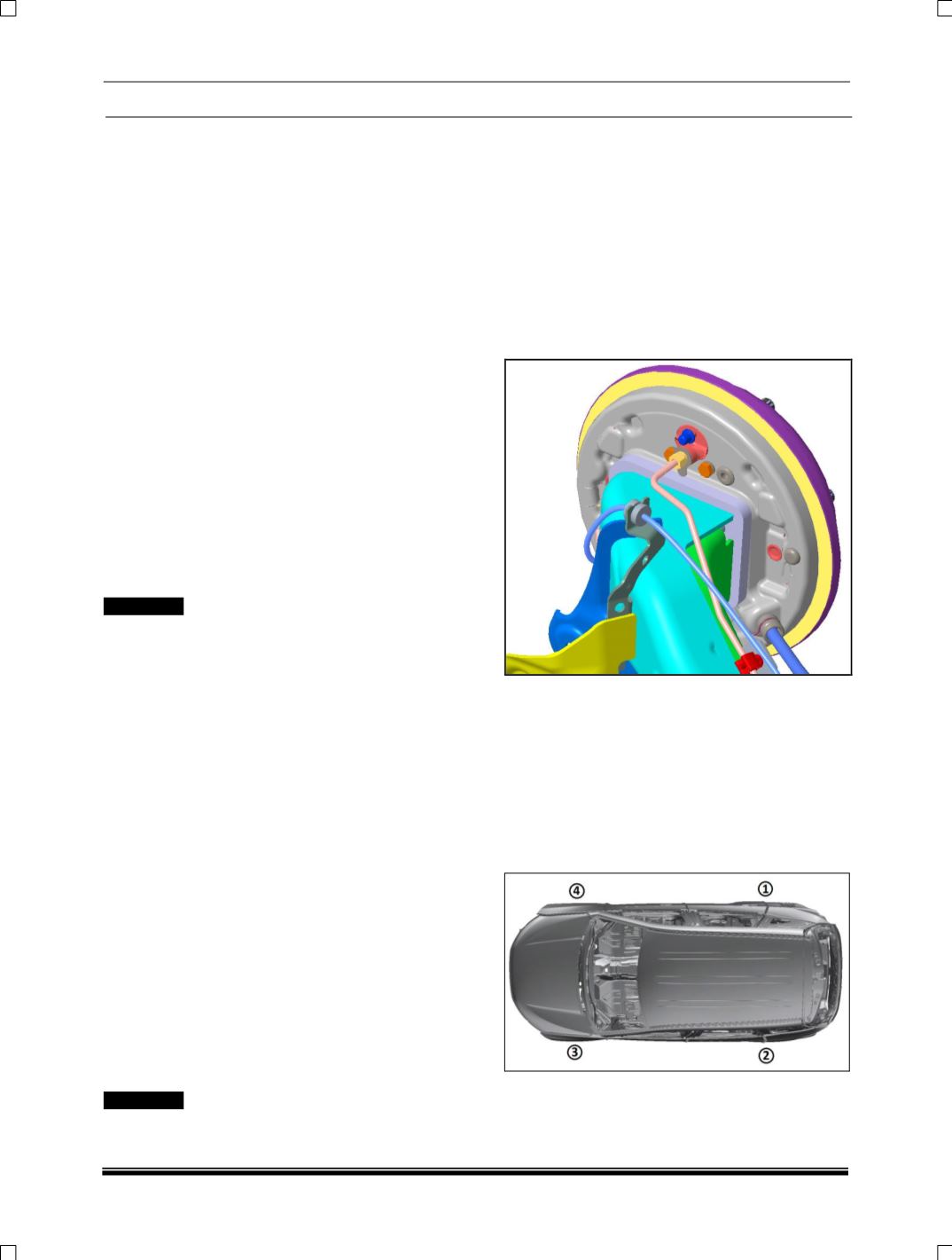
3. Connect the bleed tube to the Rear right Drum
Brake bleed screw and place the other end
submerged in a transparent container
containing sufficient brake fluid.
4. Depress the brake foot pedal for 2-3 times and
hold it down.
5. Open the bleed screw
(1).
The fluid will flow
into the transparent container.
6. Tighten the bleed screw
to torque 0.7~1 Kgm
and release the pedal.
7. After the pedal returns, allow an interval of 3 to
4 seconds before making the next stroke.
Steps 4 to 6 should be repeated until there are
no more air bubbles at the end of the bleed
tube.
8. Now follow the same procedure at the other
wheels as per the sequence given below.
9. After the bleeding sequence is completed
remove the bleed tube and place the dust cap
on the bleed screw.