




 362 / 948

BRAKES
32
INSPECTION
Measure the pad lining thickness if it is found to
be 1mm or less anywhere, it has to be replaced.
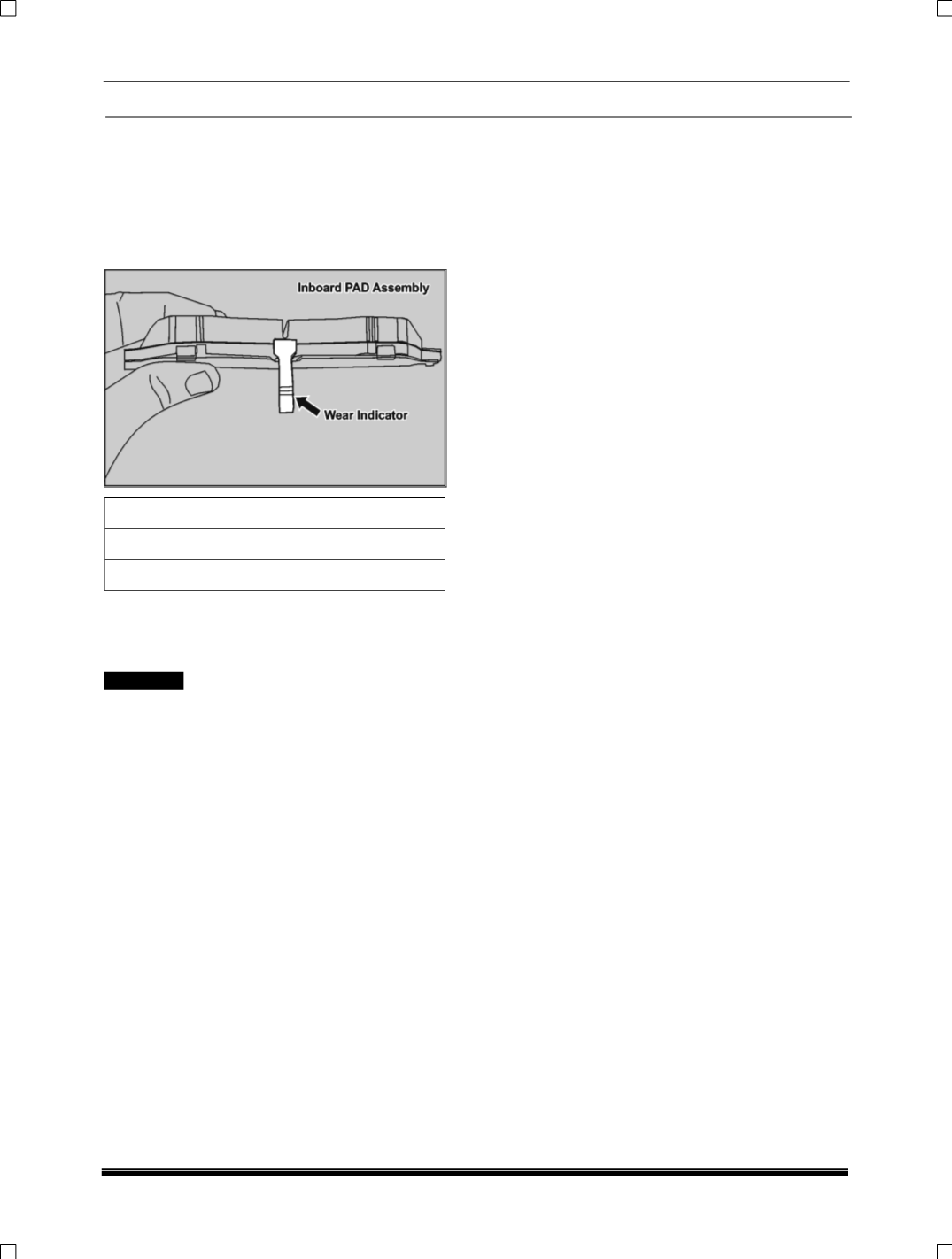
The inboard pads of front and rear brakes are
provided with the wear indicator.
1. FRONT BRAKE PAD INDICATOR
PAD
Front
PAD lining thickness
11.5mm
Useful PAD Thickness
10.5 mm
FITMENT
For fitment follow the reverse procedure of
removal.
! CAUTION
The inboard pads are provided with wear
indicator assembly. Since the inboard pad and
shims are not inter-changeable.
In rear caliper, only inboard pad has clip-on
shim. Outboard pad doesn’t have shim.
Do not polish the pads with sand or emery
paper as hard particles of sand or emery paper
will deposit on pad and may damage disc.
Do not contaminate pad surface with oil or
grease.
Always use genuine recommended pads for
replacement.
Brake pads have to be replaced in sets only. If
brake pads on left side are replaced then
brake pads on right side should also be
replaced.
Apply brake pedal couple of times with the
engine started before taking the vehicle for a
road test. Before applying an emergency
brake, its is advisable to apply the brake gently
several times at 50 Km (30 miles) per hour to
allow the brake pads to align. Heavy braking or
prolonged braking should be avoided in the
initial 100-150 km.(60-90 miles ) of run until the
new pads are bedded.
NOTE
While inserting the pads between the carrier
and disc care should be taken that the friction
material should be towards the disc.
Rotate the disc and make sure it is free to
rotate. If it is not free to rotate, inspect and
make sure that the pads are sitting square with
the disc without any tilt.
Before inserting the pads ensure that caliper is
returned fully to its position. (Push the caliper
inside if necessary.) While pushing the caliper
inside care should be taken to avoid the
damage to the cylinder. Use suitable tool if
required for pushing the cylinder inside.