




 44 / 948

KRYOTEC ENGINE
35
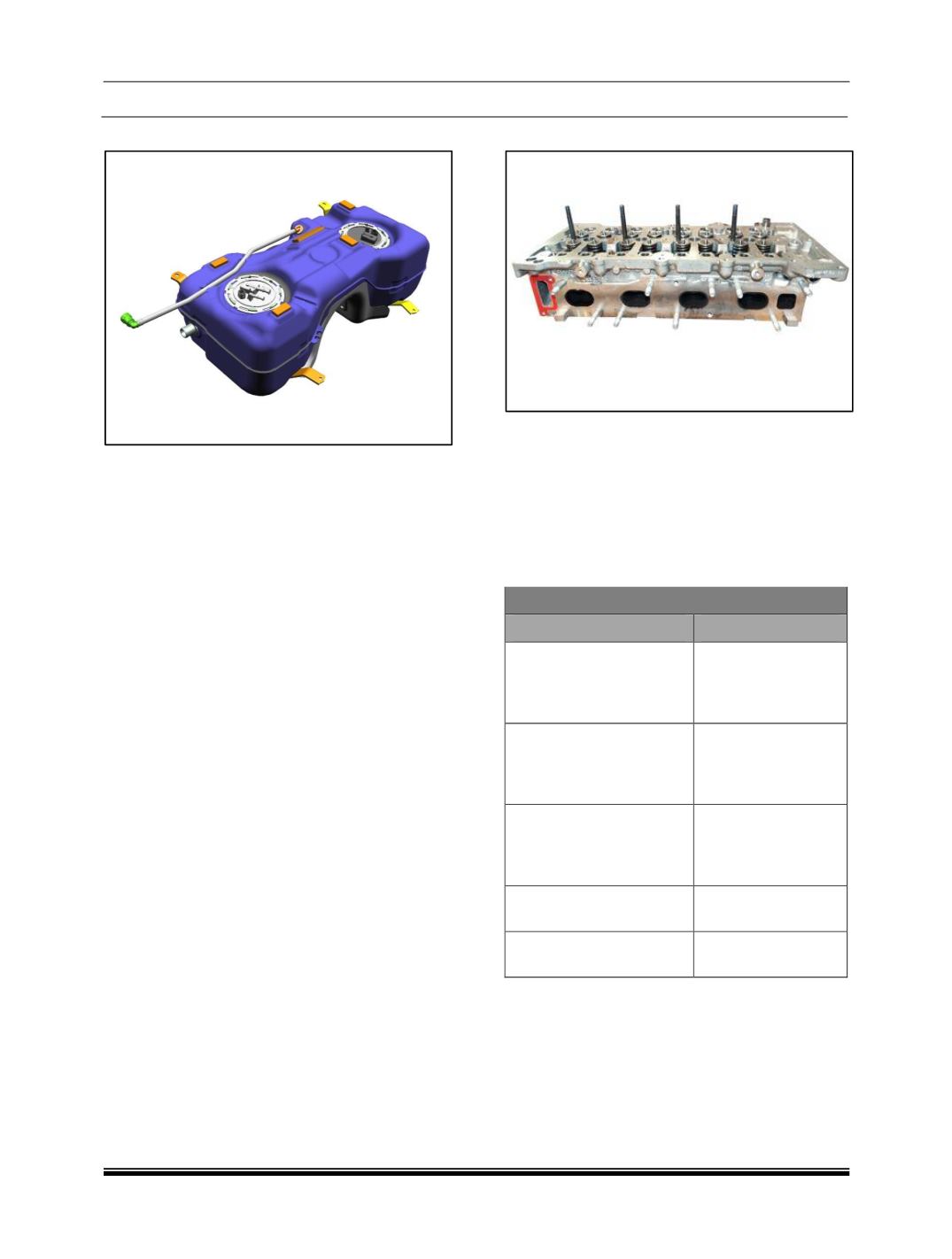
B. FUEL TANK
After removing the fuel tank visually inspect the fuel
tank for deterioration, damage or leaks. Replace as
necessary.
NOTE
Any repair on the fuel tank using external heat or
flame may result in severe damage to property and
life.
Draining Procedure
1. Remove the fuel tank off the vehicle.
2. Remove the fuel pump unit and suction unit
from the fuel tank.
3. Shift the tank to flushing area.
4. Fill the tank with warm or normal tap water and
agitate it vigorously.
5. Drain the water and repeat the process until
the tank is clean.
6. Replace the tank if it is damaged inside.
7. After washing flush out the remaining water
completely.
WARNING
Do not allow water to remain inside the fuel tank
after washing. This will cause corrosion inside the
fuel tank.
C. CYLINDER HEAD
NOTE
The mating surfaces of the cylinder head are not
machinable. If the surface is warped, uneven, or
damaged otherwise, replace the cylinder head.
Using a straight edge and feeler gauge, check
evenness of cylinder head parting surface with
crank case. If unevenness exceeds specified
values, replace cylinder head.
CYLINDER HEAD
Measure
Value
Cylinder head gasket
thickness with maximum
protrusion piston (mm)
protrusion -0.110 -
+ 0.230 thickness
(no hole) 0.95 +/-
0.05
Cylinder head gasket
thickness with maximum
protrusion piston (mm)
protrusion -0.231 -
+ 0.330 thickness
(one hole) 0.95 +/-
0.05
Cylinder head gasket
thickness with maximum
protrusion piston (mm)
protrusion + 0.331 -
+ 0.425 thickness
(two holes) 1.15 +/-
0.05
Nominal cylinder head
height (mm)
107 +/- 0.05
Flatness Cylinder Head
Surface (mm)
< 0.1