




 686 / 1265

DRIVESHAFT
3
1.2. GENERAL GUIDELINES FOR TESTING
DRIVE SHAFT NOISE:
Ensure that the DRIVER is alone in the vehicle
while conducting the test.
All the windows of the vehicle should be fully
rolled- up to reduce the disturbances caused
by external noises.
Drive on a smooth stretch of road and pay
particular attention to various noises
emanating from the front portion of the vehicle.
Observe the changes in noise levels through
speeds between 10 to 60 kmph (6 and 36
mph).
It should be noted here that the driver may
encounter difficulty in distinguishing between
similar sounding noises resulting from either
the drive shaft or the underbody (for example
noise from strut and caliper).
Therefore, it is advised that the car be driven
on uneven and bumpy surfaces as well, to
observe the noises which may then be
attributable to the underbody.
Focus on that side of the car being considered
for the drive shaft complaint.
Tests for CV (wheel side) and Inboard (engine
side) joints are different and need to be
conducted separately.
TESTING FOR NOISE:
Checking for wheel side (CV) joint noise:
(This noise will appear to emanate closer to the
wheel, rather than the engine).
1. Shift to the 2nd gear and maintain a steady
speed between 20 and 30 kmph (12 and 18
mph).
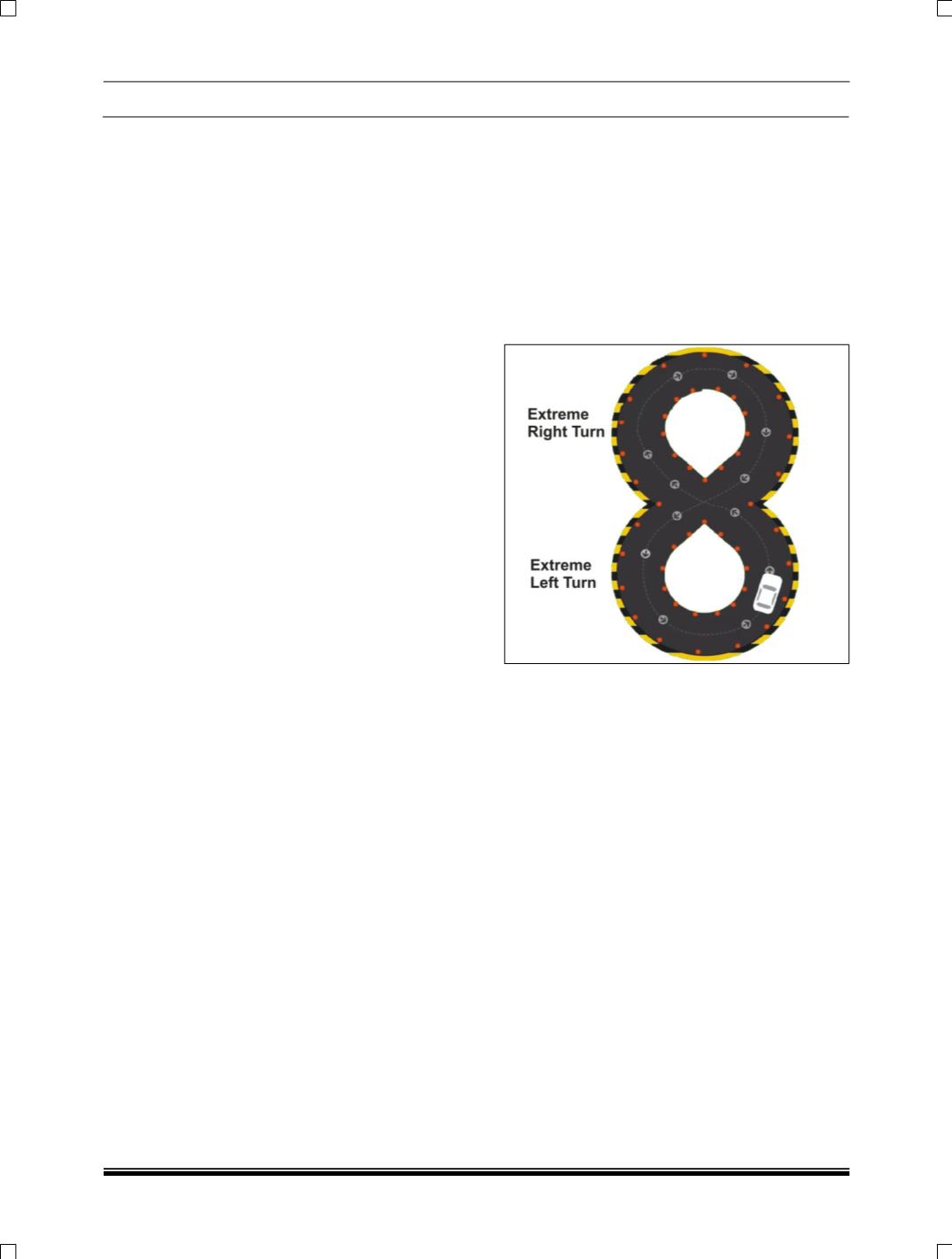
2. Drive the car to form a figure of “8” as shown
in the (Fig. 4) Identify an audible and
persistent “Cluck” – like noise during either
an extreme left or extreme right turn.
Fig. 4
3. The “Clucking” noise on a particular turn can
be confirmed by repeating the turn.
Checking for engine side joint noise:
(This noise will appear closer to the engine, than
the wheel).
1. Shift to the 4th gear and maintain a steady
speed between 40 and 60 kmph (24 and 36
mph).
2. Lower the car speed by gently applying the
brakes while ensuring that the tyres do not
screech and the car does not dive forward
sharply.
3. Identify an audible “Dug” sounding noise as
the car decelerates.
As the car slows down, it can be observed
that the sound would become louder and
occur after longer intervals.