




 136 / 1133

1.2L REVOTRON ENGINE
98
FUEL SYSTEM COMPONENTS
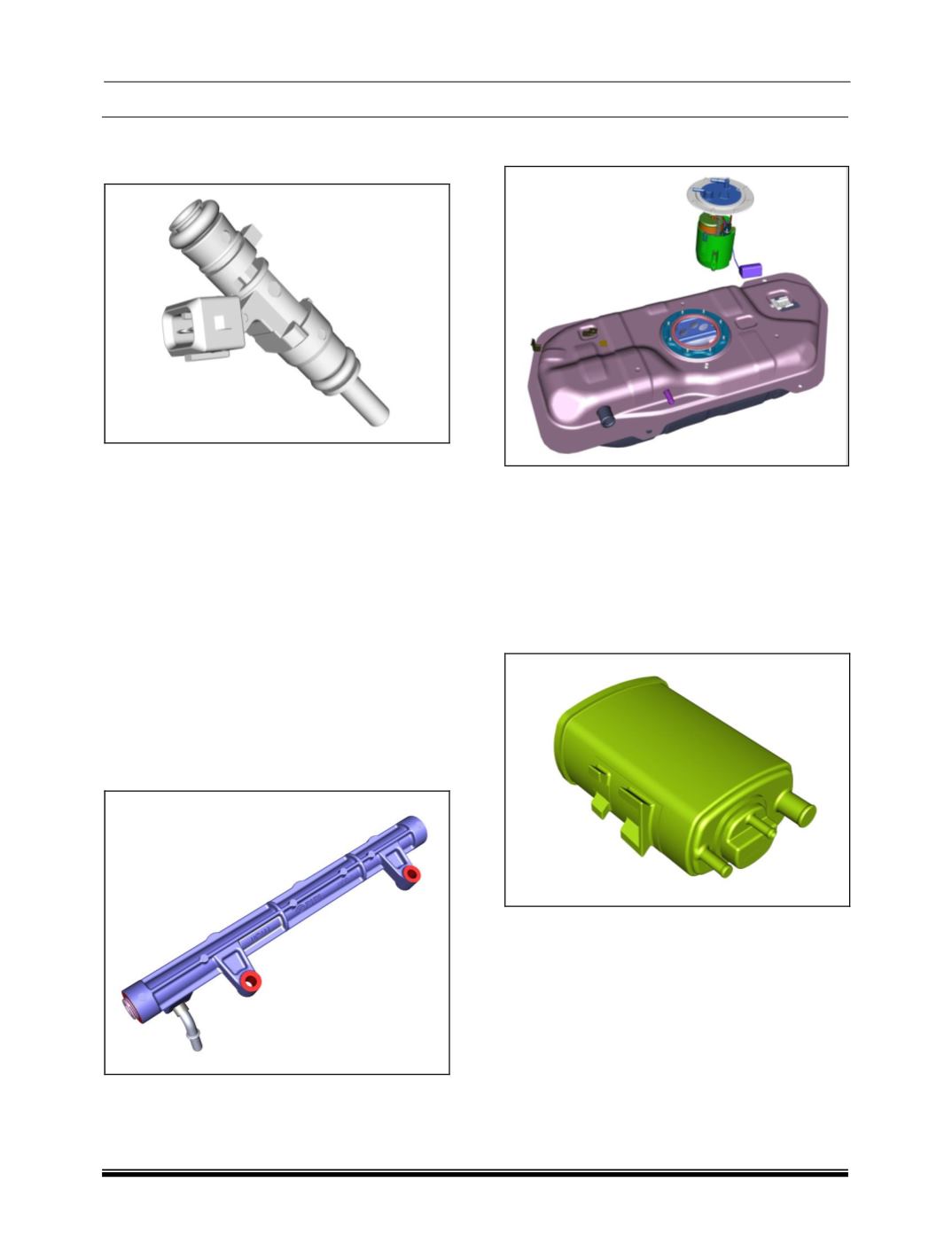
1. Injector
The injector used in this engine is a piezo injector.
This is controlled by the EMS ECU. The timing of
injection and quantity is controlled by the EMS
ECU. It operates at a pressure of 4 bar. It makes
multiple injections.
The piezo actuator is an electrically energized
device that acts similar to a solenoid but is much
more precise. A piezo actuator is a composition of
piezo discs, that when electrically energized,
cause the discs to deform resulting in an
expansion. This expansion results in a
longitudinal motion thus controlling the injector.
When energized, the piezo actuator pushes
downward against the valve piston. The piezo
actuator is returned to its non-energized state via
the ECU switching the polarity of the electrical
feed to the injector.
2. Fuel Rail
It is a fuel reservoir where the fuel is maintained
at a pressure of about 4 bar. The fuel is pumped
into it from the pump and gets delivered to the
injectors through the lines.
3. Fuel Tank and Fuel Tank Unit
The Fuel tank assembly consists of the fuel tank
and the Intank pump. The fuel tank is used to
store the fuel. The Intank pump consists of float
and a sensor. Fuel level sensor assembly
provides the signal to indicate the fuel level in the
tank. As the float arm assembly moves with
respect to the fuel level in tank, resistance at
sensor varies accordingly.
4. Canister
Canister made of high grade Nylon, containing
special dust free activated carbon is used to
adsorb fuel vapours. The lower end of the canister
is open to atmosphere for ventilation. The end is
not really open but there is foam filter. The
purpose of the bottom filter is to protect the
canister from dust and dirt during operation. When
the engine is inoperative (i.e. while parked) fuel
vapours generated inside the fuel tank due to fuel
volatility and temperature variations are passed
into canister through tank pressure valve.
Activated carbon contained inside the canister
adsorbs these vapours.
When the engine is running, the fuel vapours