




 75 / 1906

ENGINE
39
11. Immediately after the test drive, place the
vehicle at the same spot from where it started.
12. Place the same previously used vessel below
the Oil sump.
13. Unscrew the drain plug and drain off oil into
the vessel. Drain the sump fully.
14. Weigh the vessel along with oil, now for the
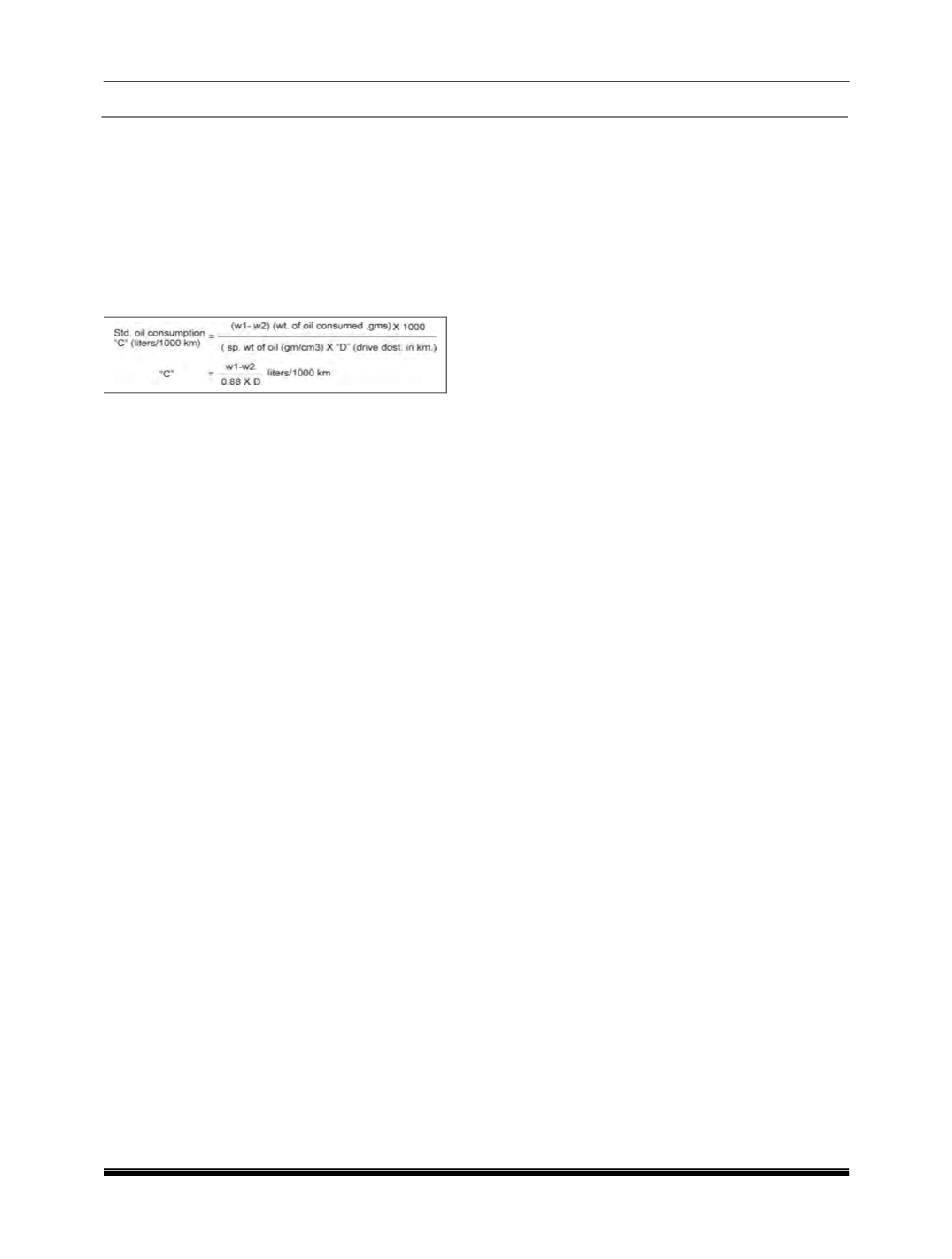
second time. Let this weight be ‘w2’ gms.
Find out standard oil consumption as follows:
If the engine oil consumption is more than
0.2 liter
per
1000 kilometers
then it can be treated as high
engine oil consumption and the engine can be
taken for further investigation.
iii.
Extremely Low Engine Oil Pressure :
Check the following:
External leakages.
Oil level in sump up to maximum mark on
dipstick / Check oil level.
Oil pressure switch / indicator for proper
functioning.
Functioning of pressure relief valve on oil
pump.
Oil pumps performance using a suitable
pressure gauge. If low oil pressure is not on
account of above factors, wear of
journals/bearings is indicated for which
overhaul of engine may be considered.
Leakage through oil pumps back plate.
iv.
Mechanical Failures :
Defective water pump, idler tensioner, air
lock in HLA, damaged turbocharger, engine
mounts or alternator can be a source of
mechanical noise. Defect can be located by
replacing alternator, water pump, engine mounts,
and idler tensioner with a new one. Metallic
knocking sound from an engine may be due to
faulty injectors, excessive clearance in main and
big end bearings, small end bush, tappets, piston
slap, seizing of piston rings, scored cylinder bore
or breakage of any moving parts. Overhauling of
fuel system will set right Diesel Knock.
Dismantling of engine may be considered if still
noise occurs even after attending all above
mentioned problems. Check for EMS problems if
any.