




 1245 / 1863

ELECTRONIC STABILITY PROGRAM (ESP)
12
In normal conditions when the ignition is switched
on the ESP, ABS and EBD lamp will come on and
then switch off after 3 seconds. During this period
the system will perform a self-diagnostic to
confirm all inputs and outputs are working
correctly.
In addition to this, the ESP warning lamp will blink
during ESP Intervention or TCS intervention.
If the ESP warning lamp remains on after this time
it means either
1. The ESP system has not been connected or
2. The system has detected a failure and has to
be diagnosed
If the ABS warning lamp remains on after this time
it means either:
1. The ABS system has not been connected or
2. The system has detected a failure and will
need to be diagnosed.
The EBD lamp is shared with the brake fluid level
and parking brake, hence if the EBD warning lamp
remains on after this time it means either:
1. The park brake is applied
2. The Brake fluid level is low
3. The ABS system has not been connected. or
4. The system has detected a failure and will
need to be diagnosed.
If the warning light does not come on, the fault
should be sought in the electrical connections of
instrument cluster (for ignition switch, ECU), fuse
or warning lamp.
If the ESP system detects any fault that may
adversely affect its performance it will switch to a
failsafe shut down mode. When this happens the
electricity supply to the solenoid valves is
deactivated, stopping control signal output, this
causes the valves to switch to their default state.
(Open for inlet valves / Closed for Outlet valves).
In this condition, the conventional hydraulic brake
circuit will still function, allowing brake pressure to
reach all wheels. It should be noted that with an
ESP fault the system will not be able to stabilise
the vehicle when it is starting to skid or when the
wheels are starting to spin.
In the case of ABS fault the wheels may lock
during braking and in the case of an EBD failure
the brake force proportioning between front and
rear will no longer function and hence rear wheels
may get locked before front wheel lock.
19.4 On vehicle REPAIRS
NOTE
Refer ABS “REPAIRS” sections for the removal of
ECU, Wheel speed sensors and HCU.
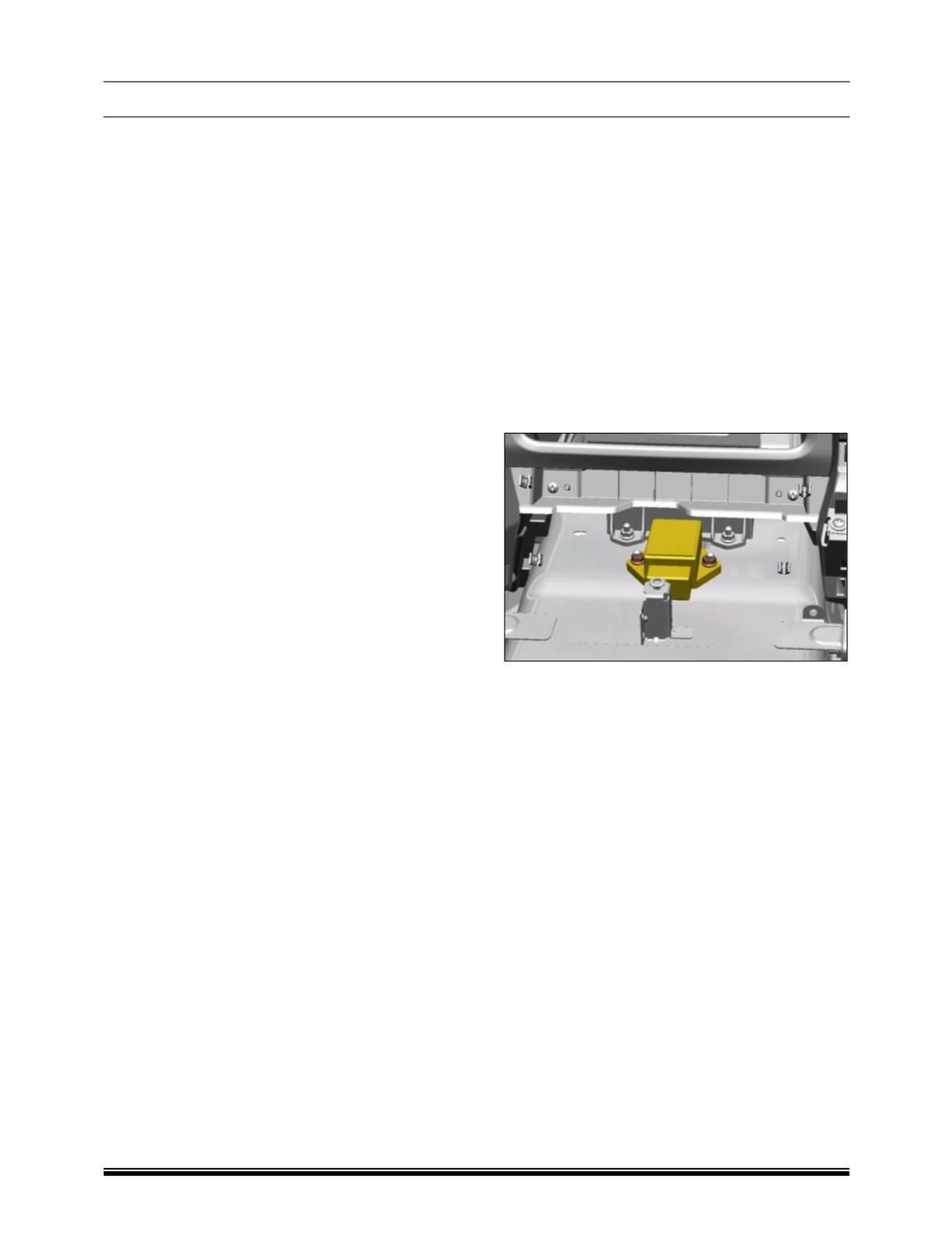
A. YAW RATE SENSOR REMOVAL.
1. Switch of the Ignition and disconnect the
battery.
2. Remove the Floor console.
(For procedure
refer Body group.)
3. Disconnect the Yaw rate sensor electrical
connecter.
4. Loosen and remove the 2 bolts and take out
the Yaw Rate sensor.
INSPECTION
Physical Inspection:
Inspect the yaw rate sensor
and replace if the following is found
If the connecter is damaged, scratched or
cracked.
If the sensor has been dropped.
If surface of the sensor is cracked, dented or
chipped off.