




 418 / 1006

412
DRIVETRAIN
4.3.2 ON VEHICLE REPAIRS
PRECAUTIONS
Following precautions should be taken while
handling or working on driveshaft.
NOTE :
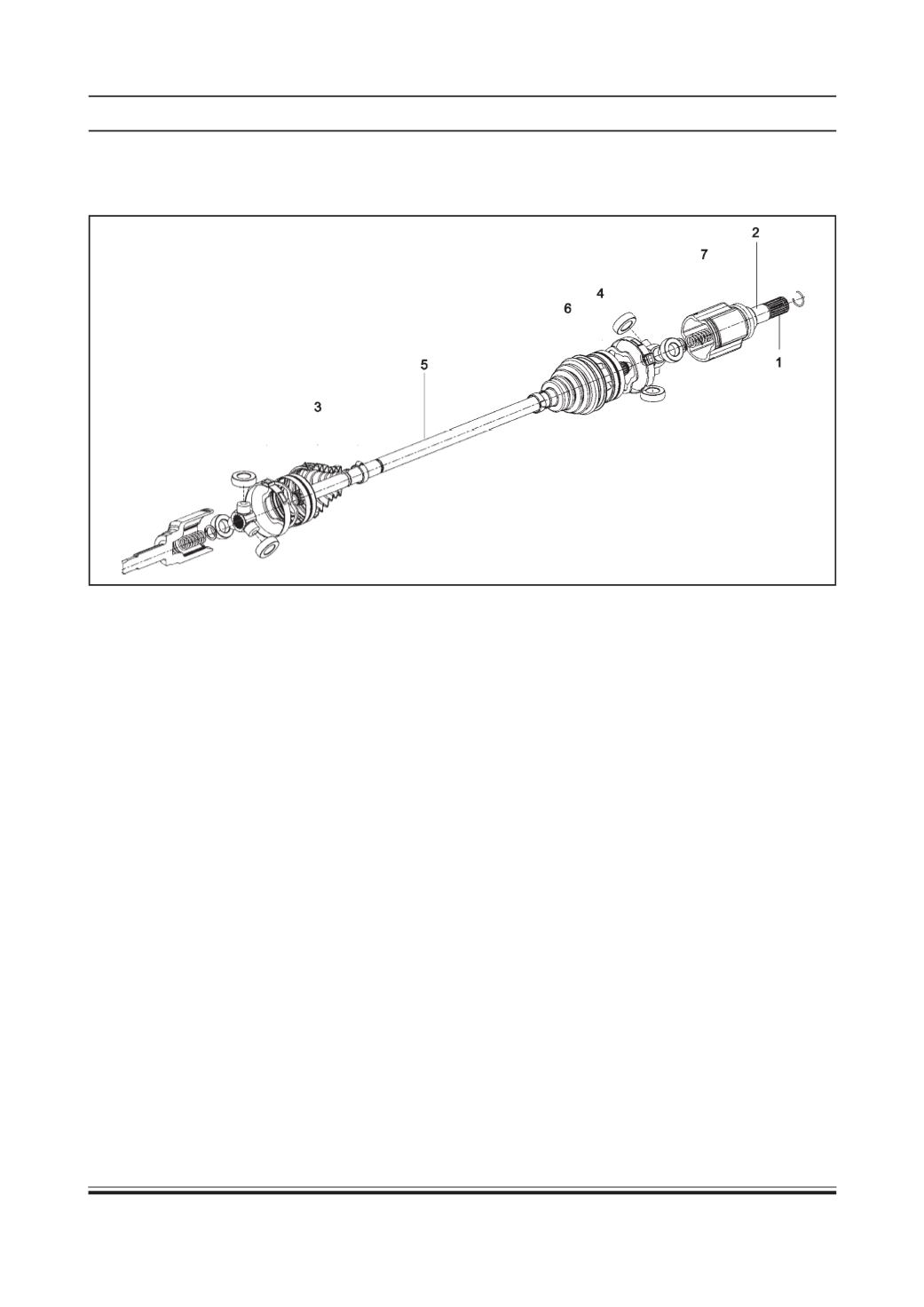
Refer above figure for more illustration as precautions
are in-line with numbering given in figure.
1. Precautions should be taken to avoid damaging
the surface of the threads and splines during
installation on vehicle.
2. Protect this surface from nicks and scratches.
Damage to this surface may reduce the
performance of oil seal.
3. Take precaution to avoid any contact between the
ear of the clamp and any object, which may bend/
crush, the “ear”. A damaged “ear” may decrease
the clamping load, which may lead to grease
leakage and/ or intrusion of water/debris. Clamps
once used should not be reused again.
4. Eared clamp must be placed at correct position
while crimping i.e. it should be crimped at the solid
or outer portion of tulip joint. Do not crimp the
clamp at the depression area of the joint.
5. Never handle driveshaft in vertical position. It should
be handled by both hands. If possible, one gripping
the Outboard joint by the outer race or the stem
and the other hand gripping the In board joint by
outer race. A slight axial force should be applied in
order to guarantee that the plunging joint is fully
compressed. Take all precautions to avoid any
contact between the inboard and outboard boots
and any surface which may cause a cut, nick or
abrasion. The boots are extremely delicate and
critical to the performance to the half shaft. Do not
allow the boots to come in contact with other half
shafts, work benches, the vehicle frame, lower
control arm, or any other chassis component. If
grease leakage is observed from either boot, the
half shaft should be removed, checked and
rectified.