




 237 / 1006

231
ENGINE 273 MPFI
ENGINE
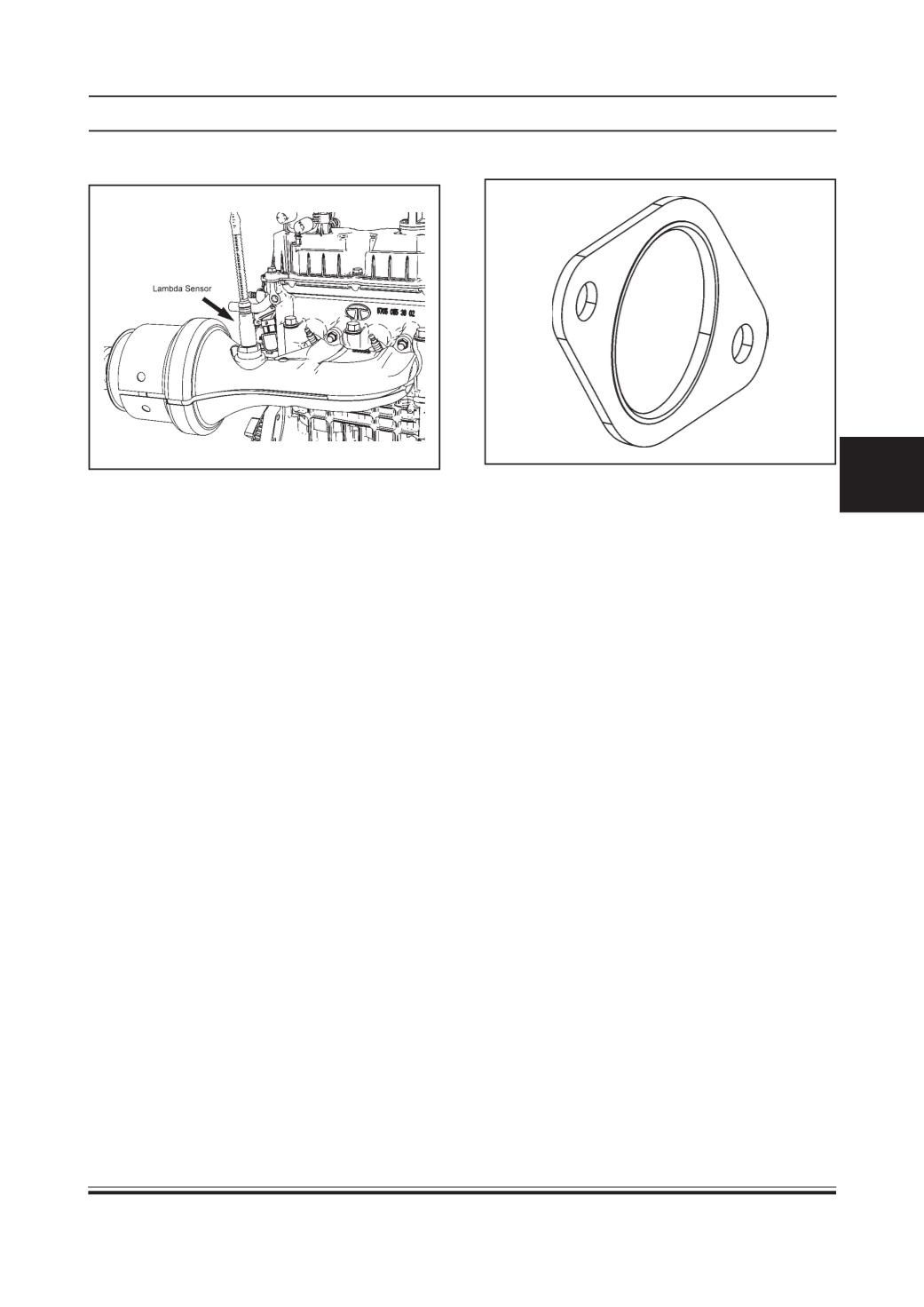
LAMBDA SENSOR
Lambda sensor is a part of the emissions control
system and feeds data to engine control unit (ECU).
The role of the sensor is to help the engine run as
efficiently as possible and thus it reduces emission
level.
The lambda sensor consists of an insulating tubemade
up of a specific ceramic material - Zirconium dioxide
(Catalyst) which is to be heated by heater supply. It
is placed into the exhaust manifold and detects rich
and lean mixtures. When heated above 350º C, it
delivers an output signal between + 100mv (which
means lean exhaust gases) and + 800mv (which
means rich exhaust gases). The mechanism involves
a chemical reaction that generates a voltage. The ECU
analyzes the voltage to determine if the mixture is
rich or lean, and adjusts the amount of fuel entering
the engine accordingly.
The reason why the engine needs the lambda sensor
is because the amount of oxygen that the engine can
pull - in, depends on all sorts of things, such as the
altitude, the temperature of the air, the temperature
of the engine, the barometric pressure, the load on
the engine, etc.
When the lambda sensor fails, the ECU can no longer
sense the air/fuel ratio. The car performs poorly and
uses more fuel than required.
All the burnt gases are expelled out through cylinder
head, exhaust manifold, catalytic converter and
silencer using exhaust pipes. The main function of
exhaust manifold gasket is to seal the connection
between the manifold and cylinder head. It helps to
prevent the leakage from joints and allows exhaust
gas to flow through catalytic converter easily and
comfortably.
EXHAUST MANIFOLD GASKET