




 236 / 1006

230
ENGINE 273 MPFI
SYSTEM COMPONENTS
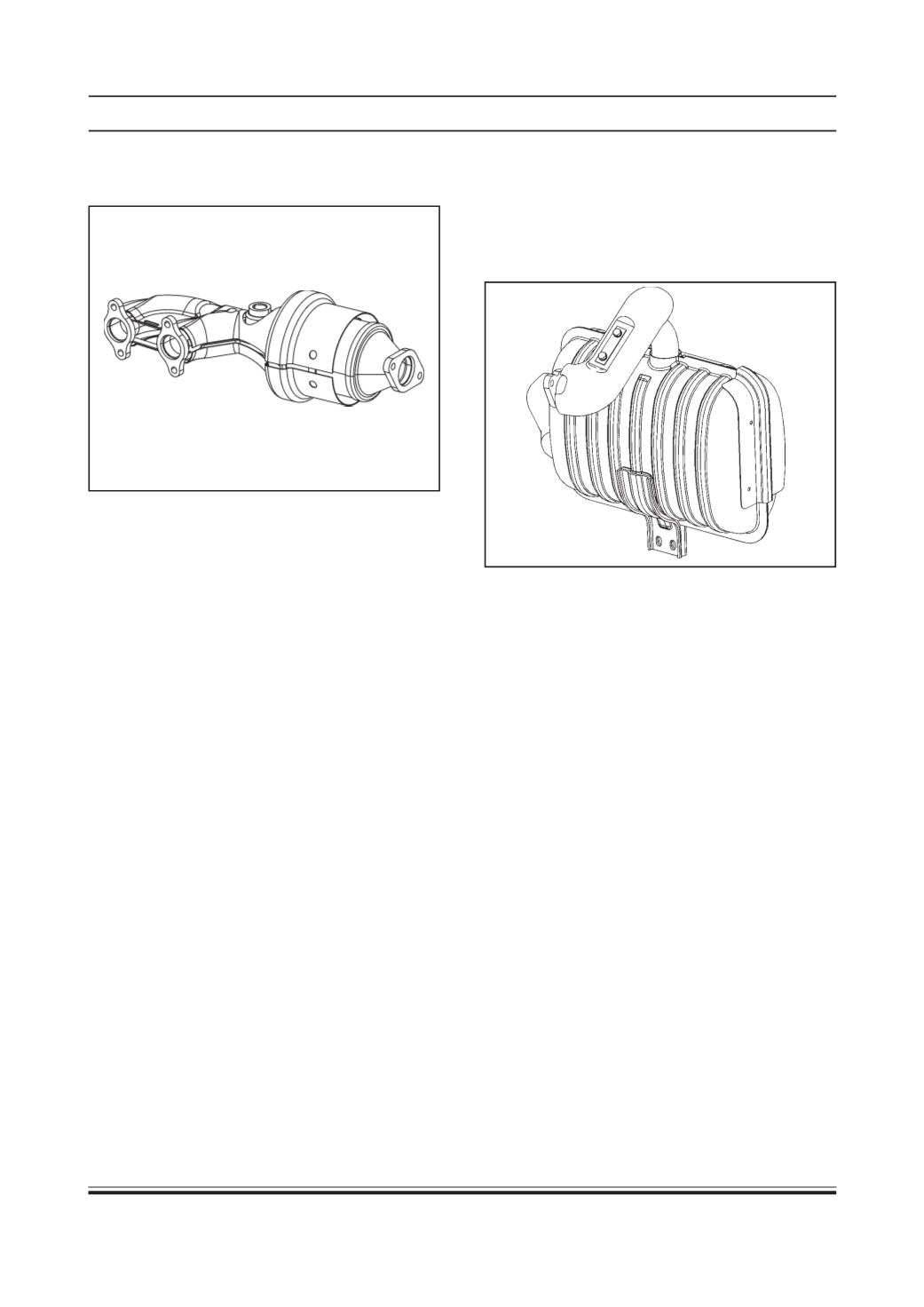
CATALYTIC CONVERTER
Catalytic converter is a device that uses a catalyst to
convert three harmful compounds in exhaust gases
into harmless compounds.
The three harmful compounds are:
(a) Hydrocarbons (HC) (in the form of unburned
gasoline)
(b) Carbon monoxide (CO) (formed by the combustion
of gasoline)
(c) Nitrogen oxides (NOx) (created when the heat in
the engine forces nitrogen in the air to combine with
oxygen)
In a catalytic converter, the catalyst (in the form of
platinum and palladium) is coated onto a ceramic
honeycomb. The catalyst helps to convert carbon
monoxide into carbon dioxide. It converts the
hydrocarbons into carbon dioxide and water. It also
converts the nitrogen oxides back into nitrogen and
oxygen. A catalyst is a substance that causes or
accelerates a chemical reaction without itself being
affected. Catalysts participate in the reactions, but
are neither reactants nor products of the reaction they
catalyze.
In the catalytic converter, there are two different types
of catalyst at work, a reduction catalyst and an
oxidation catalyst.
The reduction catalyst is the first stage of the catalytic
converter. It uses platinum and rhodium to help in
reducing NOx emissions.
The oxidation catalyst is the second stage of the
catalytic converter. It reduces the unburned
hydrocarbons and carbon monoxide by burning
(oxidizing) them over a platinum and palladium
catalyst.
SILENCER ASSEMBLY
Inside a silencer, there are set of tubes which finely
tuned and designed to reflect the sound waves
produced by the engine in such a way that they
partially cancel themselves out.
If there is a hole in the silencer then the sound waves
are no longer forced through the tubes and escape
outside - increasing the noise level.