




 614 / 1904

602
ELECTRICAL
8.2 GENERAL PRECAUTIONS
1. Before starting electrical checks on the vehicle,
ensure that the relevant mechanical functions &
the relevant test equipment are working correctly.
2. Switch off ignition prior to making any connection
or disconnection in the system as electrical surge
caused by disconnecting ’live’ connections can
damage electronic components.
3. Ensure hands and work surfaces are clean and
free of grease, scarf, etc. as grease collects dirt
which can cause tracking or high-resistance
contacts. When handling printed circuit boards,
treat them as you would a disc - hold by the edges
only; note that some electronic components are
susceptible to body static.
4. Connectors should never be subjected to forced
removal or refit, especially inter-board connectors,
damaged contacts will cause short-circuit and
open-circuit conditions.
Prior to commencing test, and periodically during
test, touch a good earth, i.e. cigar lighter socket,
to discharge body static as some electronic
components are vulnerable to static electricity.
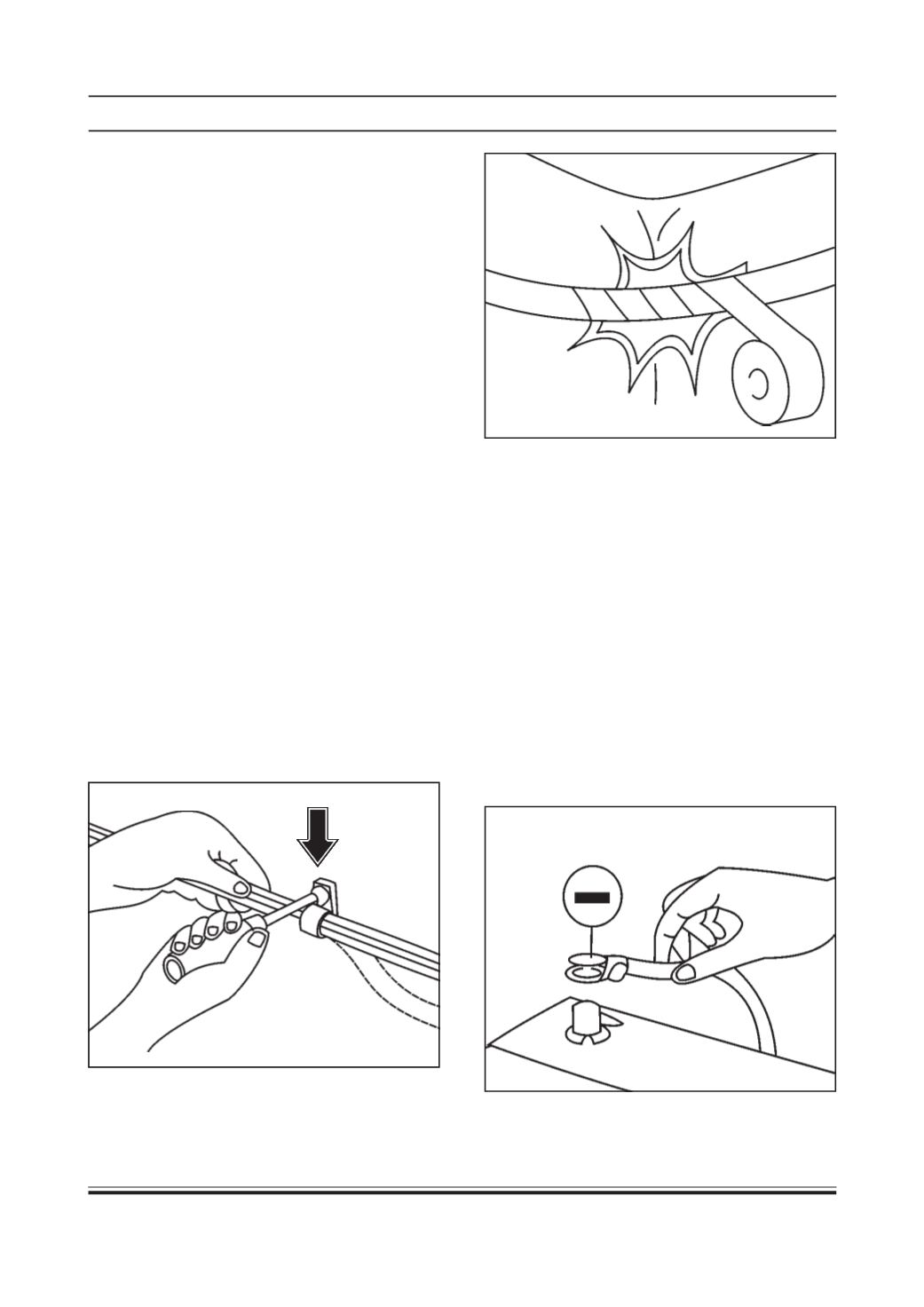
5. Secure the wiring harness by using clamps so that
there is no slack. However, for any harness which
passes to the engine or other vibrating parts of the
vehicle, allow some slack within a range that does
not allow the engine vibrations to cause the harness
to come into contact with any of the surrounding
parts, and then secure the harness by using a
clamp.
6. If any section of a wiring harness interferes with
the edge of a part or a corner, replace the part of
harness or wrap the section of the harness with
core tube.
7. To prevent damage to the electrical / electronic
parts (especially computers or semi
conductors) or to prevent fire :
a. Always disconnect the battery. Ensure that
battery leads are routed correctly and are not
close to any potential chafing points. Never
reverse connect the vehicle battery and always
observe the correct polarity when connecting
test equipment.
b. When disconnecting the battery terminals, be
sure for the following.
1. Turn off the ignition switch and all other
switches.
2. Disconnect the negative (-) terminal wire and
3. Disconnect the positive (+) terminal wire.
Connect the wires in the reverse order of
disconnecting.