



 520 / 1904

508
BRAKE SYSTEM
3.4 BRAKE PEDAL PLAY INSPECTION :
(ii) Depress brake pedal several times with the same
effort as used while normal braking operation and
observe pedal travel. If pedal goes deep down for
first time and its travel decreases for the following
depression, then air tightness is observed.
(iii) If pedal travel doesn’t change then air tightness is
not obtained. Inspect vacuum lines and sealing
parts and replace defective parts.
(iv) Repeat the entire test after replacing defective
parts.
(b) Check operation
(i) With engine stopped, depress pedal for several
times with the same effort as used while normal
braking operation and make sure that pedal travel
doesn’t change.
(ii) Start engine and depress brake pedal. A small
increase in pedal travel indicated satisfactory
functioning of booster. But if there is no change in
pedal travel, it indicates a malfunction.
(c) Check air tightness under load :
(i) Start engine. Depress brake pedal. Stop engine
while holding the brake pedal in depressed
condition.
(ii) Hold the brake pedal in depressed condition for
30 seconds. If pedal height doesn’t change it indi-
cates proper operating condition and if pedal travel
rises it indicates malfunctioning.
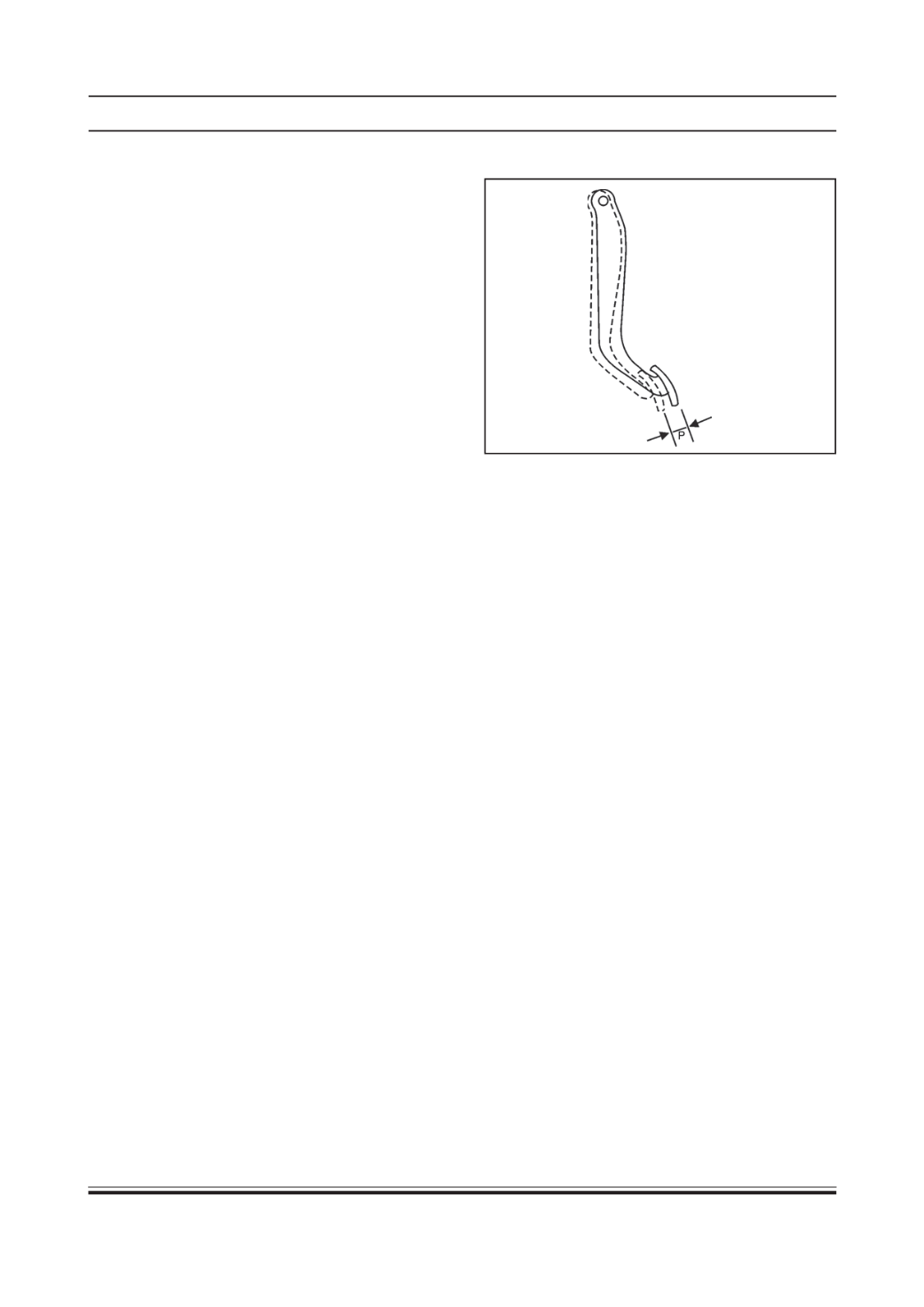
Brake pedal Free Play, should be kept 1 - 2 mm as
shown above. If it is out of specification check stop
light switch for proper installation and adjust it as
necessary. Also check pedal shaft bolt for looseness.
Brake shackle pin should rotate freely on pedal.
Ensure proper lubrication applied on it.