




 827 / 1003

ELECTRICAL
4
g. Before commencing work on an ignition
system, all high tension terminals, adapters and
diagnostic equipment for testing should be
inspected to ensure that they are adequately
insulated and shielded to prevent accidental
personal contact and to minimize the risk of
shock.
8. When installing any of the vehicle parts, be
careful not to pinch or damage any of the wiring
harness.
9. Connectors and Harnesses
The engine compartment of a vehicle is a
particularly hostile environment for electrical
components and connectors. Always ensure these
items are dry and oil free before disconnecting and
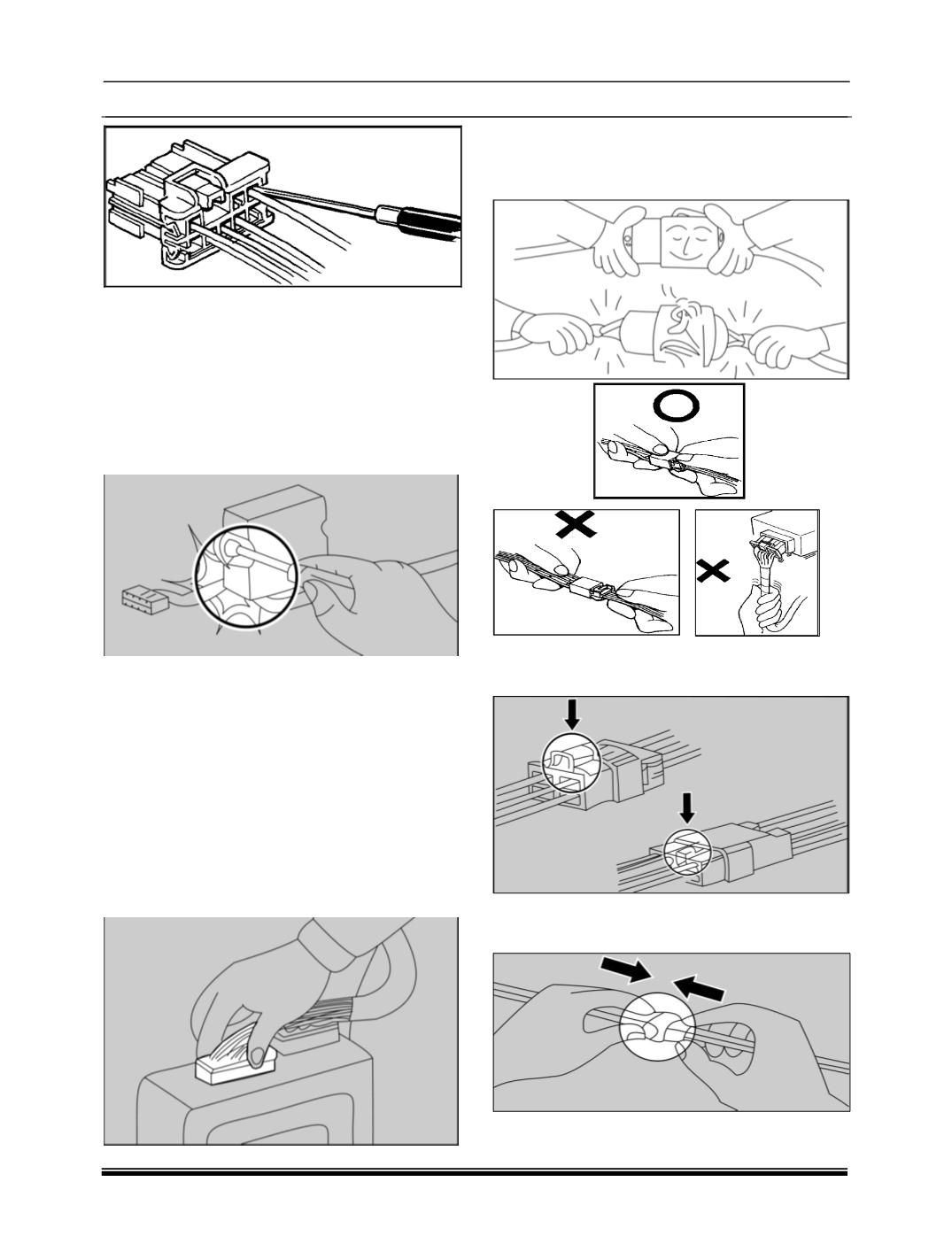
connecting test equipment. Never force connectors
apart either by using tools or by pulling on the
wiring harness. Always ensure locking tabs are
disengaged before removal and note orientation to
enable correct reconnection. Ensure that any
protective covers and substances are replaced if
disturbed.
a. Make sure that connectors are connected
securely.
b. When disconnecting a connector pull it off
from the mating connector by holding on both
connectors. Never try to disconnect
connectors by pulling on their wires.
c. While disconnecting the interconnection
connector, press in the direction indicated by
arrows in the illustration.
d. While connecting the interconnection
connectors, insert the connectors until a
“snap” noise is heard.
e. Dirt / corroded terminals result in improper
contact. The terminals should be cleaned