




 230 / 1119

1.5L REVOTORQ ENGINE
42
iii.
Extremely Low Engine Oil Pressure
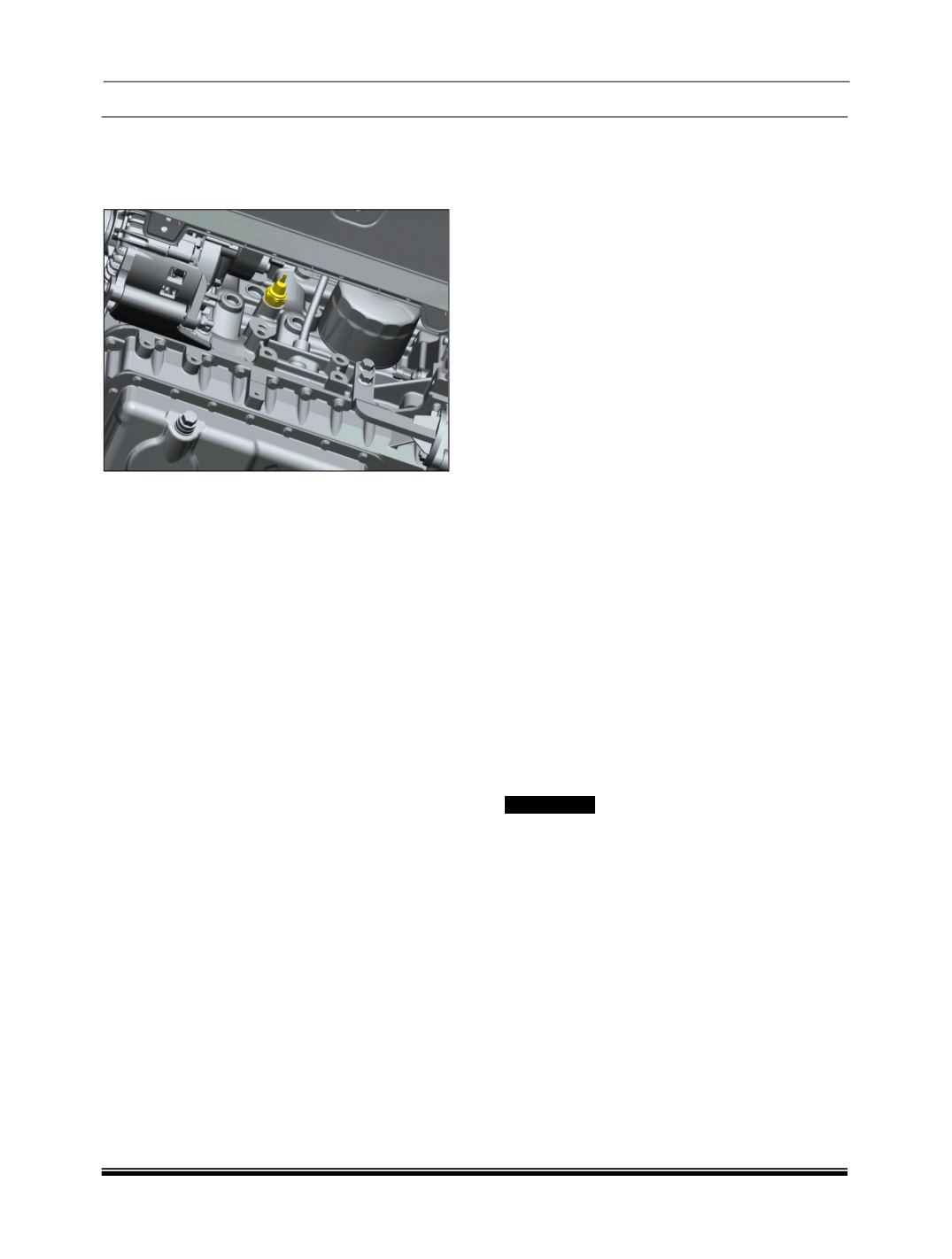
If suspecting inadequate oil pressure, check the
pressure by removing oil pressure transducer and
connecting a gauge directly to the engine block.
Check the following: External leakages.
Oil level in sump up to maximum mark on
dipstick / Check oil level.
Oil pressure switch / indicator for proper
functioning.
Functioning of pressure relief valve on oil
pump.
Oil pumps performance using a suitable
pressure gauge. If low oil pressure is not on
account of above factors, wear of
journals/bearings is indicated for which
overhaul of engine may be considered.
Leakage through oil pumps back plate.
Test procedure
1. Park the vehicle on a flat surface and engage
the parking brake.
2. Check that the oil level is at the ‘MAX’ mark on
the engine oil dipstick. Add oil as necessary.
3. Verify the correct quantity of oil used.
4. Inspect the engine thoroughly for signs of
external leaks through the cylinder head cover
gasket, crankshaft main seals, camshaft seal, oil
sump gasket, oil pump gasket, oil sump drain
plug, etc. Repair any external leaks.
5. Install a pressure gauge in the oil pressure
transducer port.
6. Place the vehicle in neutral and start the
engine. Allow the engine to warm up to normal
operating temperature.
7. Read the oil pressure indicated on the gauge at
idle and at maximum engine speed.
8. If the oil pump output is not at minimum
pressure, the oil pump may be clogged or
defective. This is also an indication of excessive
wear of the crankshaft journals and/or bearings
and an engine overhaul may be considered.
Maintenance Instructions FOR Common Rail
Common rail refers to a small fuel accumulation
tank called Rail, where the pressure of the fuel
remains almost constant and always available to
injectors. The high-pressure pump compresses
the fuel at a pressure of 1600 bar and transfers it
through a connection pipe to the high-pressure
accumulation duct or Common Rail.
The common rail then softens the pressure
oscillations caused by the opening and closing of
the injectors and by the continuous discharge of
the high pressure pump. The fuel is then
transferred from the common rail through pipes to
the electronic injectors Due to high pressure
developed in the common rail system, care and
cleanliness is of utmost importance during
removal and installation of the common rail
system. Tiny dust particles (0.2 mm) can block
injector nozzle in opening position, which will then
continuously inject fuel into the cylinder there by
increasing the cylinder pressure leading to engine
damage.
NOTE
The ambient conditions to store common rail
parts are: -30°C to +60°C, and humidity
between 0 to 80%.
The nozzle holder should not place in or near a
magnetic field source above 400 A/m.
All system components must be thermally
sealed in plastic bags and clearly labeled.
Prior to working on common rail system, the
technician must thoroughly wash hands before
and during the work as necessary.
!! WARNING
Smoking is strictly prohibited while working on
common rail system, as the system is under high
pressure and may cause serious injury, or
component damage.
Prior cleaning of engine and injection system
Clean the area around the engine and then fuel
injection system with clean brush and degreasing
agent. Cover electrical unit’s viz., starter,
alternator etc., to avoid fuel spray/splash.
Clean the joints and external surface of the
injection system and each connection that is to be
opened, by a vacuum cleaner. The surface of the
workstation on which the work on common rail is
to be carried, should preferably be stainless steel.
The workplace should be a closed room, clean
and free from machine tools and welding
equipment.