




 320 / 948

WHEELS AND TYRES
11
Deposits of mud, dust etc. must be cleaned
from inside of the rim.
Remove stones from tread, clean the tyre and
rim before balancing to achieve better results.
Each tyre should be inspected for any
damage.
Do not use more than one balance weight on
one side.
Use coated weights on aluminum wheels/rims
to prevent damage to the finish.
The type of balance weights, when used, must
be in accordance with the profile of the rim
flange.
NOTE
For balancing wheel, follow the manufacturer’s (of
balancing machine) manual for balancing
instructions, recommendations and any other
additional information.
III. TYRE ROTATION
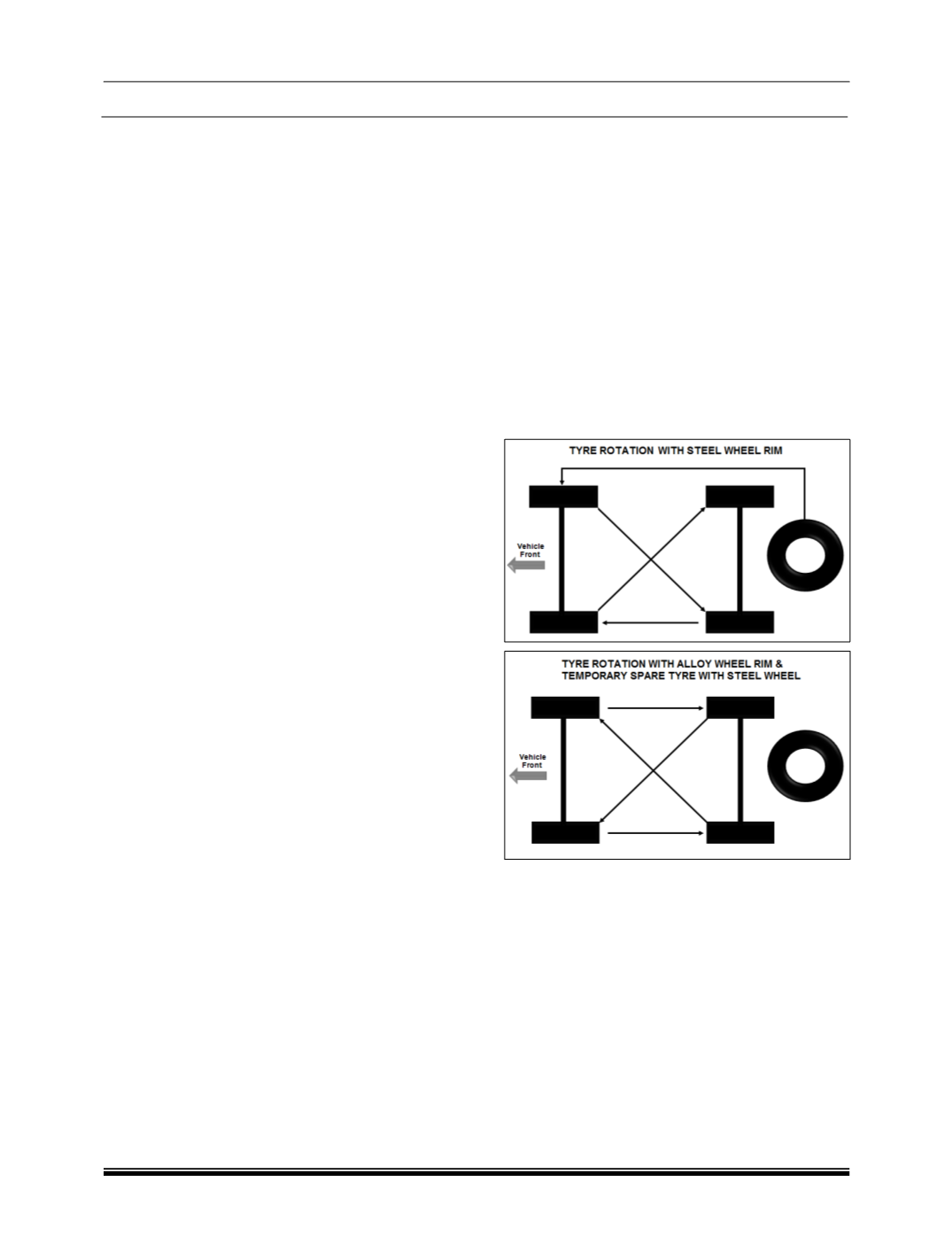
To equalize wear rotate the tyres as per to the
figure given below periodically. Tyre rotation is
recommended for achieving identical wear on
each tyre. Regular rotation of tyres will also
prevent abnormal wear. The sketch indicates a
suggested sequence of tyre rotation. Rotate tyre
at a point specified in the service schedule.
NOTE
Due to their design, radial tyres tend to wear
faster in
the shoulder area, particularly in front
positions.
This makes regular rotation necessary. Do not
use spare steel wheel rim for tyre rotation, when
vehicle is fitted with alloy wheel rims.
NOTE:
Wheel Rotation Frequency is after every
10000kms.
Temporary spare tyre with steel wheel rim
should not be considered for rotation.