




 553 / 1133

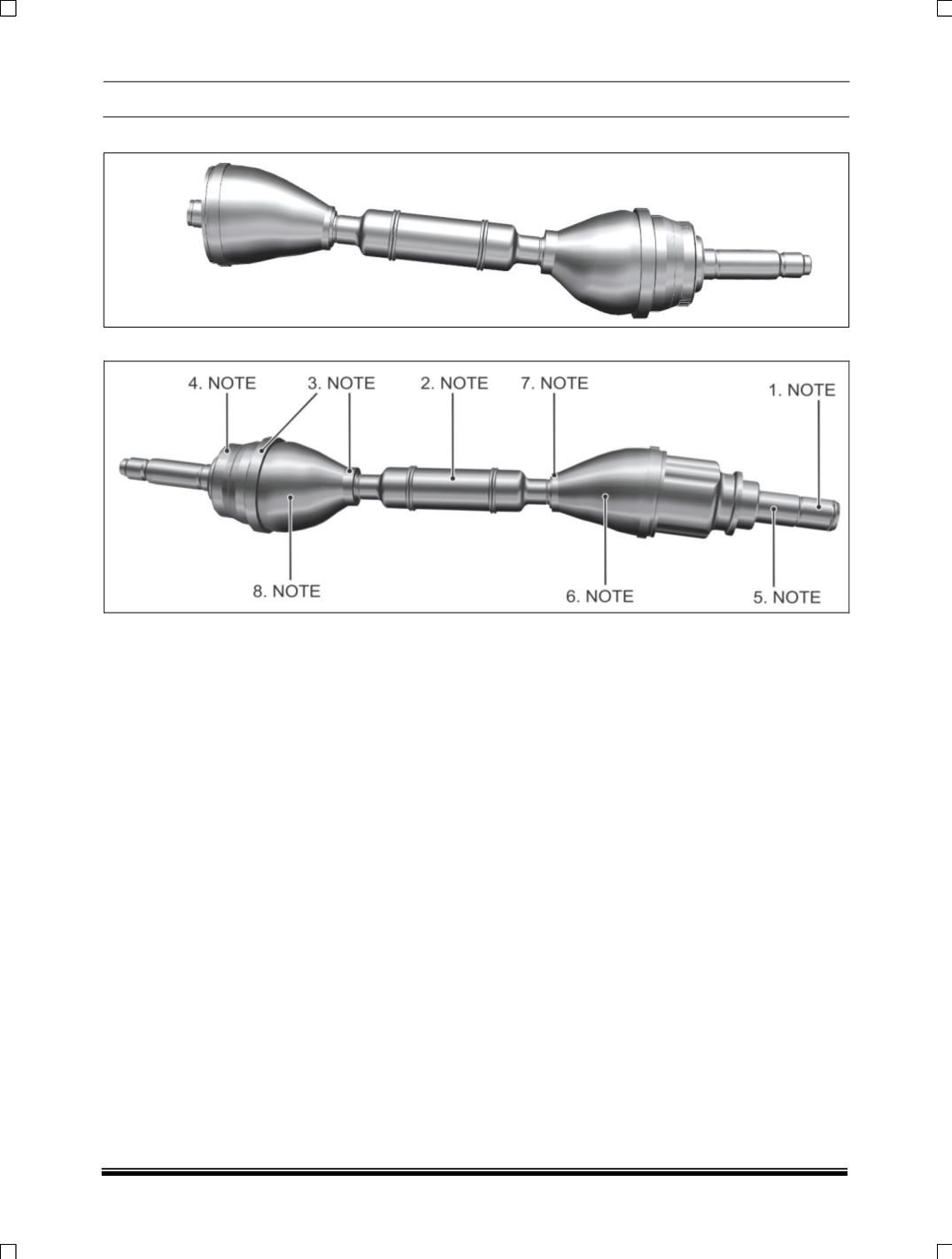
DRIVESHAFT
2
DRIVESHAFT RH
DRIVESHAFT LH
Half shafts must be stored in their original
shipping containers or supplier approved fixtures
until assembled into vehicle. It is important to take
all precautions to avoid stacking half shafts on top
of each other. The seals and deflecting rings are
extremely delicate and any cut, nick, or abrasion
may reduce the performance of the driveshaft.
1. Note:
If Out board joint must be angulated to fit
the half shaft assembly into the vehicle,
all precautions should be taken to avoid
damaging the surface of the threads and
splines during installation.
2. Note:
Take all precautions to avoid any contact
between the inboard and outboard seals
and any surface which may cause a cut,
nick or abrasion. The seals are
extremely delicate and critical to the
performance to the half shaft. Do not
allow the seals to contact other half
shafts, workbenches, the vehicle frame,
lower control arm, or any other chassis
component. If grease leakage is
observed from either seal, the half shaft
should be removed from the vehicle,
handled with care, and returned to
authorize dealer for analysis.
3. Note:
Clamps should be in position and tight. If
clamps are loose, don’t install into
vehicle.
4. Note:
To prevent damage to the internal
components of the inboard joint, take all
precautions to avoid over extending the
joints.
5. Note:
Protect this surface from nicks and
scratches. Damage to this surface may
reduce the performance of the mating
seal.
6. Note:
Protect deflector ring from impacts,
which
could
cause
dents.
A
dented/Damaged deflector ring may
result in an interference condition and
affect the seal.
7. Note:
Eared clamp must be in position and
crimped. Take precaution to avoid any
contact between the ear of the clamp
and any object, which may bend/crush,
the “ear”. A damaged “ear” will decrease
the clamping load, which may cause
grease leakage and / or intrusion of
water/debris.
8. Note:
Take precaution to avoid any contact
between the inboard seal and the tooling
used to insert the assembly into the
transmission. Contact between the seal
and the tooling will cause a seal peak
abrasion which may reduce the life of
the seal and lead to dissatisfied
customer.