




 512 / 1906

ENGINE
80
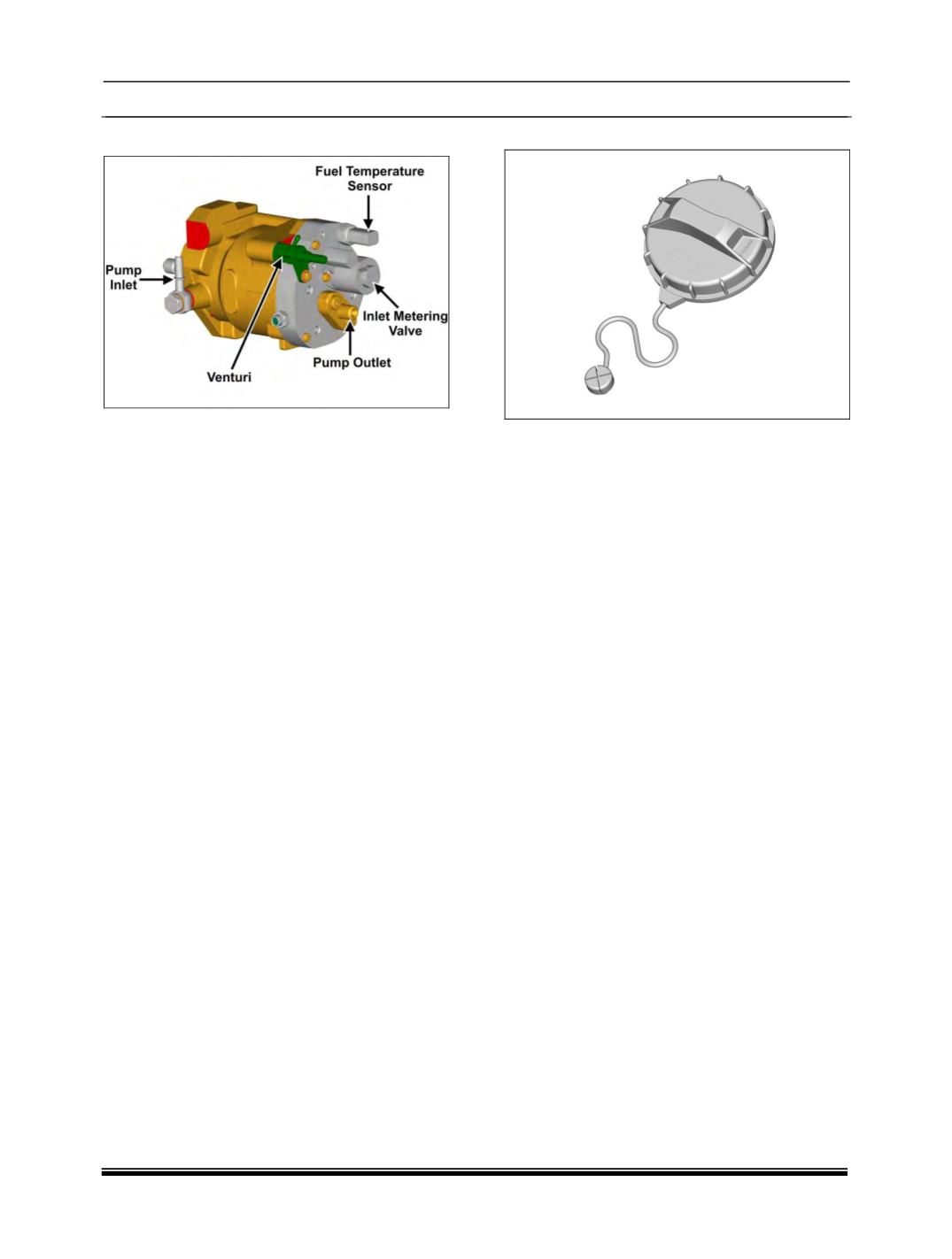
f) High Pressure Pump (H.P. Pump) :
HP pumps draws fuel from the fuel tank through
the water Sedimentor and the fuel filter. It supplies
high pressure fuel
(up to 1600 bar)
to the
injectors. It has got inlet metering valve and in-
built feed pump, integrated pressure limiter and
integrated fuel temperature sensor. This pump is
driven by the engine timing belt and controlled by
EMS ECU based on the various operating
parameters.
Fuel Temperature Sensor (
FTS
) :
This sensor monitors the temperature of fuel
entering into the HP pump. It measures the fuel
temperature on the pump hydraulic head in the
low pressure circuit, between the transfer pump
outlet and the inlet to the HP pumping stage. This
sensor information is used to modify rail pressure
control, injection etc. This sensor is in-built with
HP Pump.
Inlet Metering Valve (
IMV) :
This controls fuel flow into pumping element in
order to control rail pressure. This sensor is in-
built with HP Pump.
Venturi :
It is an integral part of High pressure pump. It has
inlet and outlet connections. One connection
comes from injector back leak circuit & the other
connection goes to the fuel tank (
return Line
), in
between there is a "T" connector which goes to
the fuel filter.
g) Fuel Filler Cap :
The fuel filler cap used EAGLE is a dual vented
fuel filler cap. In addition to its function of
providing an opening to fill fuel to the fuel tank it
also helps in maintaining pressure in the fuel tank.
It has a dual pressure valve that functions as
follows:
i. When the pressure in the fuel tank increases
be- yond the specified limit of 10.5 KPa ~ 13.3
KPa it opens to release the vapour to the
outside to relieve the pressure.
ii. If a vacuum pressure of -6.0kPa is created in
the tank, it opens up such that outside air is
allowed in to bring back the pressure to safe
limits.
In addition a ratchet tightening device ensures
that the filler cap is tightened to the correct torque.
It also fitted with a O-ring that has to inspected
regularly and replaced if it has hardened, broken
or cracked.