




 1320 / 1906

ELECTRICAL
18
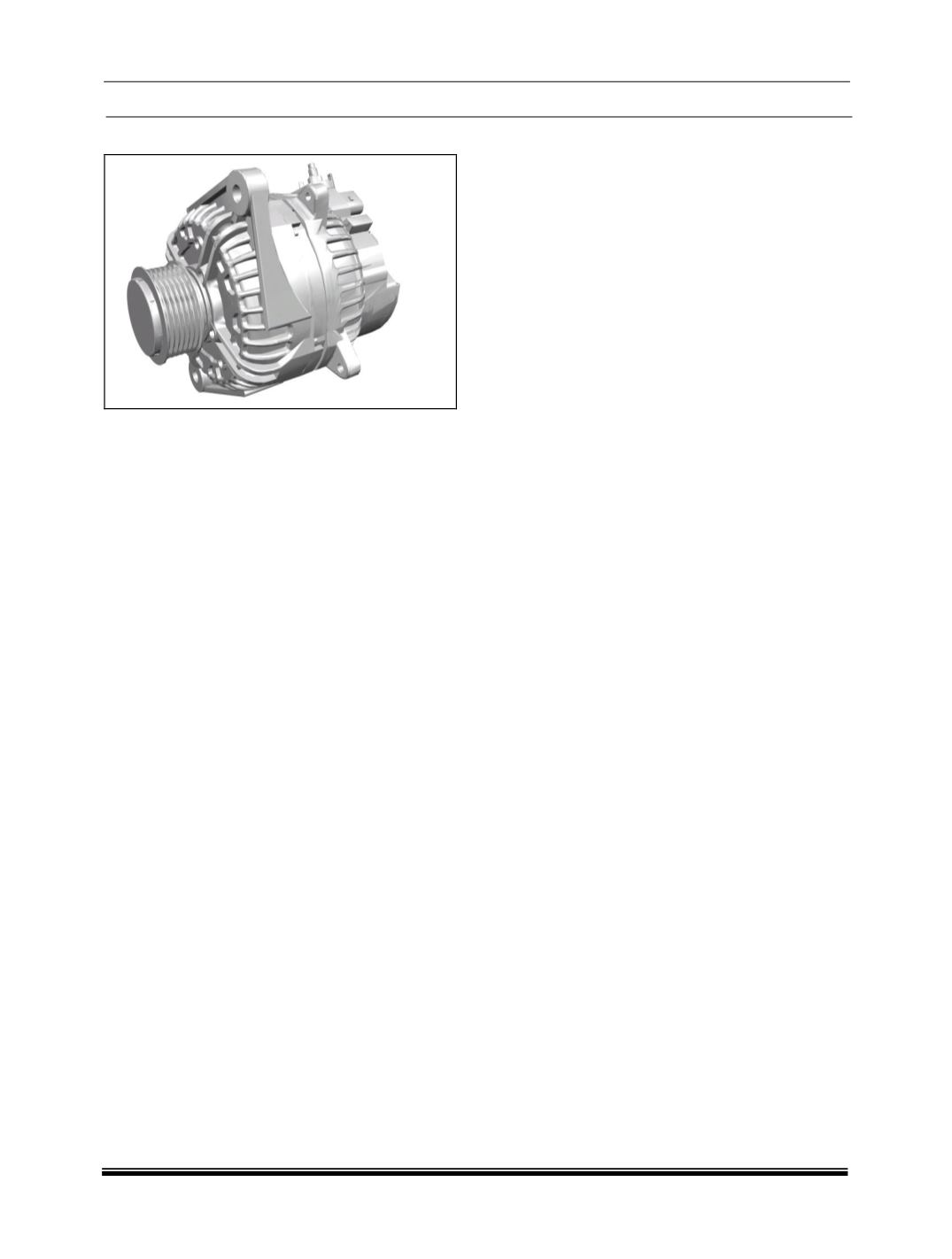
8.3.2 ALTERNATOR
GENERAL DESCRIPTION:
The alternator is a rotary machine that transforms
mechanical energy into electrical energy. It is 12-
pole synchronous generator with integrated
rectifier in three-phase current bridge circuit with
voltage-limiting Zener diode and attached
multifunction controller. The alternator is air cooled
and be able to function in the engine compartment
of the vehicle.
PRECAUTIONS:
DO’S
Alternators can be used in automobiles and
stationary motors with cold, mild and tropic
climate.
The operation of the alternator is only
permissible with assembled regulator and with
connected 12V battery.
The alternator is mounted in the vehicle with a
bracket directly onto the engine. Direct
mounting without a bracket is also possible.
The alternator has to be driven by a V-belt or a
poly V-belt. The tensioning of the belt can be
performed by tilting the alternator or by a
separate belt-tensioning pulley.
Correct alternator operation can only be
achieved when the specified direction of
rotation and the belt tension is maintained.
DON’TS
Swapping of the battery connections even for a
short period only can result in pre-damage or
functional failure of the alternator and is
therefore NOT PERMISSIBLE!!
Dismantling of the battery cables can lead to
the loosening of the battery positive cable bolt
on the alternator side. It is necessary to fasten
the bolt to the maximum fastening torque
It is not permitted to make a direct connection
between the positive and ground with the
alternator rotating.
Plug in connection:
Insufficient contact can
lead to failed output signal hence it is
necessary to ensure proper plug in connection.
Axial load on the alternator rotor shaft is not
permitted especially not by hitting as this can
cause pre-damaged bearings.
The alternator must not be dropped or exposed
to any shocks out of normal conditions. The
function of the alternator is not guaranteed
afterwards.
When the pulley is mounted by the customer
the dimensional tolerances and the tightening
torque must be kept within specified limits.
Otherwise the pulley can become loose or the
drive shaft can be damaged.
It is not allowed to store the alternator in wet
condition. This applies for installed as well as
for not installed alternators.
If the alternator is exposed to an engine
cleaning process, a drying process should be
done prior to storage of the engine.
Do not disconnect the battery cable while
engine is running.
REGULAR MAINTENANCE:
Check the general condition of the battery.
Ensure correct battery electrolyte level.
Ensure electrical connections are tight and
secure.
Check and ensure mounting bolts are tightened
properly.
Ensure the belt of the alternator is in good
condition.
Check the belt tension ensure it should be
neither too tight nor too loose.
Ensure alternator cooling slots are clear.