



 842 / 1588

30
AIRCONDITIONING
REFRIGERANT (R 134a )
(Tetraflouroethane, CF3-CH2F)
R134a refrigerant has been filled in the airconditioning
system for this vehicle.
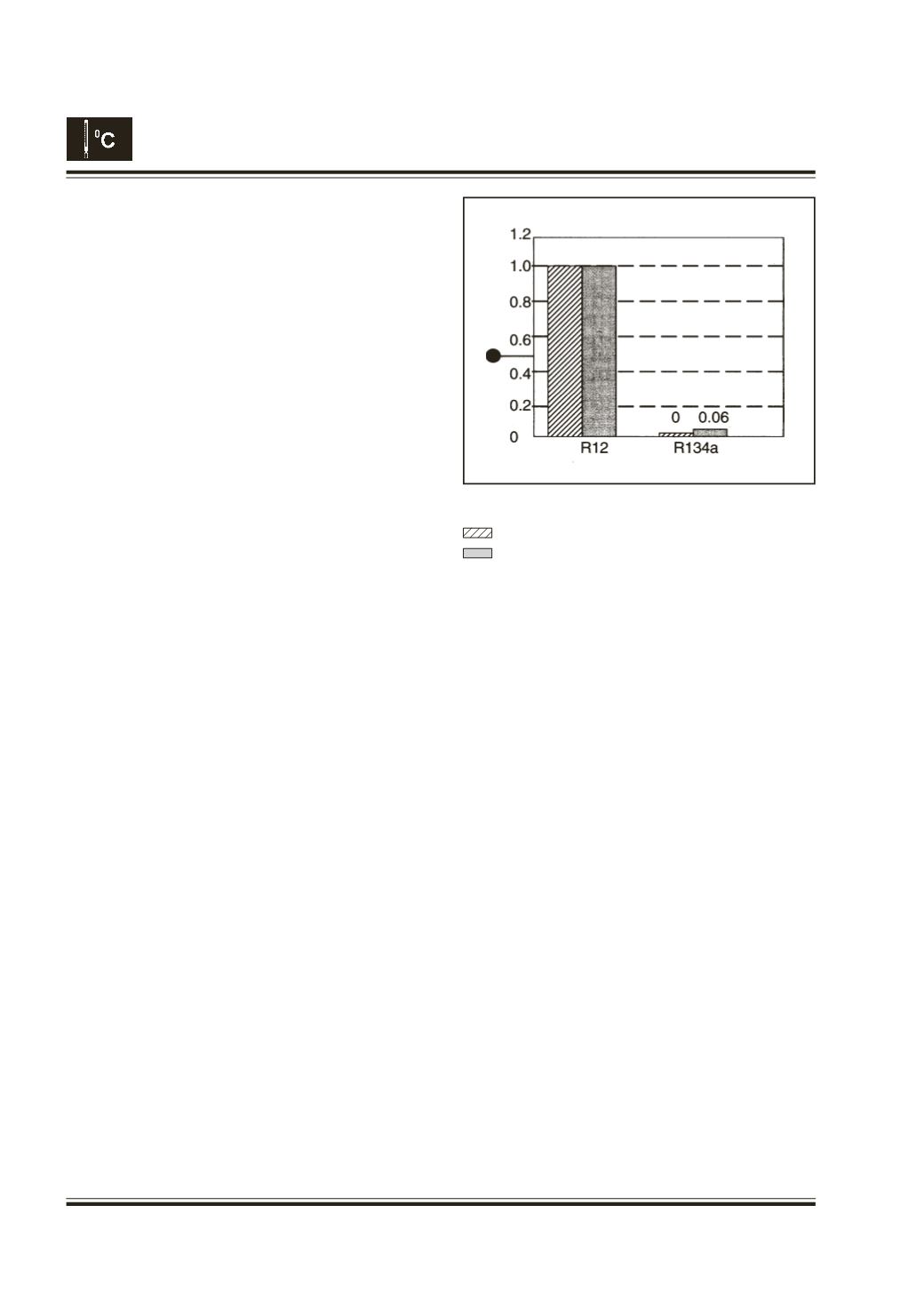
It is a hydroflurocarbon (HFC) which has no ozone
destructive potential and its global warming potential
is very much lower than that of R 12 refrigerant.
Form ...................................... Gas.
COLOUR................................. Colourless.
Smell ..................................... Slightly of ether.
Crystallisation temperature ..... -117
0
C.
Boiling temperature ................. -26
0
C.
Safety Precautions:
It is a safe refrigerant, i.e. non-flammable, non
explosive, non-irritating and without smell. The
following precautions should to be taken while handling
this refrigerant:
* Avoid any form of contact with liquid refrigerant.
Wear safety glasses for eye protection. In case
refrigerant gets into your eyes, immediately seek
medical help. Do not rub.
* In the event of work involving the refrigerant circuit,
refrigerant must not escape into the atmosphere.
* Suitable suction extraction system or reprocessing
systems are to be used.
* Refrigerant must not be released in confined
spaces. As it is heavier than air, the danger of
asphyxiation exists in any assembly pits in the
area.
* Under no circumstances may parts of the system
be cleaned from inside with superheated steam or
compressed air. Only use nitrogen for cleaning.
* Refrigerant is completely non - toxic at normal
temperatures, however it decomposes upon
contact with flames or higher temperatures, to form
hydrogen chloride and hydrogen fluoride. These
products of decomposition are hazardous to health.
Therefore, under no circumstances, should welding
be carried out on the closed system or in its close
proximity.
Ozone destructive potential
Global warming potential
l
Relative potential
* Switch off the system if a part of the air -
conditioner system is damaged or leaking, due to
some reason for example, a vehicle accident.
This is to avoid damage to the compressor running
in the absence of refrigerant in the circuit.
Fig. 41