



 497 / 1588

22
BRAKES
BRAKEMAINTENANCE
To maintain the efficiency of the brake system,
preventive maintenance is essential and the following
recommendations should be observed at the intervals
stated.
BRAKEADJUSTMENT
As it is an auto adjust brakes, brake adjustment is
not required.
1) Every 9000 kms check the lining for wear through
the inspection hole provided in the back plate,
removing the grommet (35). The linings should
not be allowed to wear down to rivet heads.
2) Every 18,000 kms clean the backplate and
lubricate the tips of the shoe platforms with
graphite grease and the moving parts of the
adjuster with mineral grease. Keep the grease
away from the shoe linings and all hydraulic parts.
3) The wheel cylinder should be overhauled once
in 36,000 kms or 18 months whichever is earlier.
MAJOROVERHAUL
It is essential that the shoe linings are inspected at
regular intervals to prevent the drums being
permanently damaged and subsequentlymaking drum
removal extremely difficult. If the drums are allowed
to become scored or grooved, the problem of drum
removal can usually be overcome by increasing the
clearance between the shoe linings and drum as
follows :
Caution :
As it is an auto brake, press the hand brake
lever with a screw driver inserted through the hole
from rear side of the backplate.
1.
Choke the front wheels, release the hand brake
and jack up the rear wheels. Support the rear
axle with horse stands. Fig. 17
2.
Slacken off the hand brake cable.
3.
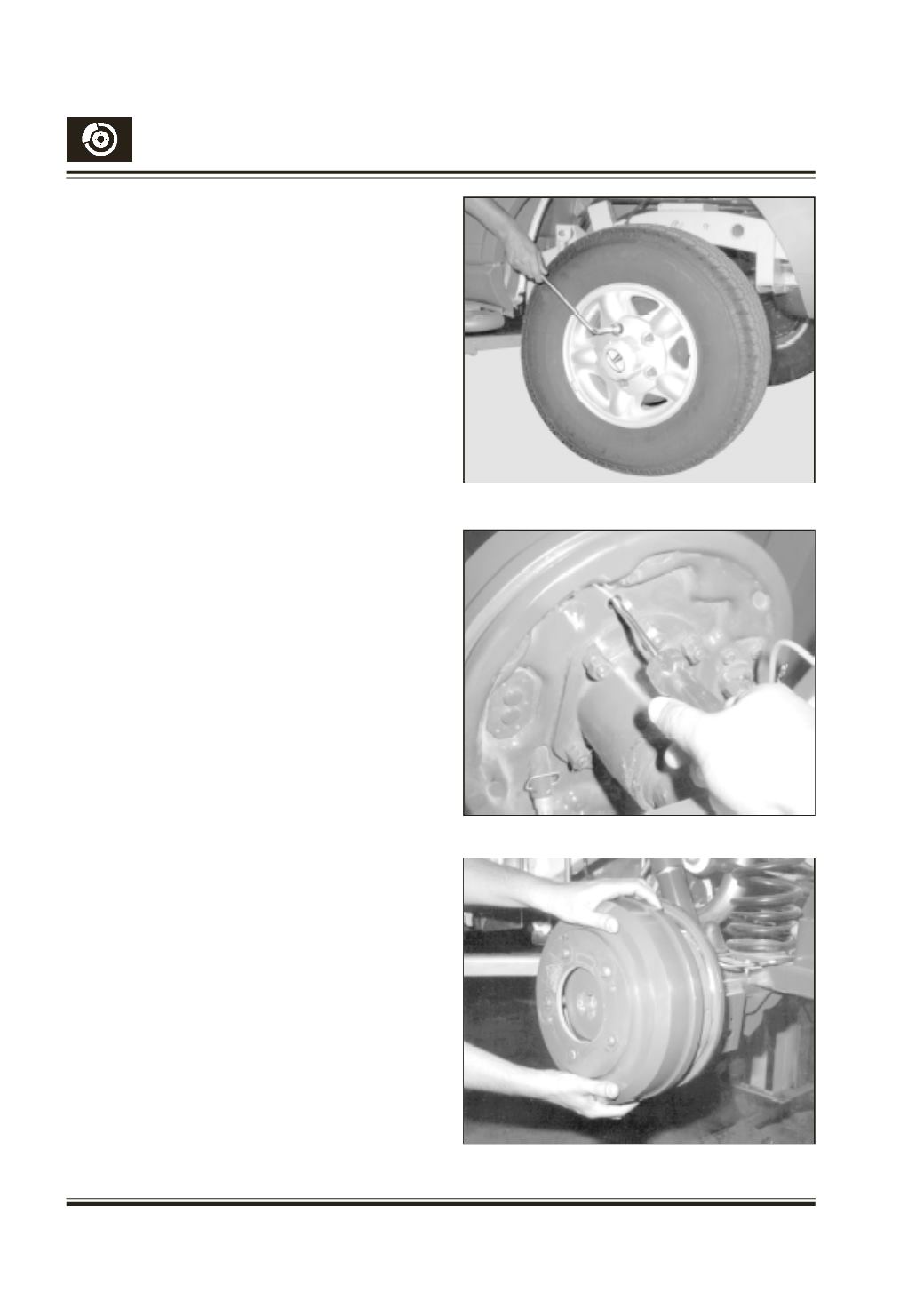
Remove the wheel Fig. 16 and insert a screw
driver through the hole in the back plate (from
rear side of the backplate Fig. 17) and press
against the hand brake lever (13). A 'click' sound
will be heard as the lever moves down. This
movement compresses the pistons in the wheel
cylinder and thereby increases the clearance
between the brake shoes and the drum. Now
take out the drum Fig. 18.
Fig.16
Fig.17
Fig.18