



 785 / 1235

ELECTRICAL
7
ELECTRICAL
8.3 STARTING AND CHARGING SYSTEM
8.3.1 BATTERY
FUNCTION:
The battery has three major functions in the
electrical system:
It is a source of electrical energy for cranking
the engine.
Once the engine is cranked, it is getting
charged from alternator.
Also it provides electrical energy to the vehicle
loads whenever the alternator output current is
not able to meet the demand or when the
alternator is fails.
SPECIFICATION:
12V, 80 A/H,
Specific Gravity: 1.27 ± 0.01
LOCATION:
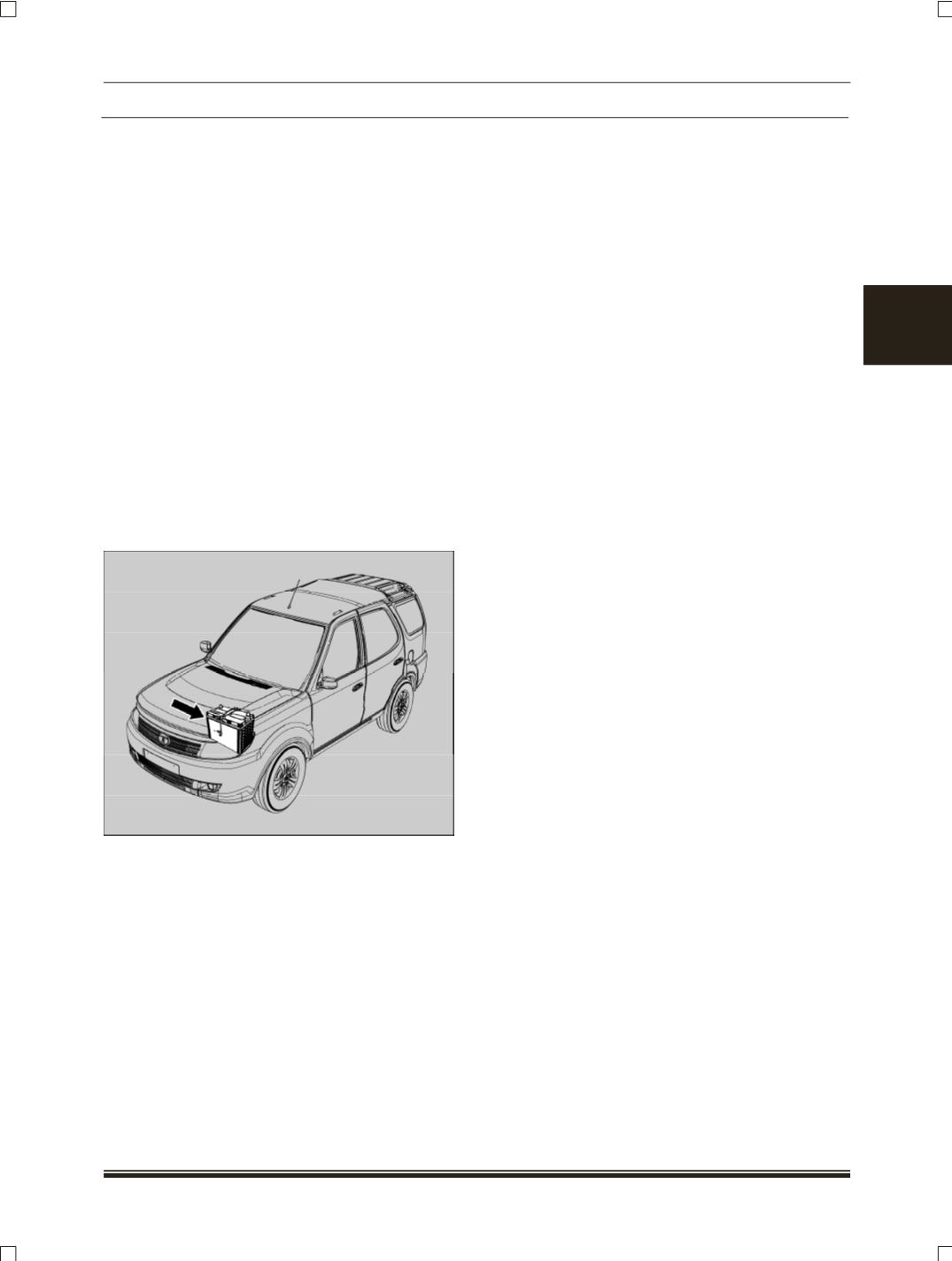
Battery is located in the left side of the engine
compartment on panel wheel arch inner LH.
BATTERY DO’S AND DON’TS:
DO'S:
Think Safety First.
Do regular inspection and maintenance
especially in hot weather.
Recharge
batteries
immediately
after
discharge.
DON'TS:
Don't add acid.
Don't store batteries with tools and other
equipment haphazardly placed.
Don't disconnect battery cables while the
engine is running (
battery acts as a stabilizer
).
Don't put off recharging batteries.
Don't add tap water as it may contain minerals
that will contaminate the electrolyte.
Doesn’t discharge a battery any deeper than
you possibly have to?
Don't mix different size and types of batteries.
FACTORS AFFECTING BATTERY LIFE:
The reasons that most batteries fail prematurely
are related to one or more of the following:
1.Improper charging
2.Lack of water
3.Installation
4.Operational issues
NOTE:
The user has control over most of the
conditions that lead to premature failure.
1. IMPROPER CHARGING:
Over charging
Charging a battery greatly in excess of
what is required is harmful in several ways.
Under charging
A battery operated with insufficient charge over
a long period of time may develop a type of
sulphate in the plates which is dense, hard and
crystalline
and
which
cannot
be
electrochemically converted to normal active
material again.
A battery operated in an undercharged
condition is unable to deliver the full power
intended for it. Constant undercharge results in
Sulphation of plates and a running down of
cells. This also causes lead sulphate deposits
on separators which create a short circuit
between positive and negative plates.