




 412 / 654

FUEL SYSTEM
21
G. CNG RECEPTACLE VALVE:
Function:
CNG Receptacle valve / receptacle is a NGV type
valve through which gas is filled into the cylinder.
The filling receptacle gets “locked in” with the filling
nozzle at the filling station and gas flows into the
cylinder.
The filling receptacle serves the following functions:
Allows for fast flow of gas into vehicle, hence
less waiting time.
It is also having an integrated 50 micron particle
filter to avoid dirt ingress.
It has an in-built check valve, hence there is no
back flow of gas.
Check valve
The Receptacle valve is provided with an inbuilt
check valve which ensures that there is no back flow
of gas.
Filter
The Receptacle valve is provided with an inlet
particle filter of 50 microns, for protecting the high
pressure line from the external particles which may
cause any blockage.
O-ring
The O-ring within the receptacle is specially
designed to withstand the harsh environment of a
CNG vehicle. The O-ring does not come in the direct
path of the gas and is enclosed within a groove so
that there is no direct abrasion and has a longer
service life.
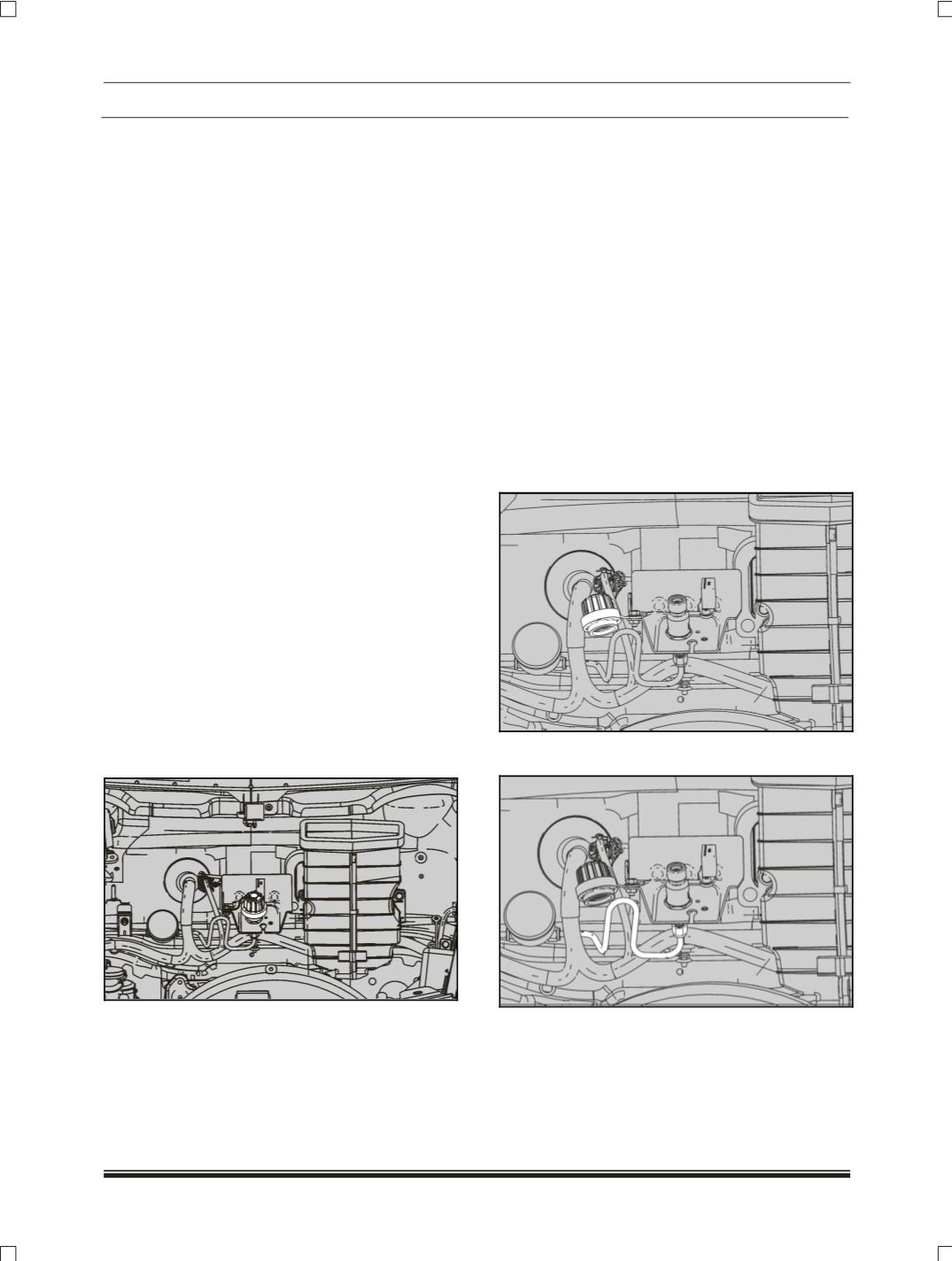
Mounting Location:
CNG Receptacle valve is fitted near petrol filling
location under front bonnet.
REMOVAL OF CNG RECEPTACLE VALVE (On
vehicle):
NOTE:
Park the vehicle with brakes ON and duel
selector switch is kept in CNG mode.
Manually turn of the tank valve and connect
the TML tester tool and start the service
“Empty CNG lines”
Crank the engine and run in idle condition
until engine stop at its own.
Re crank the engine it should not start (tank
pressure should be 0 bar)
WARNING :
Do not turn OFF Cylinder Valves, in vehicle
running in CNG mode. This may wrongly detect
the leakage error.
Disconnect battery negative cable.
Remove the cap of receptacle valve
Disconnect the high pressure connection at
receptacle valve end.
Remove the mounting nut of CNG receptacle
valve from bracket.
Take out the CNG receptacle valve.