



 266 / 654

WHEELS AND TYRES
479
SUSPENSION
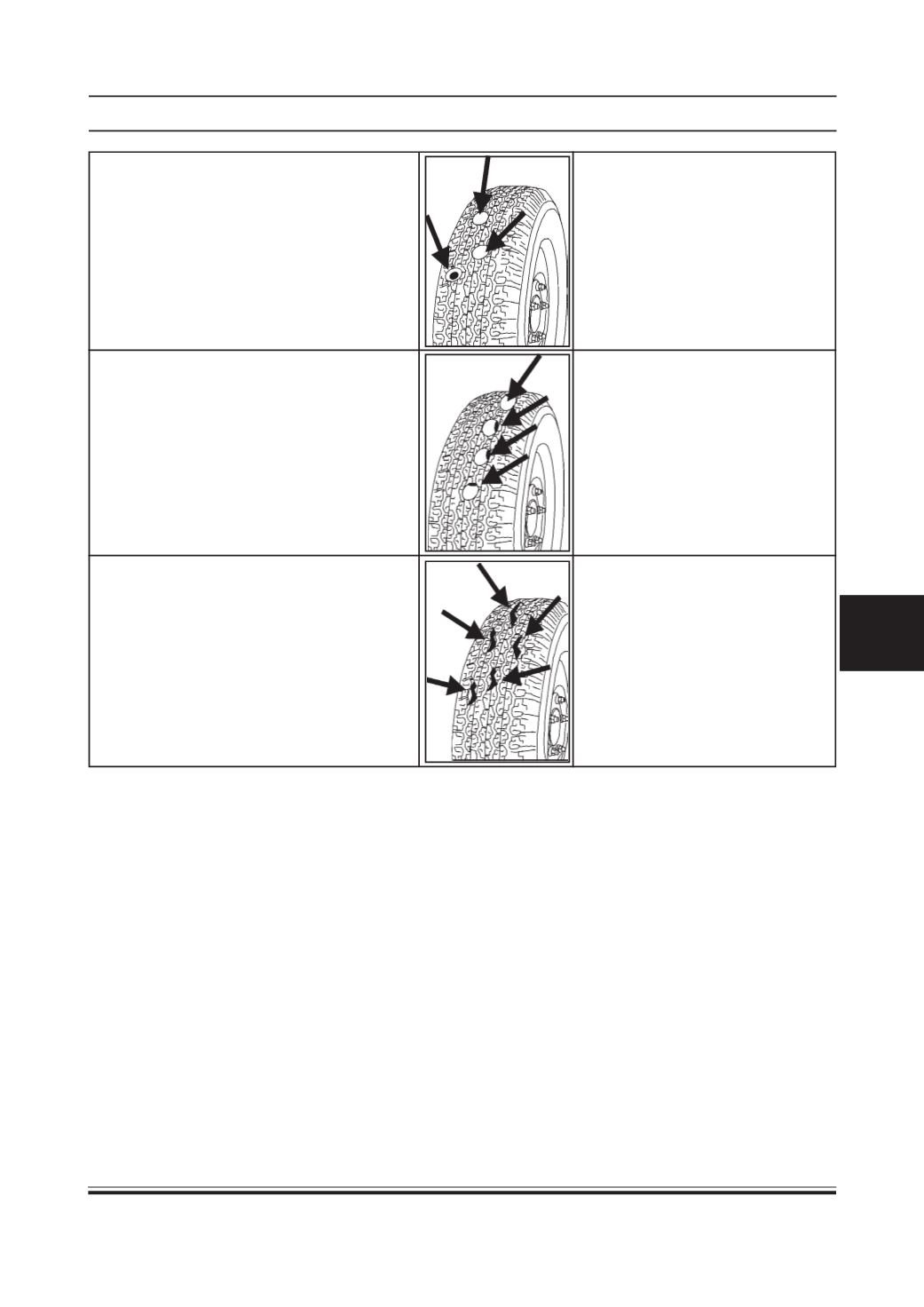
Cupped or scalloped depressions
Irregular depressions or spots
Cracked ribs
Unbalanced tyre and wheel;
defective tyre
Lack of rotation; improper
alignment; worn or damaged
steering or suspension parts
Overloading; high speed
driving over and under inflation
TYRE VIBRATION DIAGNOSIS
1. Visually inspect tyres, wheels/rims and vehicle for
uneven wear, damaged wheels/rims, or vehicle
component damage. Replace or adjust as requires.
Check wheel mounting to hub, adjust
torque
of wheel bolt to the specified value.
2. Make sure that tyres are inflated with specified
pressure and suspension is working correctly.
3. Check for proper tyre mounting on the wheel/rim.
The tyre fitting line should be concentric with the
rim flange. The yellow or red mark on t h e
tyre should be oriented to the rim correctly. (Refer
Matched Tyres and Wheel Rims given in this
section.)
4. Test drive vehicle on a smooth road surface and
diagnose symptoms.
5. Check tyre wheel/rim assembly balance. Adjust
as required. If unable to balance completely,
deflate tyre, unseat tyre beads, and rotate tyre
180 degrees on the wheel/rim. Rebalance tyre and
wheel/rim assembly and test drive the vehicle.
6. If vibration in not eliminated, measure tyre and
wheel/rim assembly for excessive lateral or radial
run out. Replace as required. Re balance tyre and
wheel/rim assembly and test drive vehicle.